Quick Answer: What Should You Eat in Batumi?
If you only try a handful of things, start with Adjarian khachapuri, borano, sinori, achma and Black Sea fish. For a lighter spread, add pkhali, Georgian salad with walnuts and lobio. For something sweet, try churchkhela or Adjarian baklava with sand coffee — a combination the city is particularly known for.
What to Order: A Quick Reference
| Dish | Best for | Local to Adjara? |
|---|---|---|
| Adjarian khachapuri | First meal, sharing | Yes |
| Borano | Dairy lovers, hearty appetite | Yes |
| Sinori | Traditional Adjarian food | Yes |
| Achma | Breakfast, bakery stop | Strongly associated |
| Khinkali | Essential Georgian experience | Georgian national |
| Black Sea fish | Seafront meal | Local context |
| Pkhali | Light starter, sharing table | Georgian |
| Lobio / lobiani | Filling, often vegetarian-friendly | Georgian |
| Kharcho | Rainy-day soup | Georgian |
| Georgian salad | Summer side dish | Georgian |
| Churchkhela | Market snack, sweet | Georgian |
| Sand coffee + baklava | Dessert experience | Adjarian context |
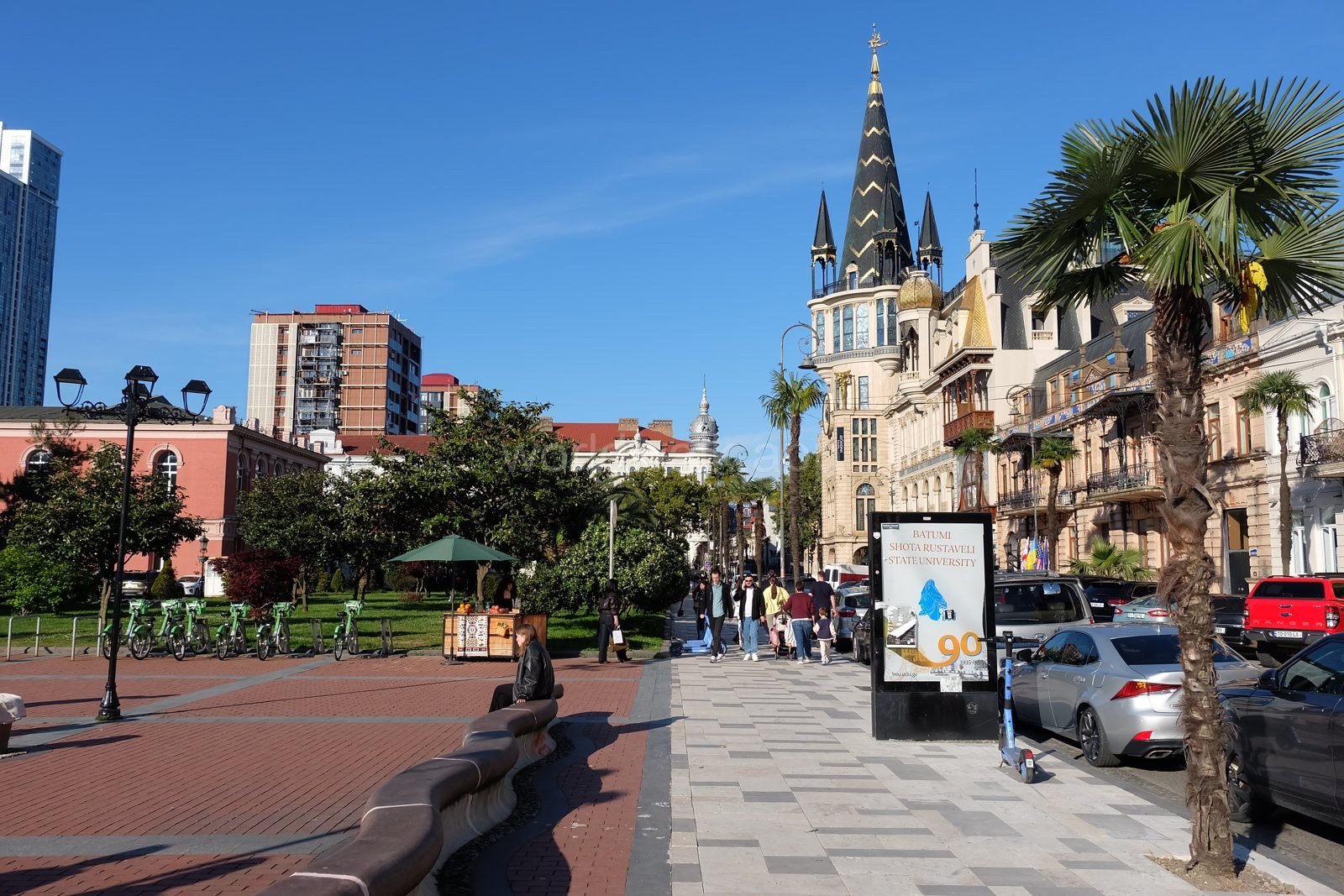
The WorldWalk Batumi audio tour covers 29 stops through Old Town, Europe Square and the port streets — including the market area where you'll find churchkhela, local cheese and seasonal produce.
Start the audio tour →Read also: One Day in Batumi
12 Local Dishes to Try in Batumi
1. Adjarian Khachapuri
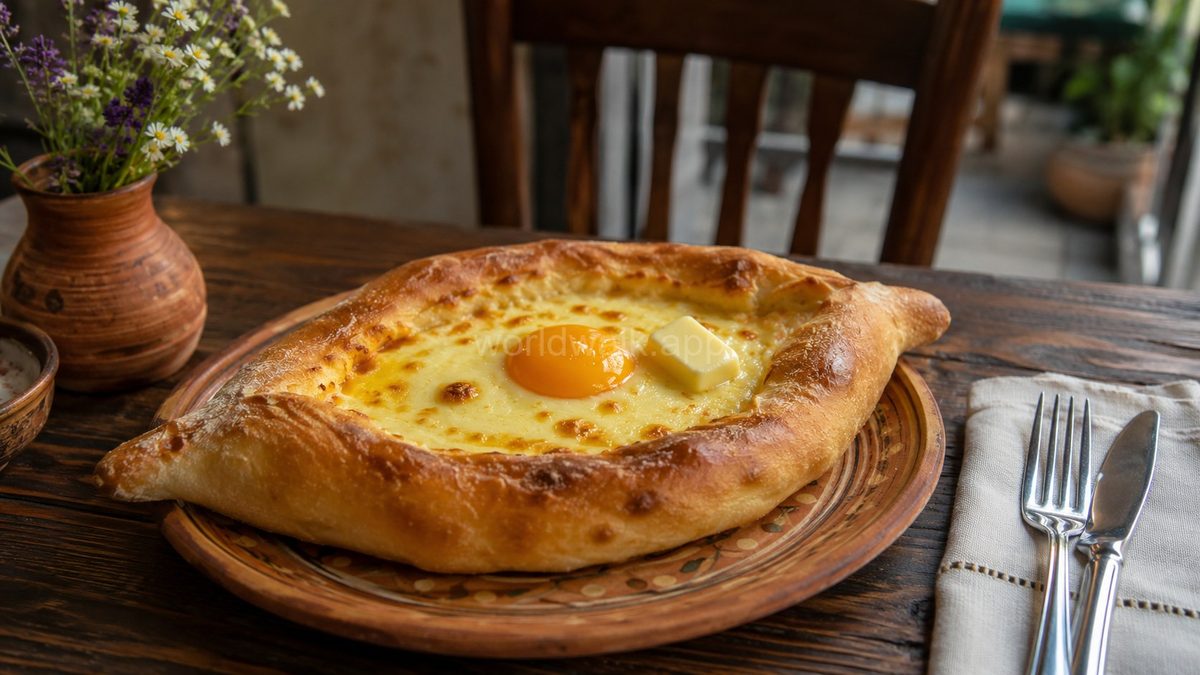
If there is one dish associated with Batumi, it is this one. Adjarian khachapuri is a boat-shaped bread filled with melted cheese, finished with a pat of butter and a raw egg yolk cracked into the centre just before serving. The boat shape is said to represent a ship on the Black Sea, with the egg yolk symbolising the sun. You stir the yolk and butter into the hot cheese at the table, then tear off pieces of the bread crust to scoop and dip. It is rich — one portion is generous enough to function as a meal on its own. It belongs on any Batumi bucket list.
Also from WorldWalk
The Port Where Empires Met and Mixed — a separate 46-stop Batumi walking tour, about 2.5 hours. Available on VoiceMap.
Explore the tour on VoiceMap → Start our tour in Telegram →2. Borano
Borano is a rich, very filling Adjarian dish. Its main ingredients include eggs, cheese and corn flour, though recipes vary and different households prepare it differently. Some versions are closer to a melted cheese preparation in butter; others include eggs and corn flour in varying proportions. Best shared rather than ordered as a solo portion. It is a dish that does not appear on every menu, so when you find it, it is worth ordering — especially if you want to move beyond khachapuri into specifically Adjarian cooking.
3. Sinori
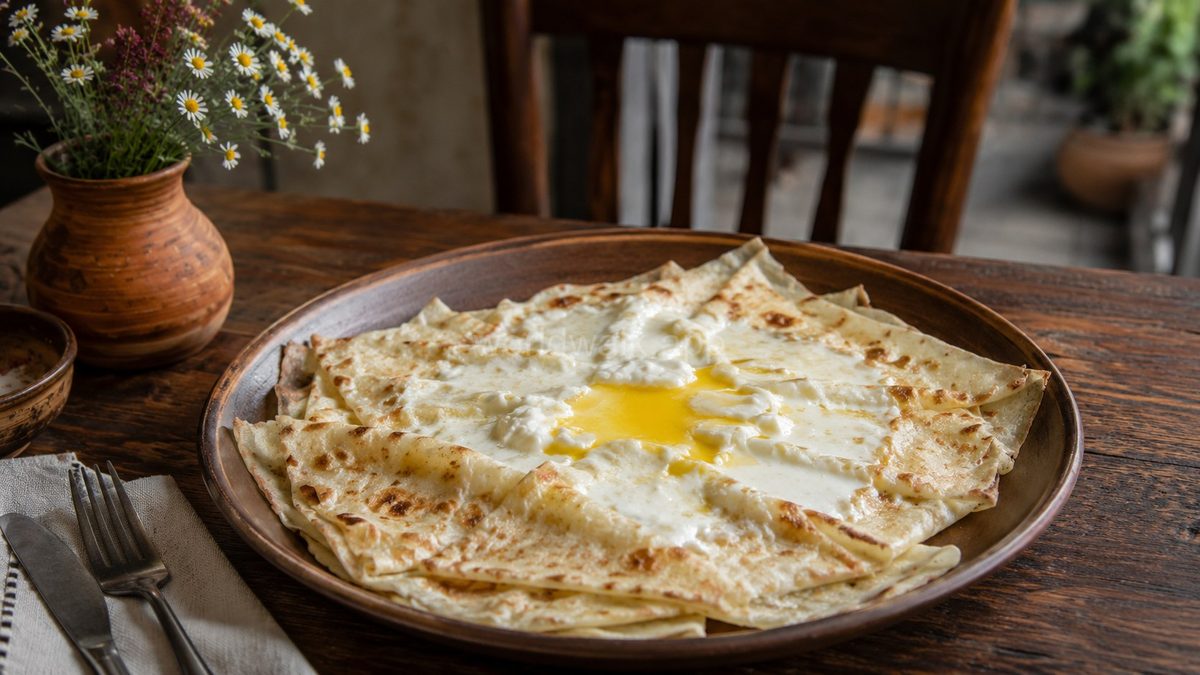
Sinori is a traditional Adjarian dish made from specially baked thin dough combined with Georgian cottage cheese and butter. It is softer and somewhat lighter than khachapuri, and often serves as part of a larger shared table. It is less well known outside Adjara, which makes it one of the more interesting things to seek out in Batumi.
4. Achma
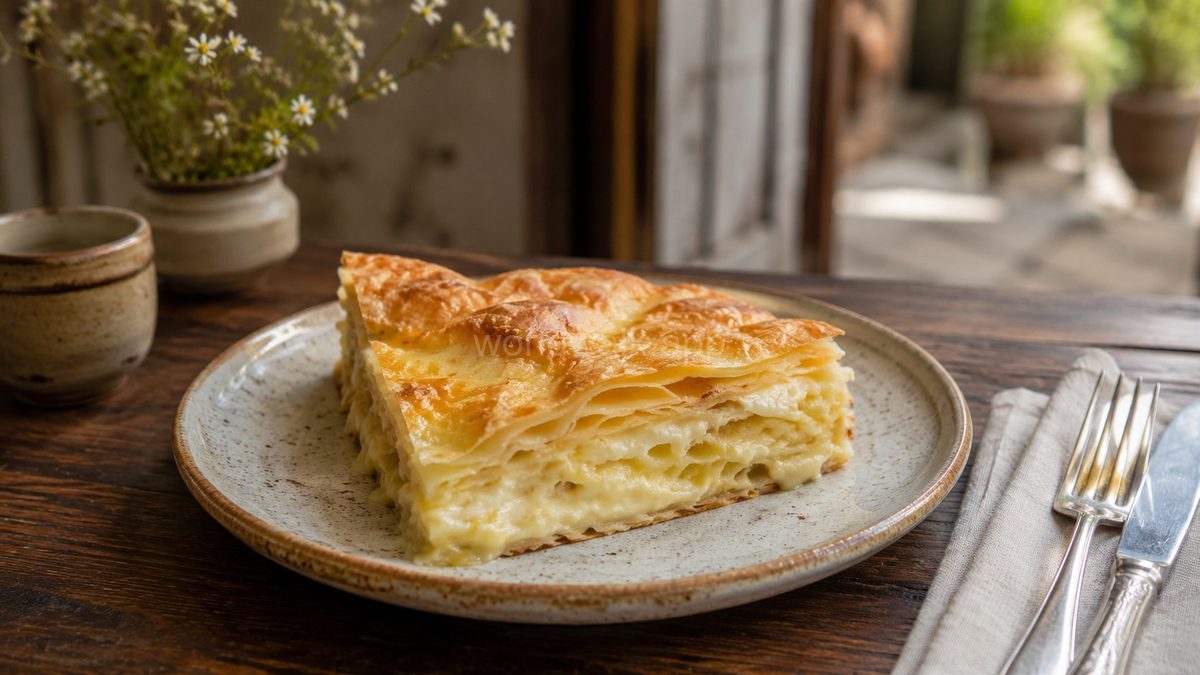
Achma is a layered pastry made with thin sheets of dough and cheese, baked until the layers meld together. It is one of the interpretations of the broader khachapuri family, though its method is distinct — the dough is boiled before baking, and the result is softer and more layered. Common as a breakfast option, it appears in bakeries early in the day. It is not as dramatic as khachapuri, but it is a good starting point for understanding Adjarian food beyond the obvious.
5. Khinkali
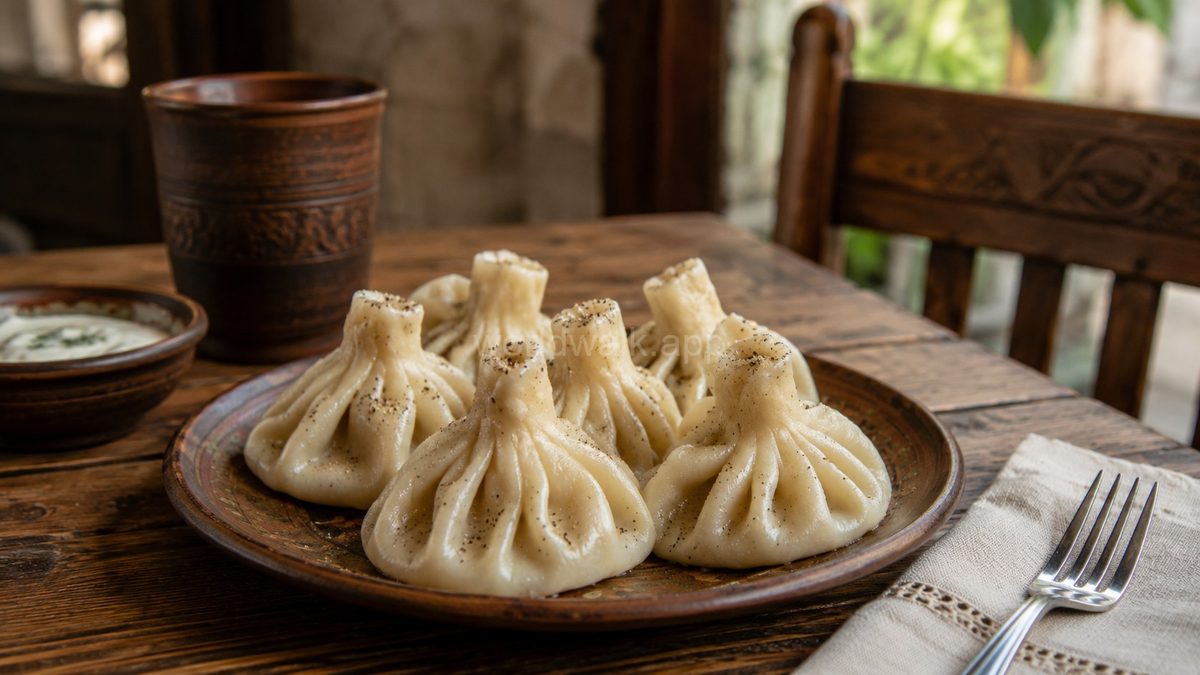
Khinkali are Georgian dumplings — thick-dough parcels filled with spiced meat and broth, or sometimes cheese, potatoes or mushrooms. Not specific to Adjara, but one of the dishes most visitors want to try. The standard method: hold by the thick twisted top, bite a small hole in the side, drink the broth before it escapes, then eat the rest. Many locals leave the dense dough knot uneaten. Order a few at a time — they are filling.
6. Kharcho
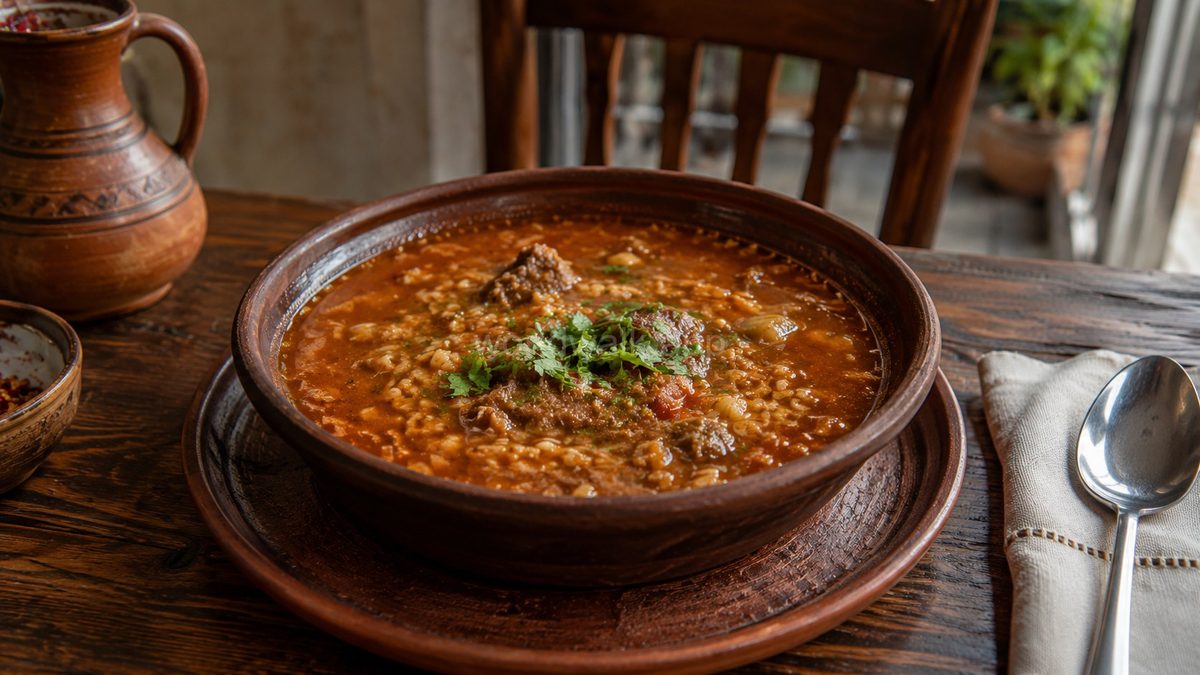
Kharcho is a Georgian soup or stew, typically made with beef, walnuts, tomatoes and a blend of spices. It is a warming, substantial dish — exactly the kind of thing that makes sense on a grey Batumi afternoon when the Black Sea weather turns overcast. If you are wondering what to do in Batumi when it rains, finding a local restaurant and ordering kharcho is not a bad answer.
7. Chvishtari and Mchadi
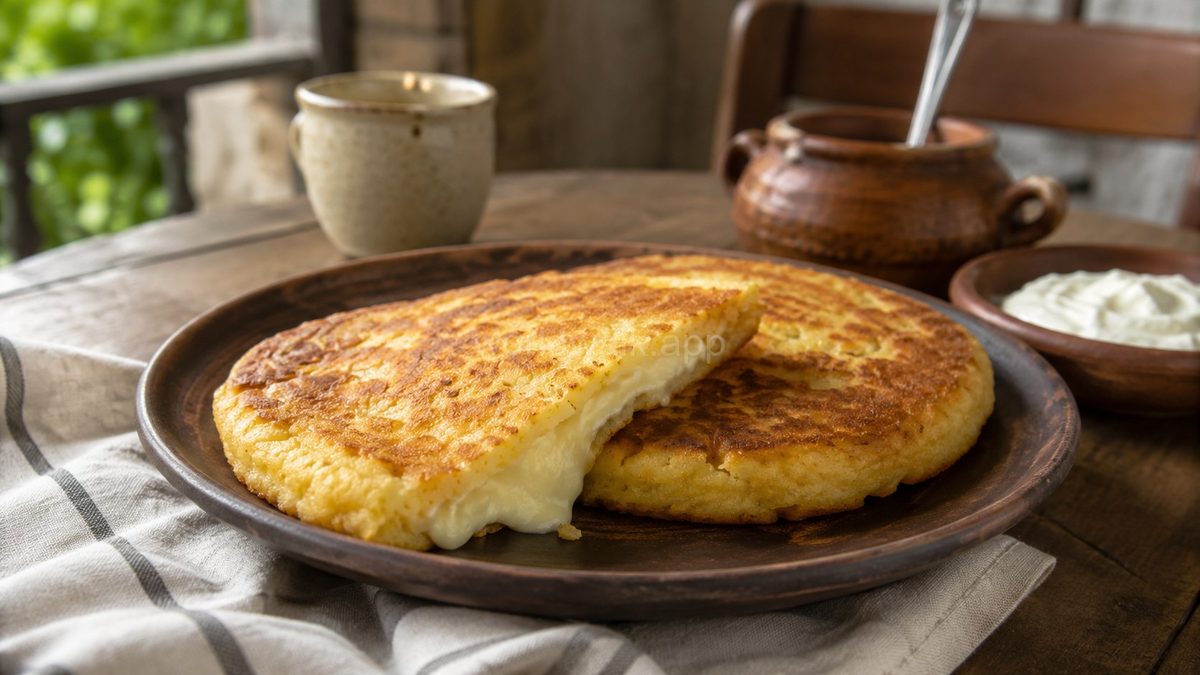
Western Georgia has a strong corn bread tradition. Mchadi is a plain, dense cornbread — often served alongside bean dishes, traditionally paired with kaimagi, a rich Adjarian dairy product. Chvishtari is a related form with cheese mixed into the dough, giving it a softer, richer centre. Both are associated with western Georgian cooking broadly — honest dishes that make a meal feel more grounded.
8. Lobio and Lobiani
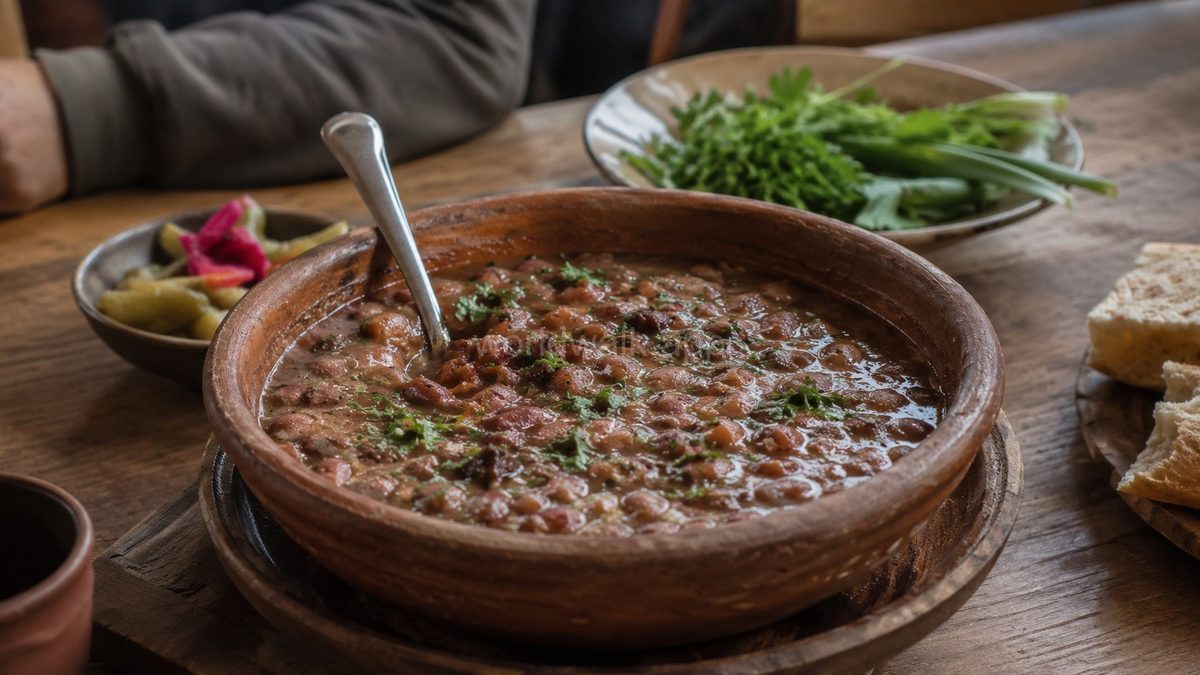
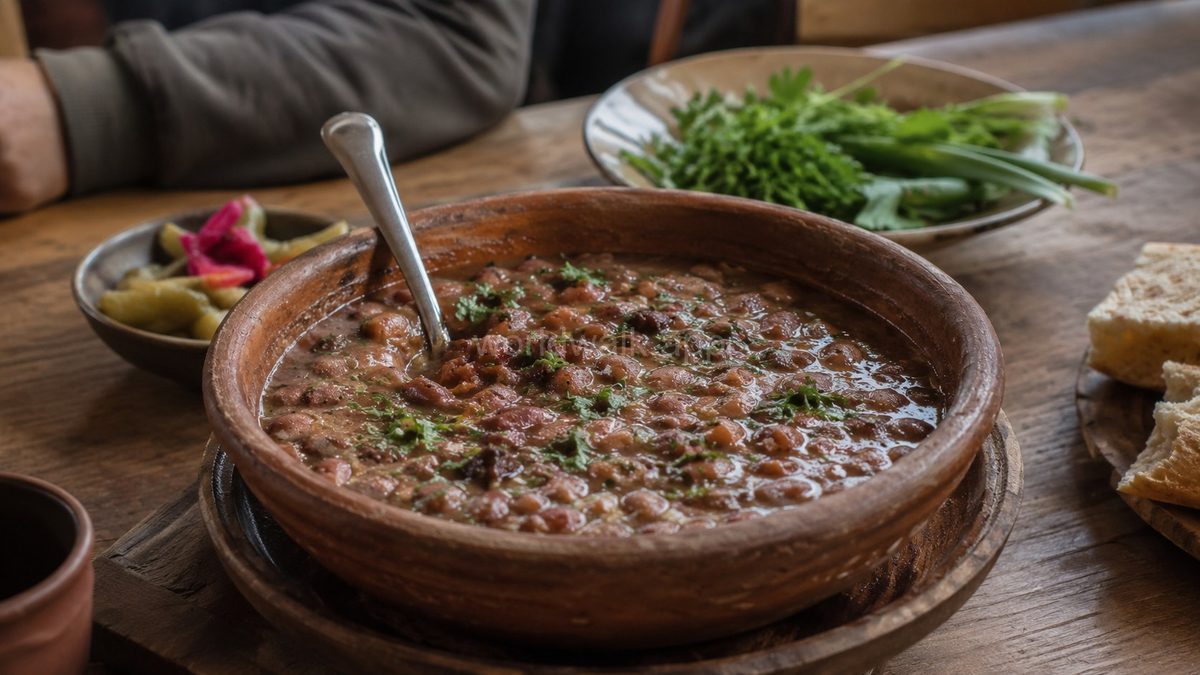
Lobio is a cooked kidney bean dish, often spiced with coriander, fenugreek, onion and garlic, sometimes enriched with walnuts — usually served in a clay pot. Lobiani is the bread form: a round filled flatbread with spiced beans in place of cheese. Both are satisfying, warming and relatively affordable. A note: some recipes use animal fat in preparation, so if you are vegetarian, it is worth asking.
9. Pkhali
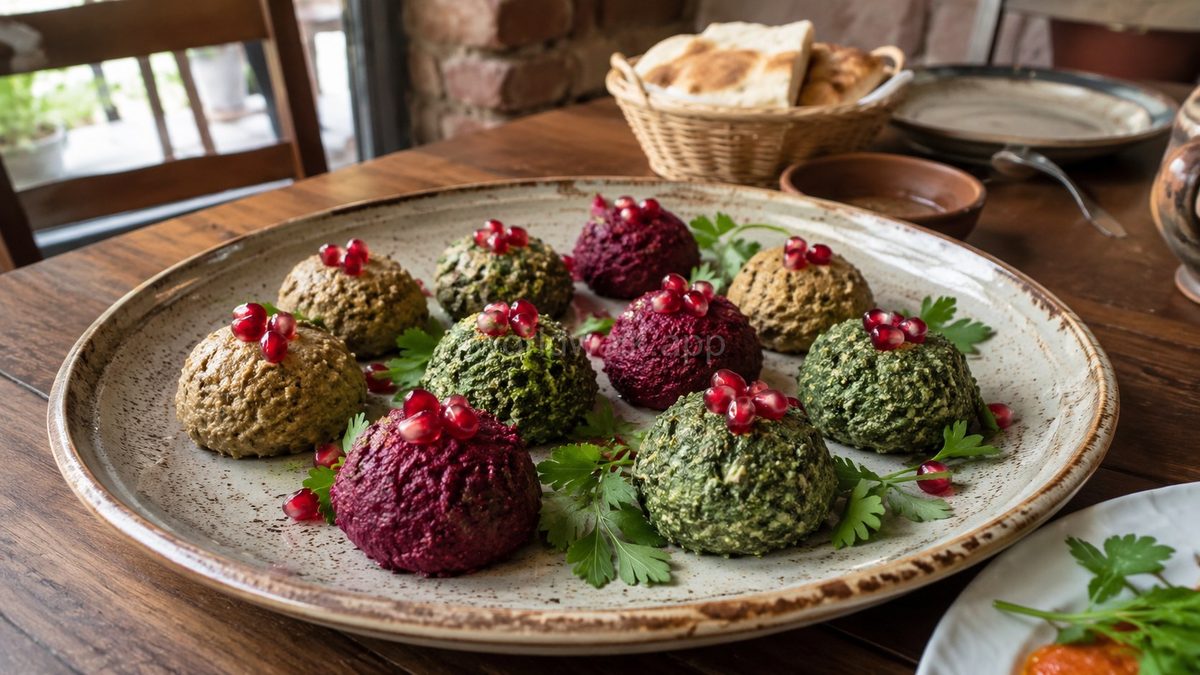
Pkhali are small vegetable preparations — finely chopped vegetables, commonly spinach, beetroot, eggplant or cabbage, mixed with walnuts, garlic and herbs, shaped into small rounds and garnished with a pomegranate seed. Served cold as a starter. The walnut and herb combination is distinctly Georgian; pkhali is one of the clearest ways to taste it without committing to a heavy main.
10. Georgian Salad with Walnuts
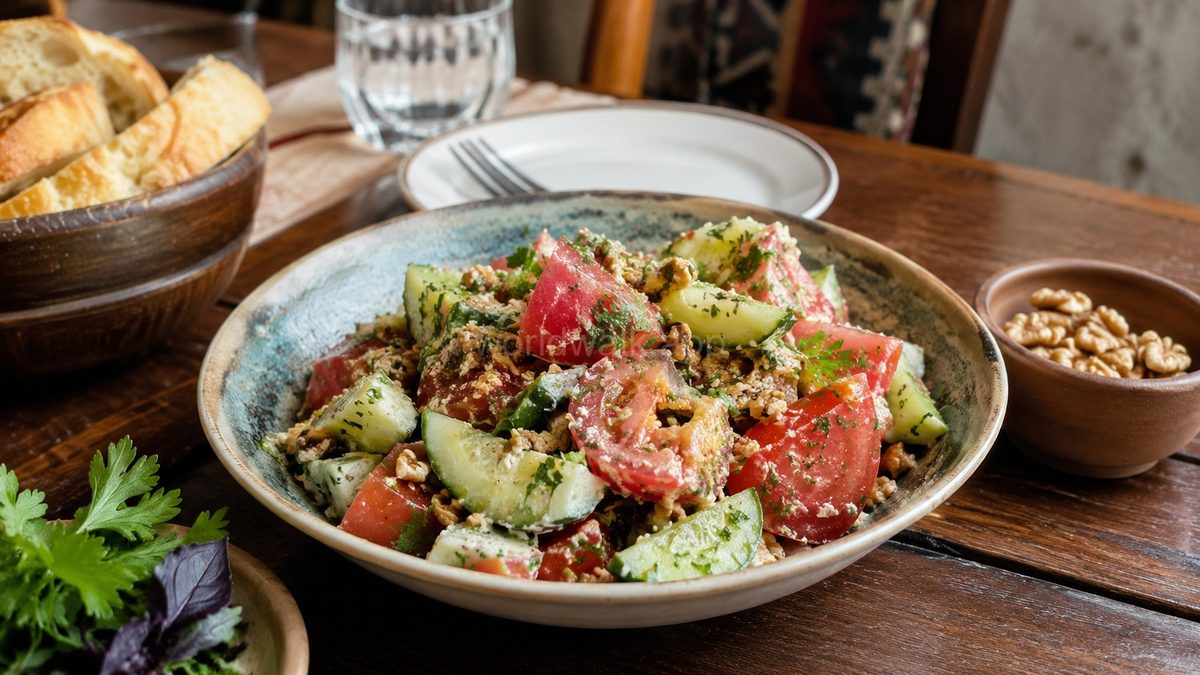
Sliced cucumber and tomato, walnut dressing, fresh coriander and sometimes parsley. It does not sound like much, but the walnut dressing and the quality of summer produce make it worth ordering deliberately rather than as an afterthought. In warmer months, when tomatoes are in season, it is especially good alongside something heavier.
11. Black Sea Fish
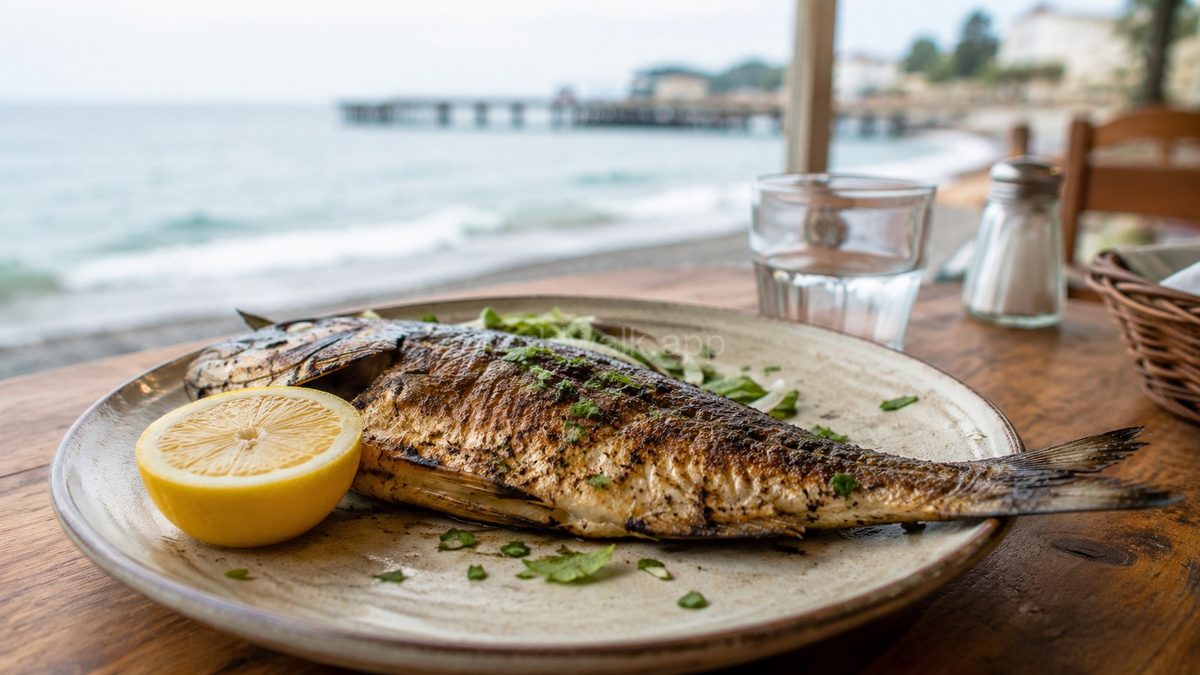
Batumi is a coastal city, and grilled or fried fish is a natural part of the local food landscape. Restaurants along the seafront and near the port area serve fish — often simply prepared, grilled whole or fried, lightly seasoned. The Black Sea has its own ecosystem and the available species differ from the Atlantic or Mediterranean. Ask what is available on a given day rather than expecting a fixed menu.
12. Sand Coffee, Adjarian Baklava and Churchkhela
Sand coffee — brewed in heated sand at a controlled temperature — is one of the more specific food experiences in Batumi. Adjarian baklava is the natural companion, reflecting Ottoman influence from across the border in Türkiye. The combination of sand coffee and baklava is how GoBatumi, the official regional tourism board, describes one of the city's defining food experiences.
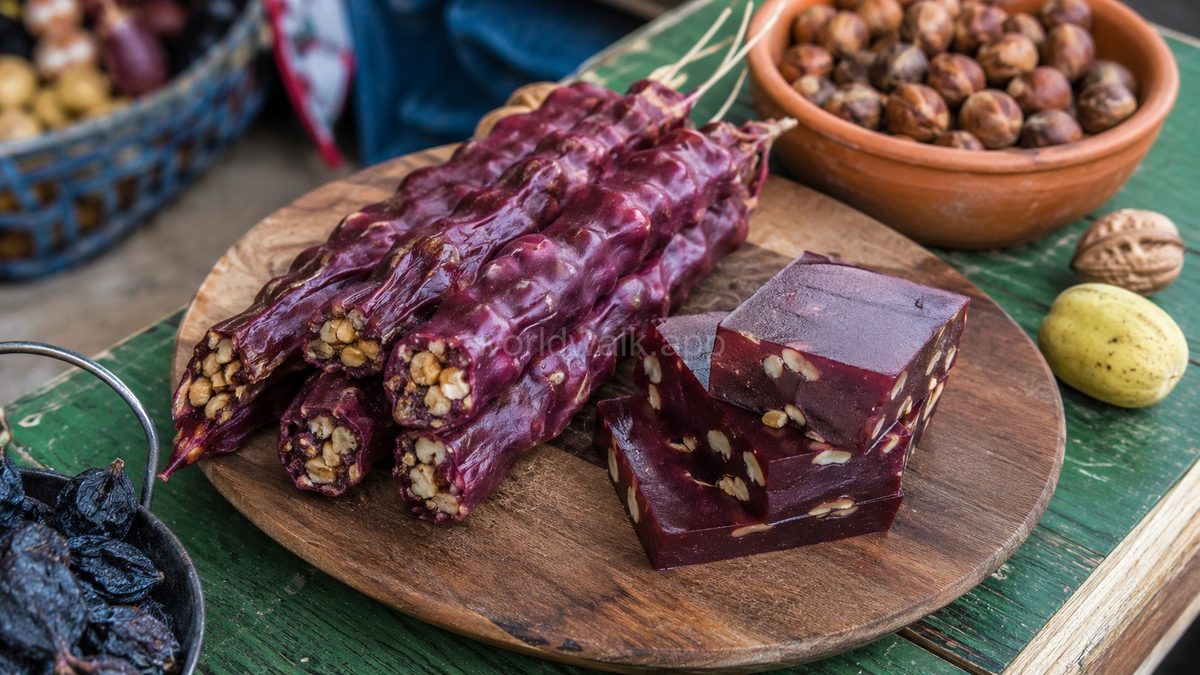
For market sweets: churchkhela — strings of walnuts or hazelnuts dipped in thickened grape juice and dried into a dense, chewy cylinder — is sold at Batumi's covered market. Quality varies; fresher versions from markets with higher turnover tend to be better. Pelamushi, a thick grape juice dessert, is a quieter option worth trying after a meal.
Vegetarian Food in Batumi
Batumi has plenty of options for travellers who do not eat meat, though not everything labelled vegetarian is guaranteed to be cooked without animal fat. Dishes that are typically vegetarian: pkhali, Georgian salad, achma, mchadi, chvishtari, lobio and lobiani. Adjarian khachapuri is vegetarian but very dairy-rich. Sinori and borano are also dairy-based. The most useful approach: tell the restaurant your requirements at the start and ask specifically.
Read also: Batumi Bucket List
What to Eat in Batumi for Breakfast
Bakeries are the most practical option early in the day. Achma, fresh bread and pastries are usually ready from the morning at a lower price than a sit-down restaurant. Guesthouse breakfast typically includes bread, local cheese, eggs, butter and preserves. Adjarian khachapuri for breakfast is possible and common, though it is heavy — better saved for lunch or dinner.
How to Order Without Overdoing It
Georgian portions are generous. Cheese and butter dishes are better shared — one khachapuri between two alongside a salad is usually enough. Combine something heavy with something light. Do not order multiple bread dishes at once: khachapuri, lobiani and mchadi are all bread-based and ordering more than one at a table of two rarely ends sensibly.
Where to Try Local Food in Batumi
Local bakeries are among the most consistent options — open early, with achma and bread ready, not designed for tourists. Simple Georgian restaurants in residential streets away from the seafront are where Adjarian dishes appear most naturally.
The covered market area is the right place for churchkhela, seasonal produce, local cheese and the kind of food that gives you a better sense of what people actually eat day to day. It is also a good stop to combine with a walk — the guide to how to get around Batumi covers transport options if you need to reach it.
Seafront and port-area restaurants are the natural setting for fish. Old Town has a concentration of cafés and restaurants, some genuinely local. Walking through it on the WorldWalk Batumi audio walking tour gives you a better sense of which places belong to the city.
Food is one of the easier ways to understand Batumi. You do not need a long list of restaurants — just the knowledge of what to order and the willingness to sit down somewhere that looks right. If you want to move between meals with some context about the city itself, the WorldWalk Batumi audio tour is designed for exactly that kind of pace. A one day in Batumi itinerary, a working knowledge of the food, and no particular rush is a reasonable way to approach the city.
FAQ
What food is Batumi famous for?
Batumi is most famous for Adjarian khachapuri, the boat-shaped cheese bread from the Adjara region. Beyond that, the city is known for sand coffee with Adjarian baklava, dairy dishes such as borano and sinori, and Black Sea fish.
What is the most famous local dish in Batumi?
Adjarian khachapuri — a boat-shaped bread filled with cheese, butter and egg yolk — is the dish most closely associated with Batumi and the Adjara region. It is available in most Georgian restaurants in the city.
Is Georgian food in Batumi spicy?
Georgian food uses a range of spices and aromatic herbs, but dishes are not typically hot in the chilli-pepper sense. Kharcho and some meat dishes can be heavily spiced but are not usually painfully hot for most people.
Is there vegetarian food in Batumi?
Yes. Pkhali, lobio, Georgian salad, achma, mchadi and chvishtari are typically vegetarian-friendly, though some preparations may include animal fat. It is worth asking if this matters to you.
What should I order for breakfast in Batumi?
Local bakeries are a good option: achma, fresh bread and pastries are typically available early in the morning. Some guesthouses serve a Georgian breakfast with bread, local cheese, eggs and preserves.