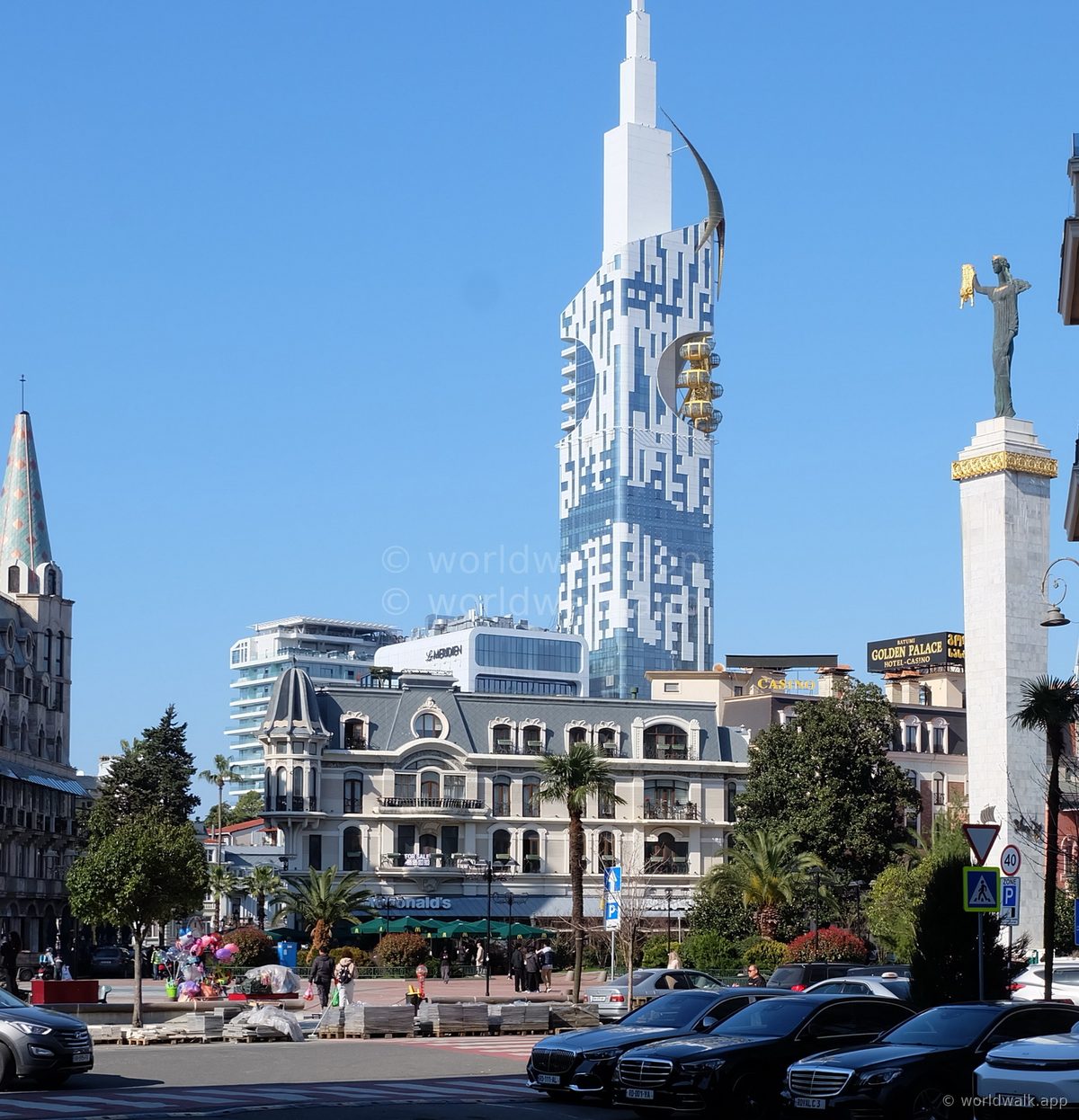
Quick answer: Start in the Old Town while it's still quiet, work your way through Europe Square and Piazza, pass through the Orta Jame area, then move toward the port in the afternoon. Walk the Boulevard in the early evening when the light is low. Eat well at lunch — and end with dinner somewhere near the Old Town.
Is One Day Enough for Batumi, Georgia?
For the city centre: yes, honestly. Batumi's walkable core is small. You can see the Old Town, the main squares, the port area and the Boulevard without rushing, and still have time to sit in a café and do nothing in particular.
What one day is not enough for: the Botanical Garden (worth a dedicated half-day), the coastal village of Sarpi, the Gonio fortress, or any real time on the beach if you want to swim and dry off. Be honest with your day and it will reward you.
Also from WorldWalk
The Port Where Empires Met and Mixed — a separate 46-stop Batumi walking tour, about 2.5 hours. Available on VoiceMap.
Explore the tour on VoiceMap → Start our tour in Telegram →Morning: Start in Batumi Old Town
The WorldWalk Batumi audio tour covers 29 stops through the Old Town, port, Turkish Quarter and surrounding streets — audio stories, photos and Google Maps links at every stop. Self-guided, at your own pace.
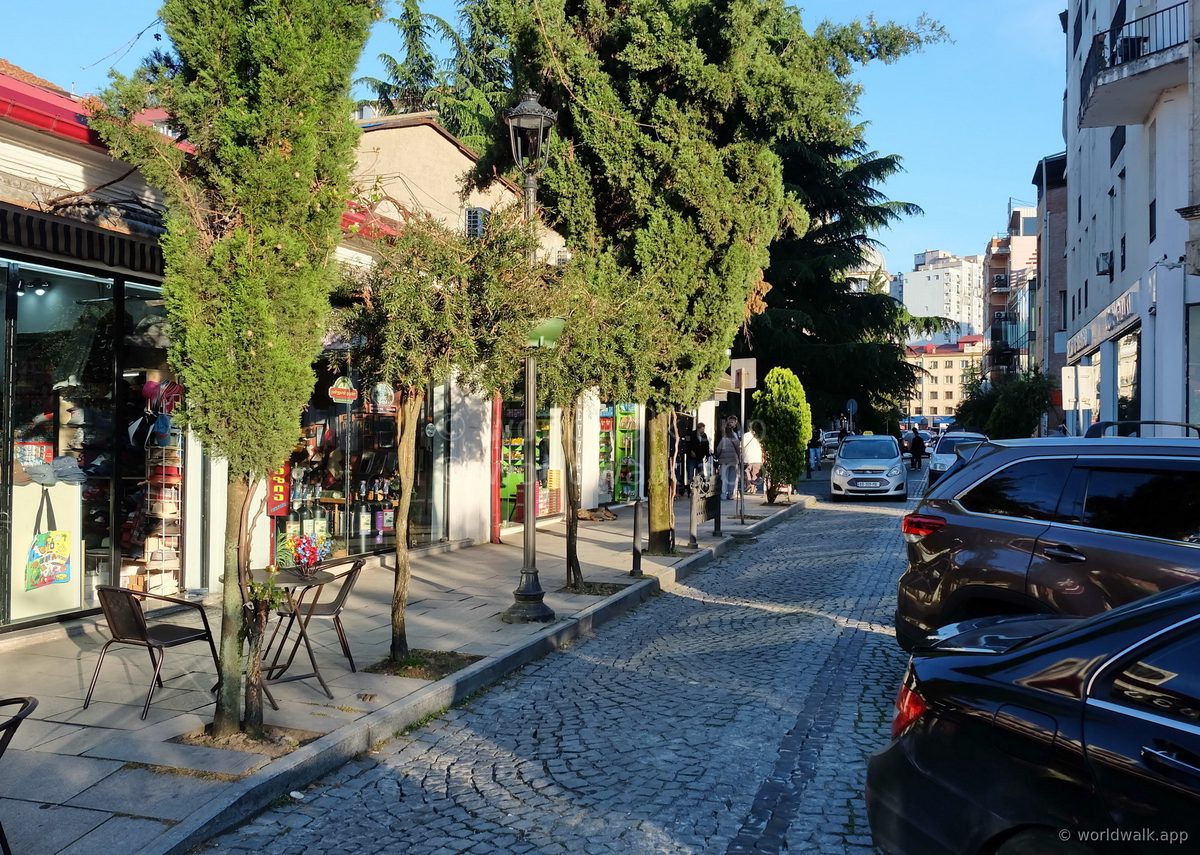
Start the audio tour →The Old Town is most itself in the morning. Deliveries settle, the courtyards are cool, and the carved wooden balconies that overhang the narrow streets catch light in a way they don't later in the day.
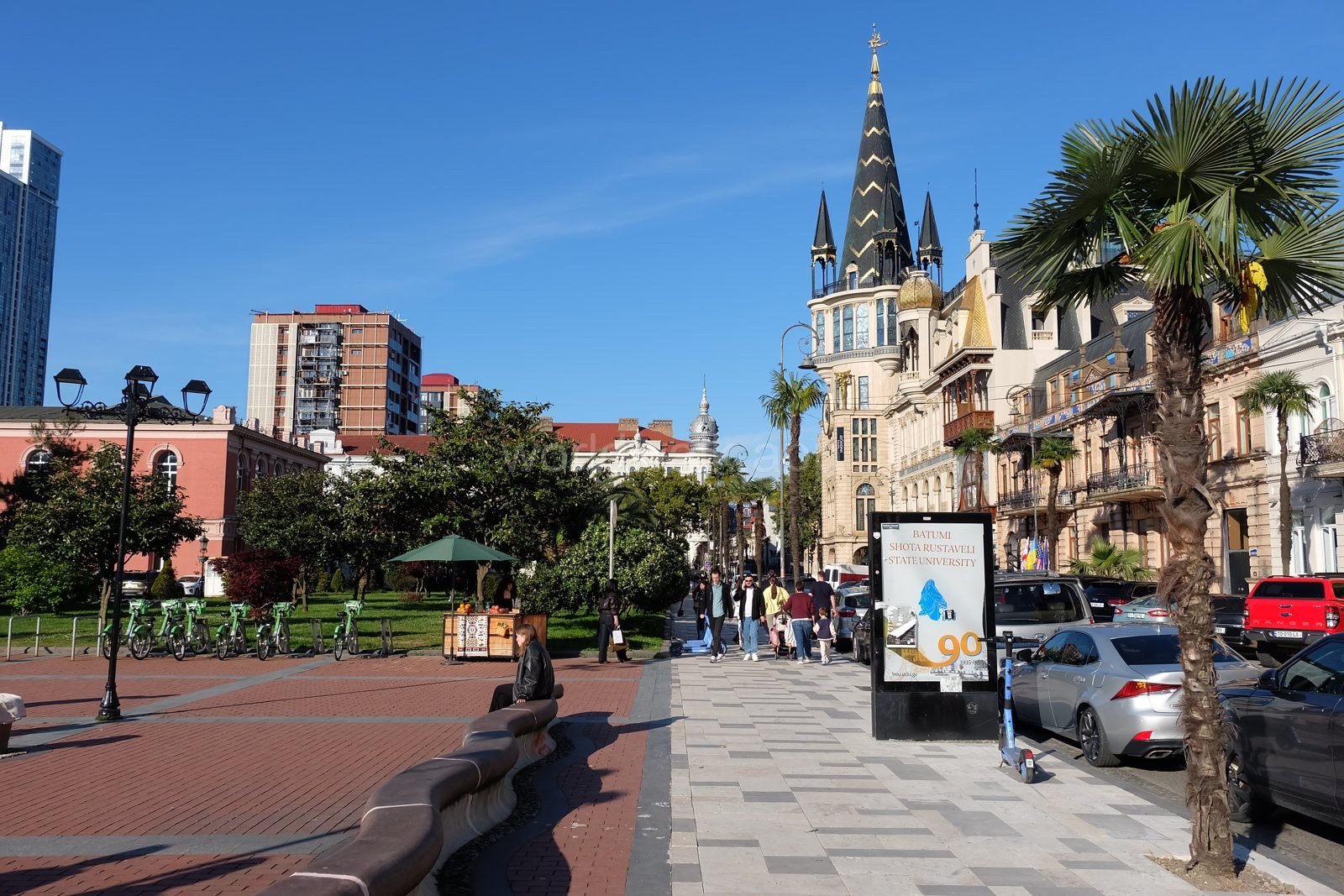
Batumi's Old Town is genuinely old in places and carefully restored or heavily rebuilt in others. Walk without expecting a perfectly preserved historic quarter. What you'll find instead is a layered, slightly contradictory neighbourhood: Ottoman-era buildings next to Soviet-era infills, Orthodox churches around the corner from a mosque, faded blue shutters on a building that might be a guest house or might be entirely residential. This ambiguity is part of its character.
Europe Square
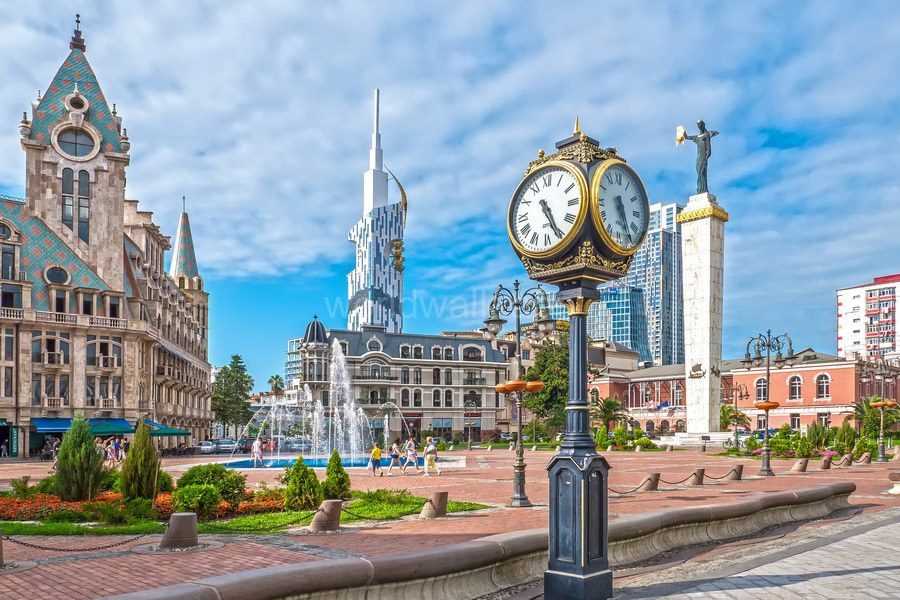
Europe Square is a logical first landmark and a useful place to orient yourself. It's central, recognisable, and a short walk from most of the Old Town's streets. The square is formal in a slightly theatrical way — the fountain, the statues of the twelve months, the renovated facades around the perimeter — but it works well as an opening scene. Start here, get your bearings, then head into the smaller streets.
Piazza Square
A short walk from Europe Square, Piazza has the feeling of a stage set — designed for aesthetics rather than everyday life, but not unpleasant for it. It's a good place for a coffee and a slow ten minutes before the main walking begins. The architecture is deliberately theatrical: Italian-inspired towers and colonnades in a city that also has mosques and Soviet apartment blocks a few streets away.
Orta Jame Mosque and the Turkish Quarter
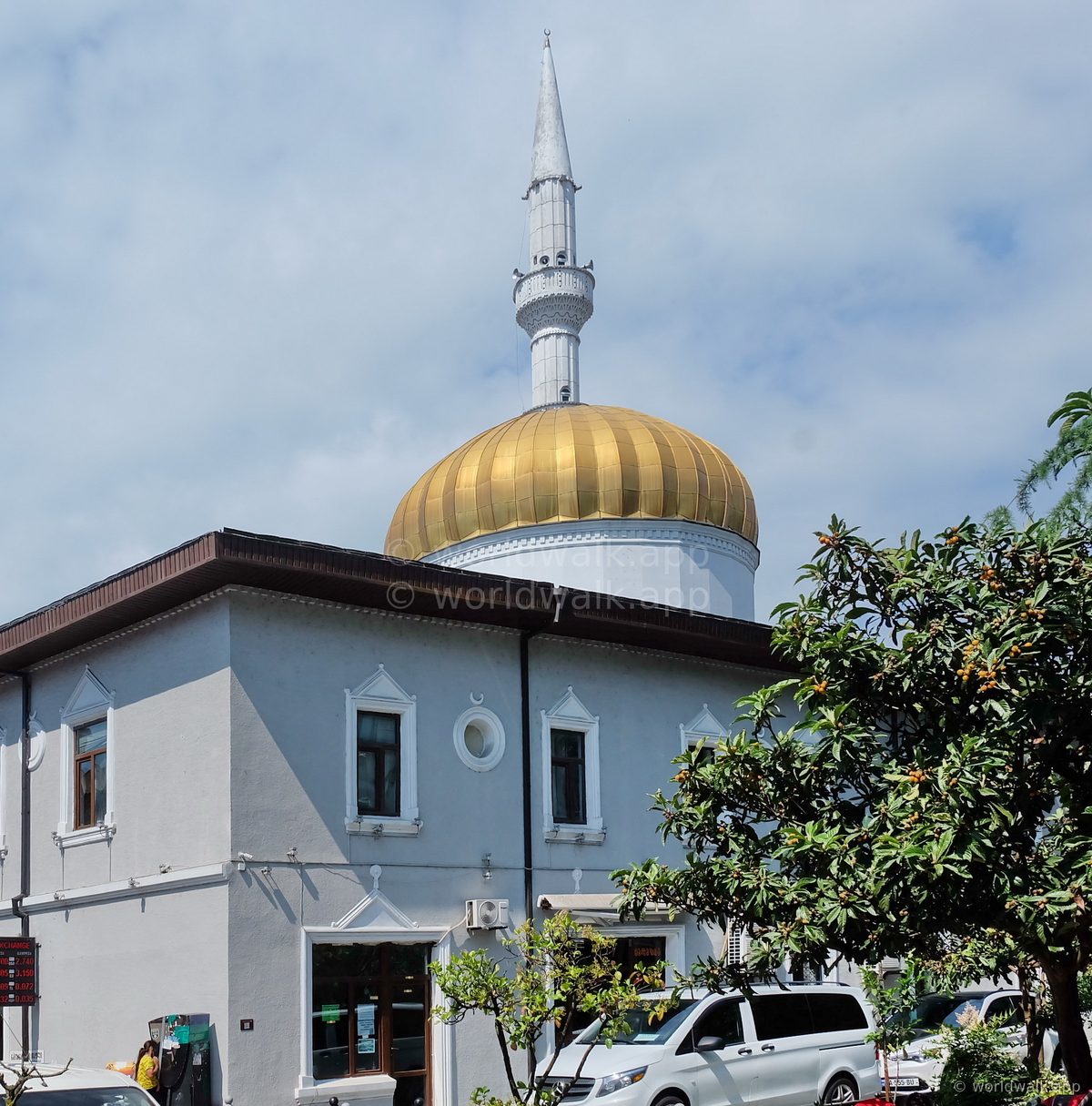
The area around the Orta Jame mosque carries traces of the city's time under Ottoman rule and its long history as a point of transit between cultures. The mosque itself is functioning and worth walking past — and, if open to visitors at the time of your visit, entering respectfully. The surrounding streets have a different texture from the rest of the Old Town — slightly quieter, with a residential feel that hasn't been fully absorbed by tourism.
Armenian Church Area and Old Streets
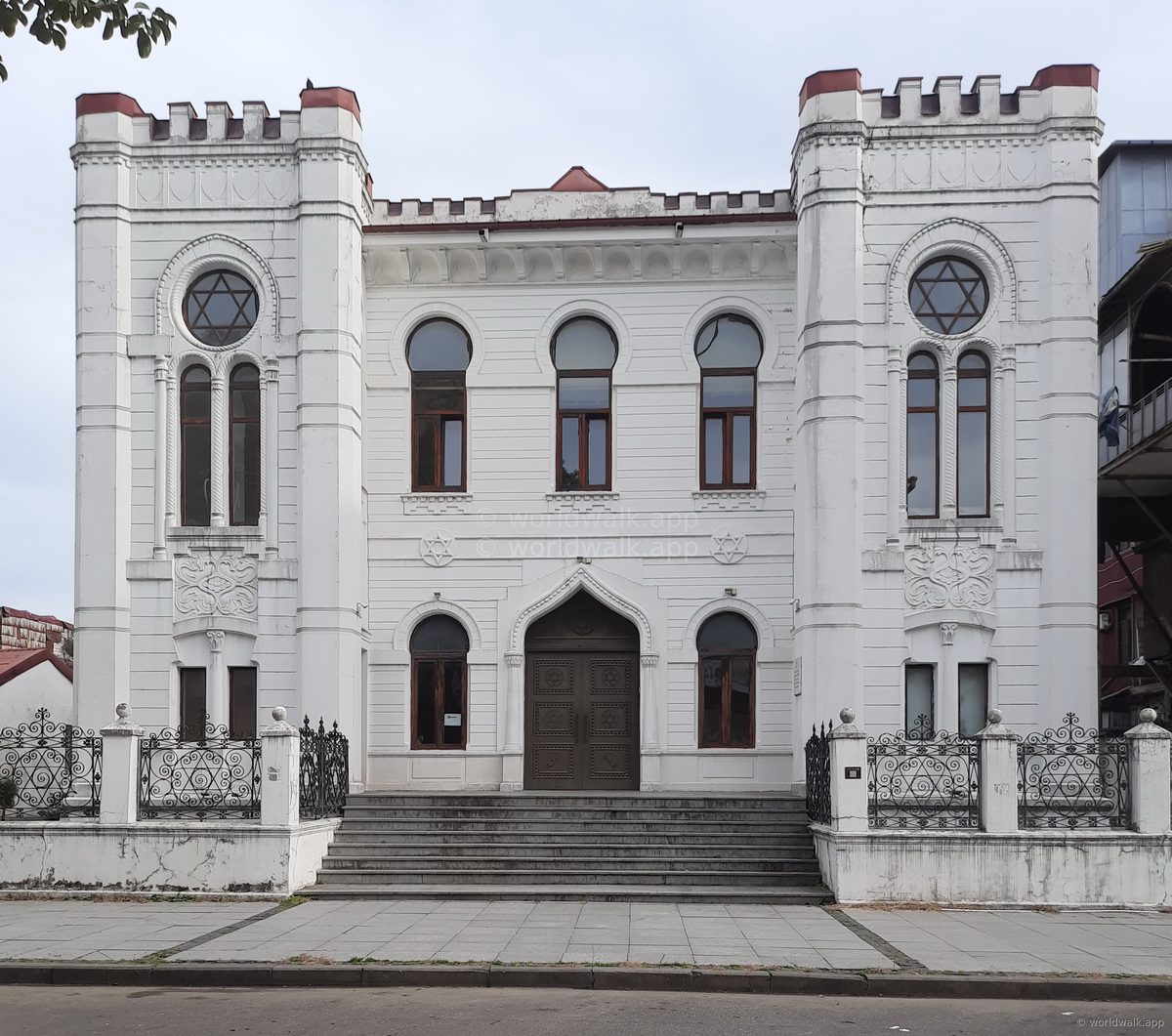
A few streets further and you'll pass the area around Batumi's Armenian Church and the Synagogue. This is part of what makes the city's centre worth walking slowly: it is genuinely multicultural, built up by Georgian, Ottoman, Russian, Armenian, Greek and other communities across different centuries. The density of religious buildings in a compact space tells the story clearly enough.
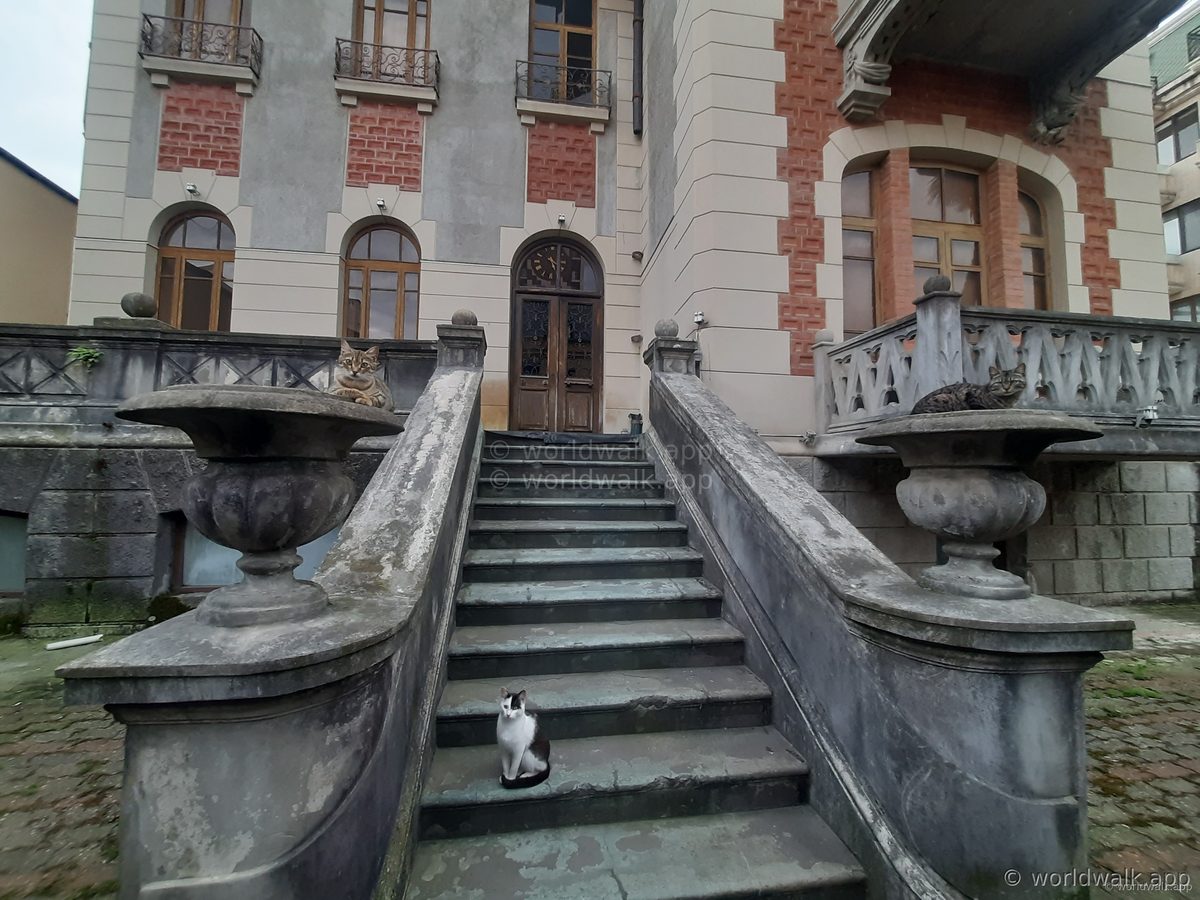
Want stories behind what you're seeing — why that building looks Ottoman, whose family lived in that courtyard? The WorldWalk audio guide covers 29 stops through the Old Town. Start and pause whenever you like.
Read also: Georgian Wine Explained: Qvevri, Amber Wine and 8,000 Years of Winemaking
Midday: Eat Properly

Adjarian khachapuri — the boat-shaped bread filled with melted cheese, a raw egg and butter — is the obvious Batumi meal and for good reason. It is filling in a way that will restructure your afternoon. Order it at a sit-down place rather than a fast counter, eat slowly, and plan a gentle post-lunch walk rather than an ambitious one.
If you'd prefer something lighter, Adjarian cuisine also includes walnut-heavy salads, pkhali and grilled fish from the Black Sea. Ask what is local that day rather than ordering from habit.
We don't name specific restaurants here because menus and management change. A busy local place with handwritten specials and a reasonable queue usually tells you more than a review from two years ago.
Afternoon: Walk Toward the Port
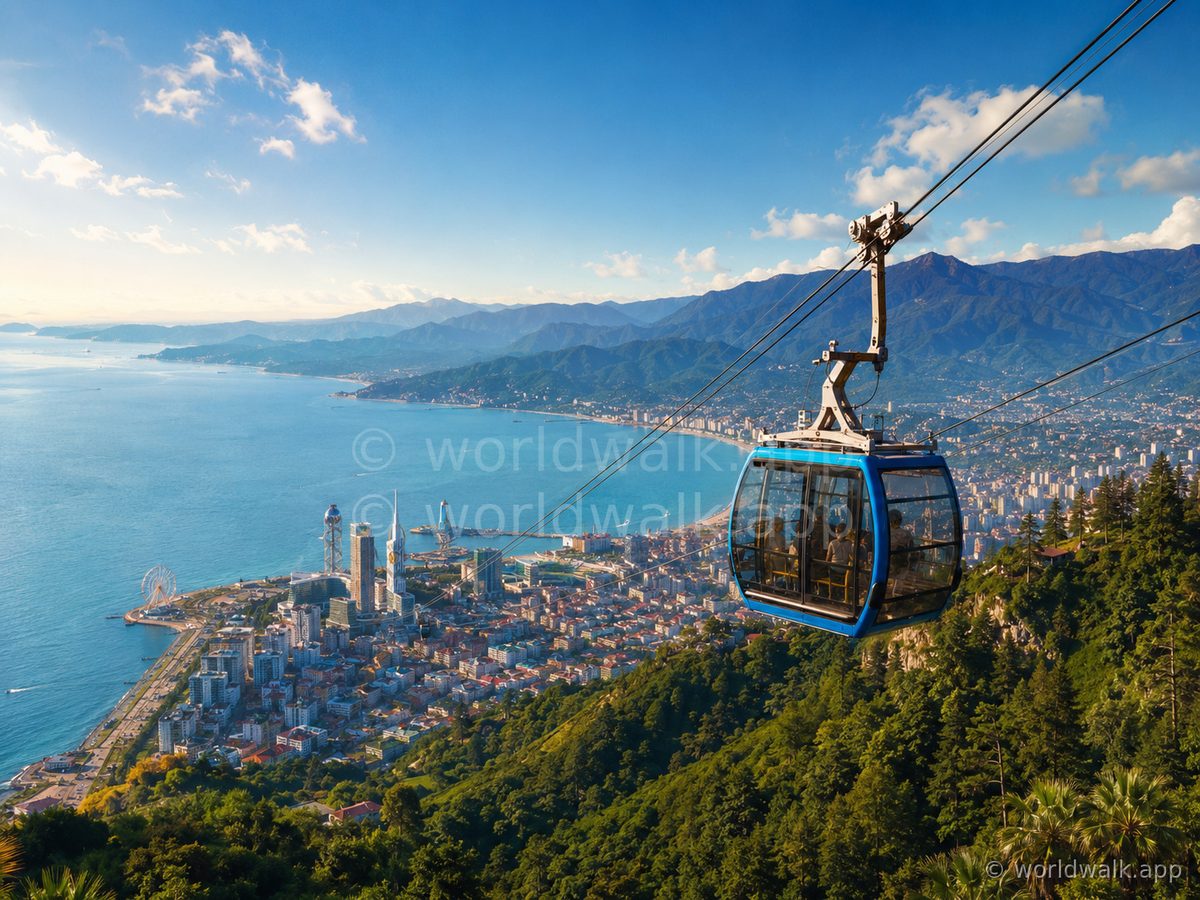
After lunch, the route moves toward the water. The streets between the Old Town and Batumi Port have a looser, more industrial quality — cranes, ferry terminals, the smell of diesel and salt. This is where Batumi stops feeling like a resort and starts feeling like a working Black Sea city.
Near the seafront, close to Miracle Park, you will find the Ali & Nino moving sculpture and the Alphabet Tower. The Ali and Nino kinetic sculpture — two figures that slowly merge and separate once it gets dark — is sentimental, widely photographed, and still worth seeing in person; the mechanics of it are more affecting than photographs suggest.
The Alphabet Tower is nearby: a distinctive spiral structure built to celebrate the Georgian script. It's most photogenic from a distance. Check before you go whether the observation platform is open to visitors.
Read also: Batumi Old Town: 5 Places You Shouldn't Miss
Batumi Boulevard: The Easy Scenic Walk
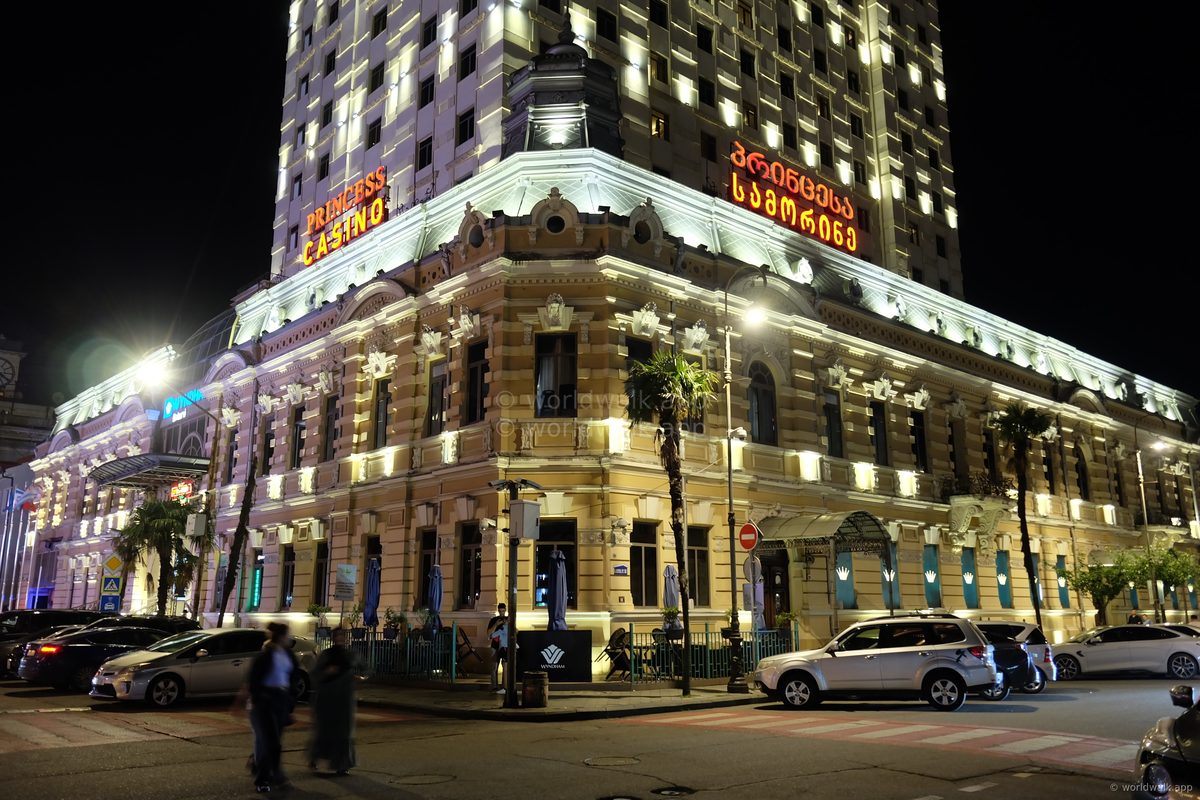
The Boulevard runs along the Black Sea coastline for several kilometres. It is flat, wide, tree-lined and almost entirely free of cars. In the late afternoon and early evening it fills with locals — families walking slowly, teenagers on electric bikes, older men on benches watching the sea.
For a first-time visitor with one day, walk a section of it rather than the full length. An hour at a comfortable pace covers a satisfying stretch without turning into a march. The evening light on the Black Sea is worth timing if you can.
Batumi's weather can change quickly. In heavy wind or driving rain, keep the Boulevard walk shorter or skip it for a covered café and return later. See our rainy day guide for wet-weather options.
Optional Detour: 6 May Park
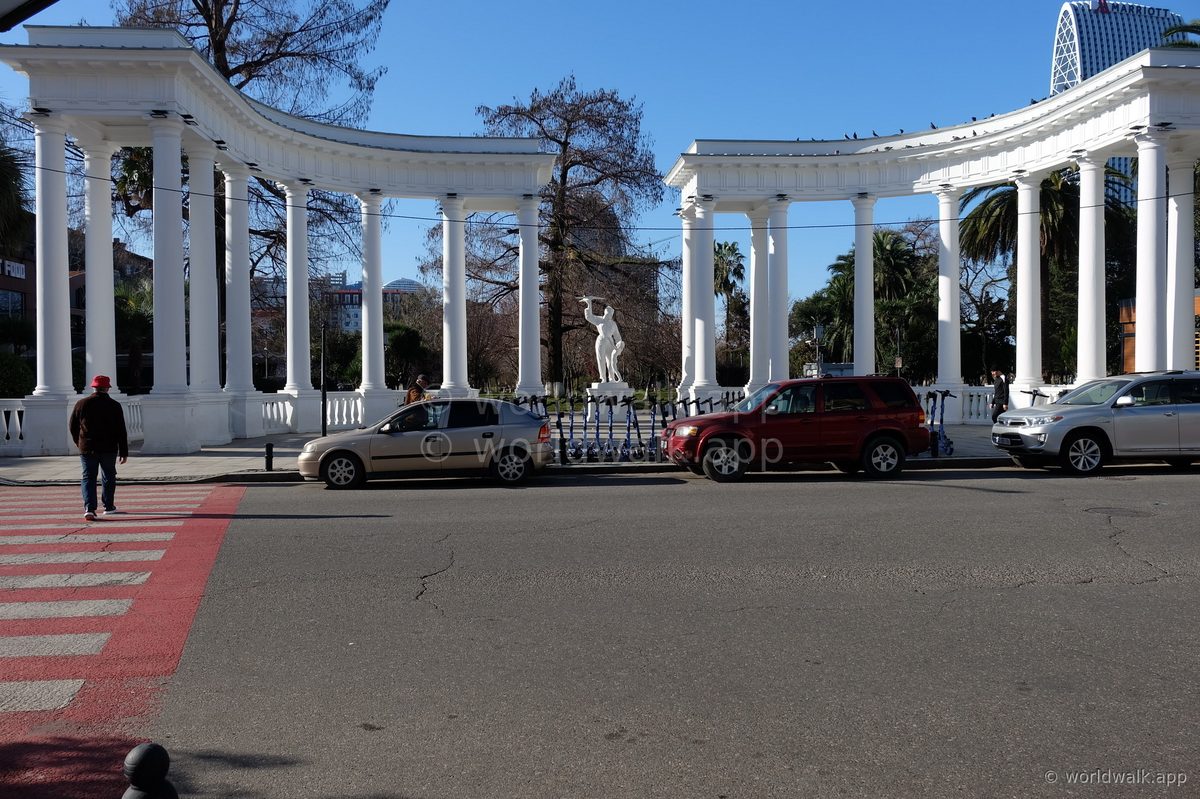
If you still have energy in the late afternoon, 6 May Park — with its lake, swans and considerably lower tourist density — is a quieter alternative to the Boulevard's main stretch. It has the feel of a local park rather than an attraction, which is its main appeal. A reasonable add-on if you want to sit somewhere green before dinner.
Evening: Slow Down Instead of Rushing
Use the evening for dinner, not more sightseeing. If you want a structured evening walk through Old Batumi, the night-walk guide covers the route from Europe Square to Ali and Nino with food and safety tips. A wine bar or a restaurant near the Old Town works well — Georgian wine deserves more than five minutes of attention.
A slow walk through the lit Old Town streets after dinner is its own reward; the balconies and archways look different at night. The streets around Europe Square and the port quarter are particularly good just after dark — wet stone reflects streetlights and the crowds thin out.
Where a Self-Guided Audio Tour Fits In
A one-day Batumi walking itinerary is easier when the route is already structured. The city is compact, but it is not always self-explanatory: a square, a balcony, a mosque, a port street or an old façade can mean very little if you do not know what you are looking at.
If you want the structure of a guided route without walking in a group, a self-guided audio tour is the middle ground. You keep your own pace, but still get the stories at each stop. You can pause for coffee, wait out rain, take photos, skip a section or continue later.
One-Day Batumi Itinerary by Time
| Time | Where & What |
|---|---|
| 9:00–10:30 | Old Town and Europe Square — early morning walk, less crowded, best light for photography |
| 10:30–11:30 | Piazza Square and nearby streets — coffee stop, take in the architecture |
| 11:30–12:30 | Orta Jame area and the Turkish Quarter — walk slowly, treat as a neighbourhood |
| 12:30–14:00 | Lunch — Adjarian khachapuri or a sit-down Georgian meal; allow time |
| 14:00–15:30 | Walk toward the port — Ali & Nino statue, Alphabet Tower area, port streets |
| 15:30–17:30 | Batumi Boulevard — late afternoon walk, watch the light change |
| 17:30–18:30 | 6 May Park optional detour, or a café break before dinner |
| Evening | Dinner in the Old Town area, short evening walk, Georgian wine |
What Not to Do With Only One Day
- Don't try to visit every beach. Swimming, drying off and getting back costs more time than a one-day itinerary can absorb.
- Don't spend half the day in taxis. The moment you start moving by car, you lose the city.
- Don't make the Botanical Garden the centre of your day unless nature is specifically your goal. It's outside the city centre, requires a taxi, and deserves a dedicated half-day.
- Don't rely entirely on random Google Maps pins. Many pins in Batumi lead to unremarkable spots or closed businesses.
- Don't plan a long exposed seaside walk in bad weather. Batumi's Black Sea coast is exposed. See our rainy day guide for alternatives.
If You Have More Than One Day
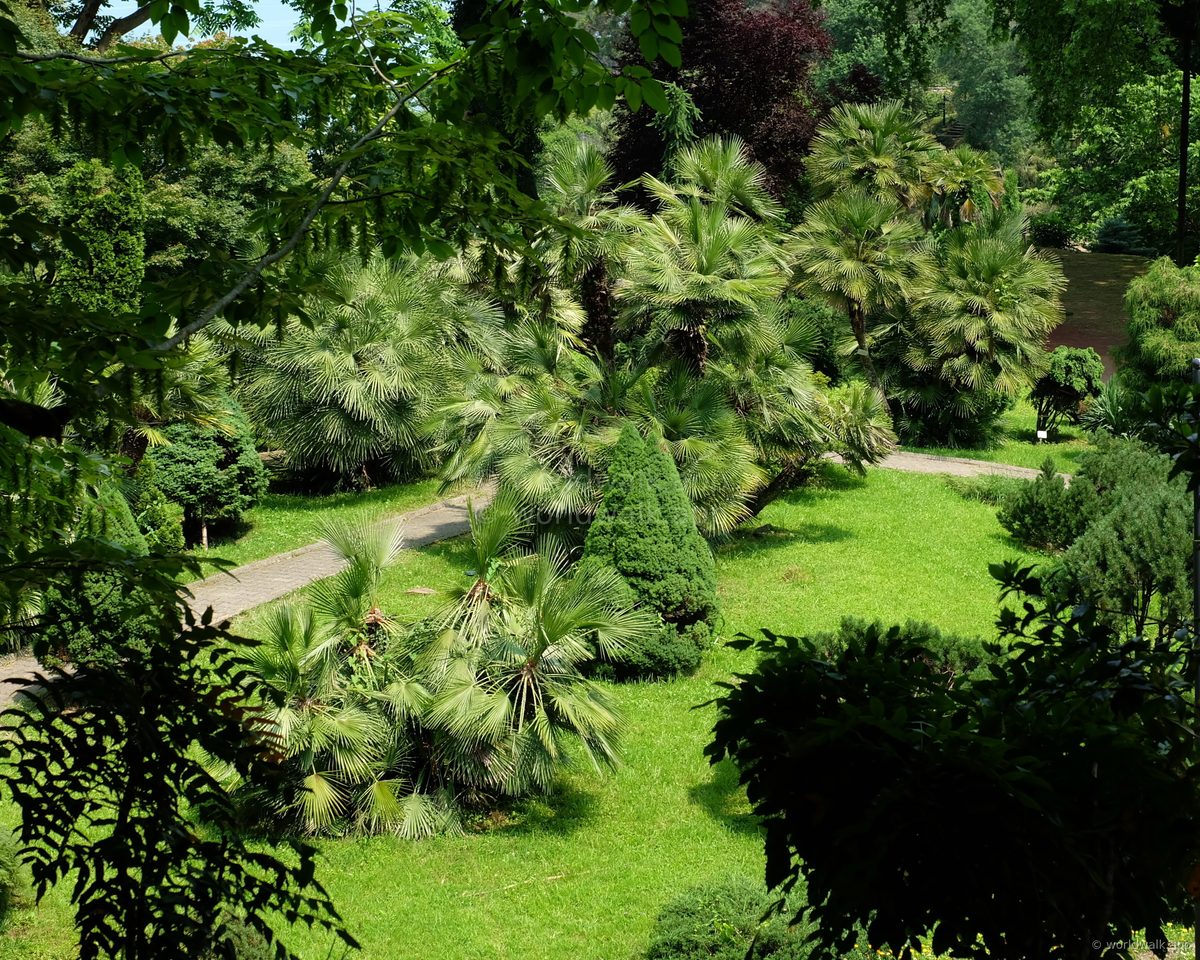
A second day opens up considerably. For a detailed multi-day plan, follow our three days in Batumi itinerary. The Botanical Garden is the obvious addition — allow at least three hours, ideally more. Gonio fortress south of the city and the village of Sarpi on the Türkiye border are worth a half-day each. A beach day works better on day two, when you already know where you are.
Rainy days are an opportunity for a slower Old Town walk, a longer lunch, and the city's smaller museums — check our rainy day guide for details.
Final Verdict
One day in Batumi works when you treat the city as something to read rather than to tick off. The best version of this itinerary includes a long lunch, a slow walk along the Boulevard in good light, and at least one street you weren't planning to turn down. The Old Town, the port, the squares, the sea — they connect naturally on foot. Don't rush it.
Frequently Asked Questions
Is one day enough for Batumi?
Yes, for the city centre. One day is enough to walk the Old Town, the main squares, the port area and the Boulevard, and eat well. It is not enough for the Botanical Garden, beach days, Gonio or Sarpi — those need more time.
What should I do in Batumi in one day?
Start in the Old Town in the morning, move through Europe Square, Piazza and the Orta Jame area before lunch, eat a proper Georgian meal, then walk toward the port in the afternoon. Finish with a late-afternoon Boulevard stroll and dinner in the Old Town.
Is Batumi walkable?
Very. The historic centre, the main squares, the port area and the Boulevard are all connected on foot. The Botanical Garden and outlying areas require a taxi, but the core one-day itinerary needs no car.
Can I see Batumi without a guide?
Yes. Batumi's centre is easy to navigate independently. That said, having some structure helps — whether from an article like this, a good map, or a self-guided audio tour that provides context at each stop.
Where should I start a Batumi walking itinerary?
Europe Square is the natural starting point. It's central, easy to reach from most accommodation in the Old Town area, and gives you clear orientation before heading into the smaller streets.
How long does it take to walk around Batumi Old Town?
The core Old Town takes around 90 minutes to two hours at a comfortable pace with occasional stops. If you want to explore every side street and sit in a café, allow a full morning.
What should I skip if I only have one day?
The Botanical Garden (needs its own half-day), extended beach time, and any plan that relies heavily on taxis. Keep the day on foot and in the centre.
Is Batumi Boulevard worth visiting?
Yes, particularly in the late afternoon or early evening when locals use it. Walk a section rather than attempting the full length — an hour is enough to get the feeling.
What should I do in Batumi if it rains?
The Old Town is navigable in light rain, especially near the covered sections around the squares. A slower lunch, a wine bar and a shorter Boulevard walk all work. See our full Batumi rainy day guide.