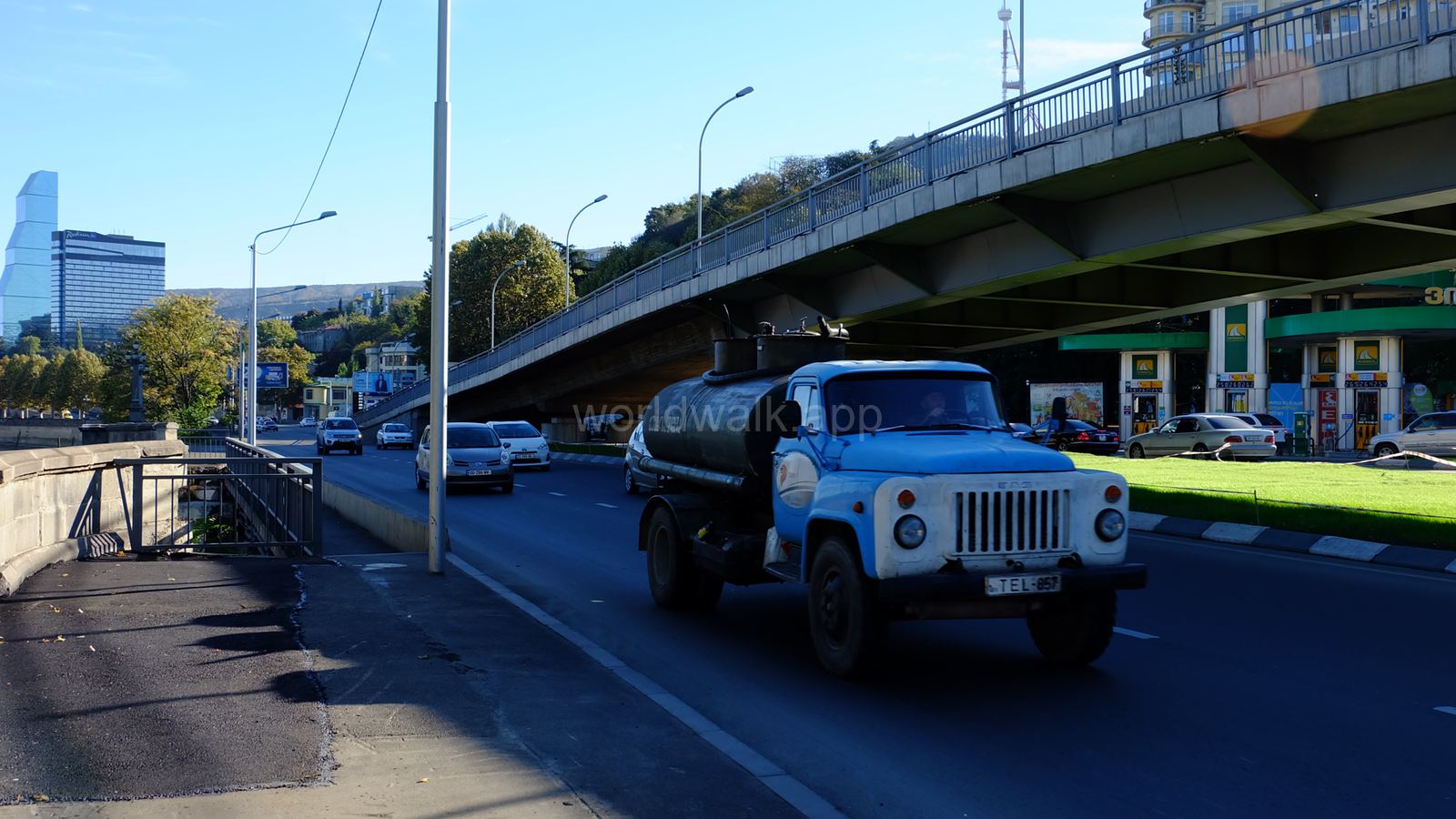
Everything you need to know fits into one rule: use an app. The difference between an app booking and a car hailed outside a tourist spot can be threefold.
Quick answer
Apps: Bolt, Yandex Go and Maxim. Bolt is the most widely used.
Price in the centre: a few lari per ride — cheaper than in most European cities.
What you need: mobile data. Without a SIM card or eSIM, the app is useless out on the street.
Where people overpay: the airport, the railway station, Freedom Square, Meidan and by the Rike cable car.
Payment: by card in the app or in cash to the driver, depending on your settings.
No child seats — that's the norm, not the exception.
Which apps work
Bolt is the main service in Georgia. It has the most cars, short pick-up times and transparent pricing. It also works in Batumi and other cities, so one app covers your whole trip.
Yandex Go operates in Tbilisi too; sometimes it's cheaper, sometimes pick-up takes longer. Useful as a second option for comparing prices.
Maxim is also available and usually cheaper, but the quality of cars and drivers is less predictable.
Practical tip: install two apps and compare prices before booking. The difference between them at the same moment can be noticeable, especially at rush hour when surge pricing kicks in.
How much it costs
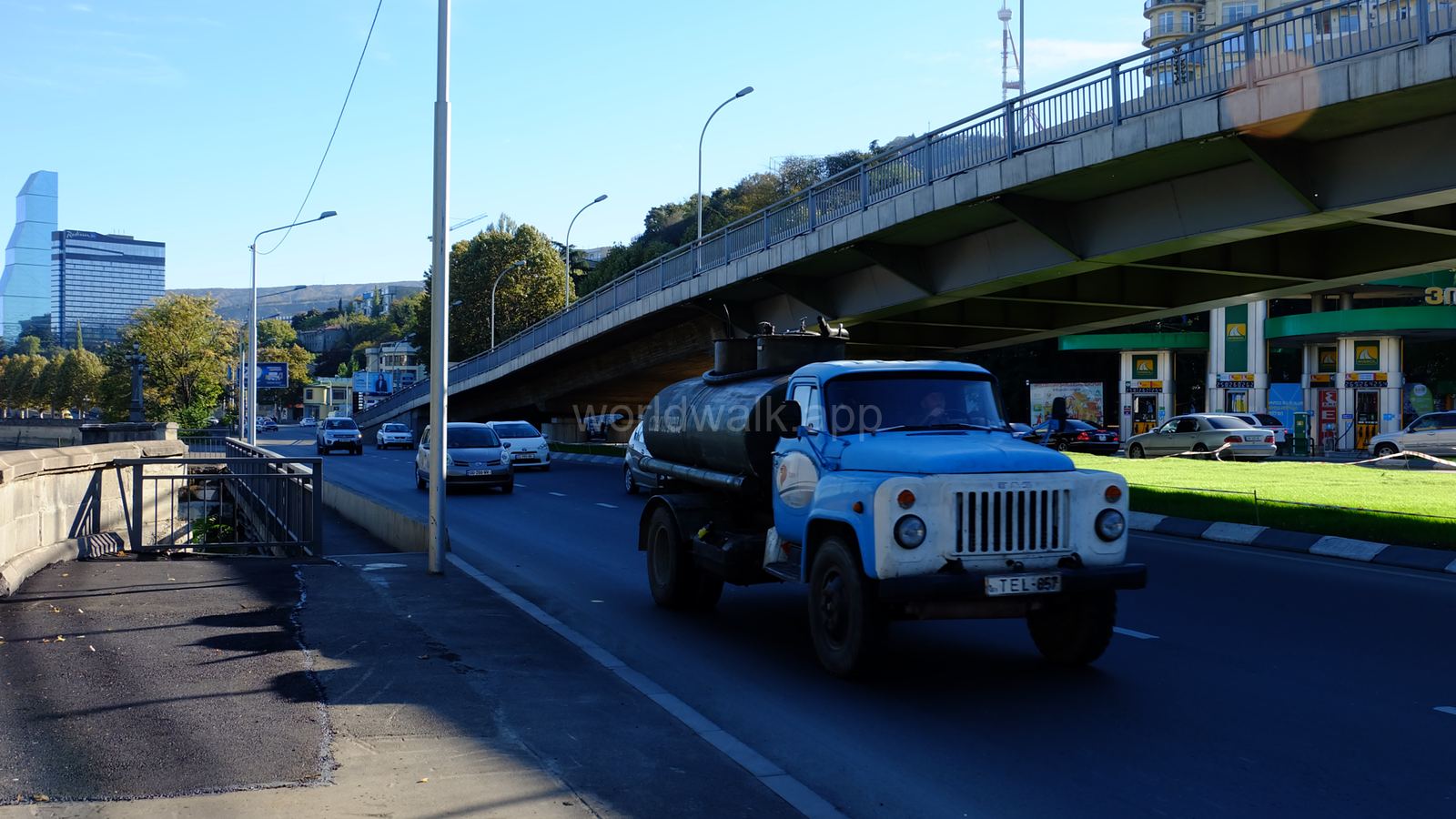
As a rough guide: a ride within the centre costs a few lari; a trip across the city is noticeably more, but still cheap by European standards. The ride to the airport is the most expensive trip within the city.
What affects the price:
- Rush hour — mornings and evenings, with surge pricing.
- Rain — prices rise immediately and there are fewer cars.
- Night — more expensive, especially after the metro closes.
- Traffic — Tbilisi sits in a narrow valley, and traffic is heavy.
Specific figures go out of date quickly, so go by the price the app shows before you book: it's fixed and shouldn't change during the ride.
Street taxis: what to expect
Cars waiting at the airport, the railway station, Freedom Square, Meidan and the lower cable car station work specifically with visitors. The price there is named, not calculated — and it's several times higher.
If for some reason you can't use an app:
- Agree the price before you get in, not when you arrive.
- Name your own price rather than asking how much it costs.
- Walk a block away from the tourist spot — prices normalise straight away.
- Carry small notes: "no change" is a universal trick.
A special case is a driver who asks you to cancel the booking in the app and agree a price directly. Don't agree — you lose both the fixed price and the record of the trip.
What you need for it to work
Mobile data. Booking taxis is the main reason to buy a local SIM card or set up an eSIM as soon as you arrive in Georgia. Café Wi-Fi won't help when you're standing on a street in Sololaki.
Pick-up point. Many streets in the Old Town are physically impossible for a car to enter. The app sometimes suggests a point a couple of minutes' walk away — that's normal; walk there rather than arguing with the map.
Address. The driver may not know your hotel's name. A pin on the map is more reliable.
Language. Many drivers speak Russian, and fewer speak English. Messaging through the in-app chat — with a translation app if needed — solves most problems.
When a taxi beats public transport
- In the evening — the metro closes around midnight, and a taxi costs little.
- With luggage — especially in Sololaki and Mtatsminda, where there are stairs.
- In the heat — climbing a hill with a backpack on a July afternoon is no fun.
- In the rain — although that's exactly when prices are highest.
- In a group — for three or four people, a taxi often costs less than four fares.
When you don't need one: inside the Old Town. Everything is within fifteen minutes' walk, and a car will get stuck in the narrow streets.
Trips out of town
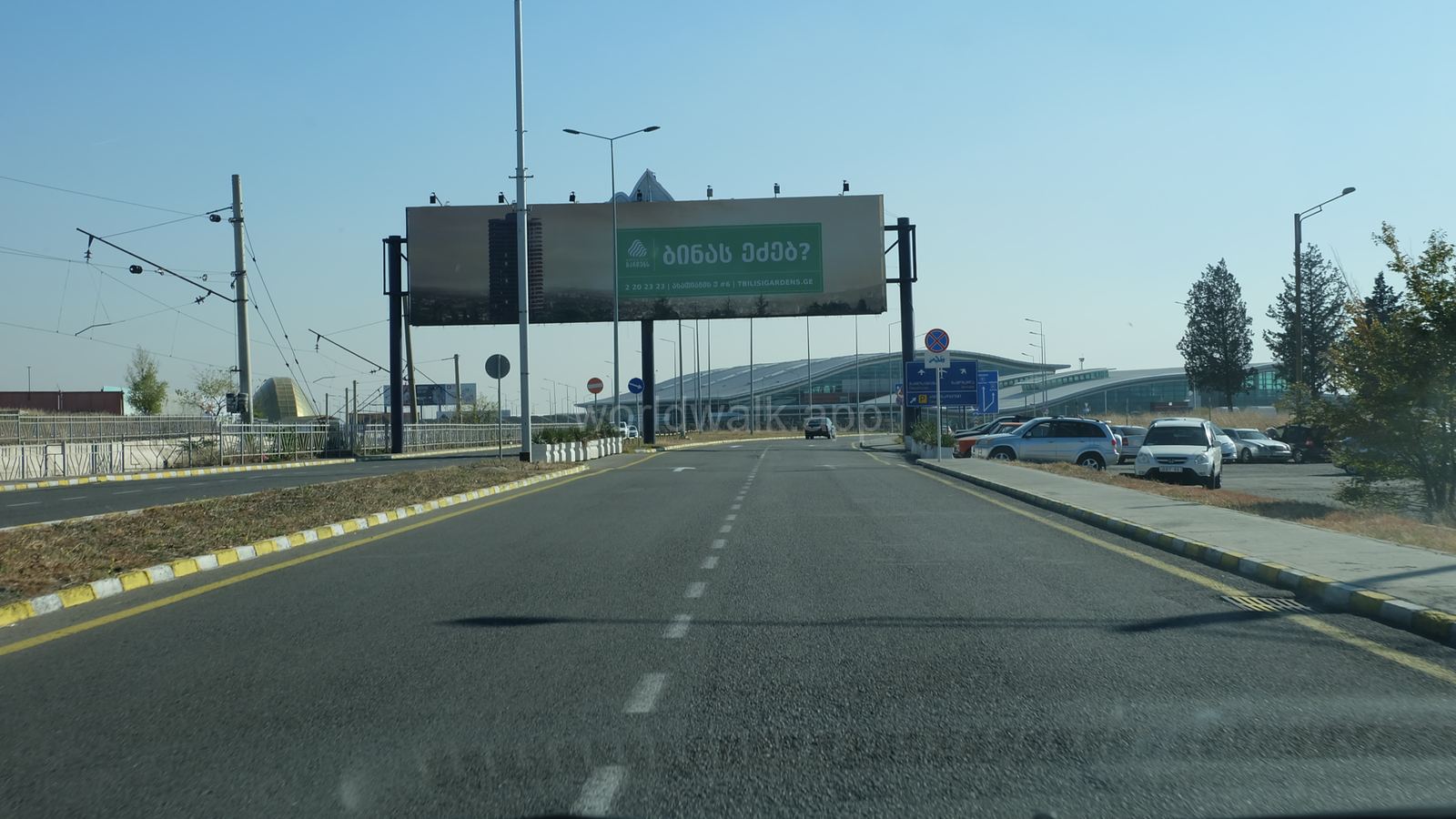
For Mtskheta, Kakheti or Kazbegi, the standard arrangement is a driver for the day rather than a metered taxi. You agree a fixed price for the whole route including waiting time, which is much more convenient than trying to find a car back from a village.
You can find one through your hotel, through contacts, or through services like GoTrip, where you plan the route in advance. What's worth seeing is covered in day trips from Tbilisi.
For the long journey to Batumi, a taxi isn't the answer — take the train: Tbilisi to Batumi.
Safety and small things
- Seatbelts are worth wearing, whatever local habits may be.
- Child seats aren't available in taxis. If you're travelling with a small child and it matters to you, bring your own.
- The driving style in Georgia is assertive. That's normal, not a sign that something is wrong.
- Smoking in the car does happen — you can politely ask the driver not to.
- Tips aren't expected; rounding up is common practice.
Frequently asked questions
Which taxi app works in Tbilisi?
Bolt is the main one; Yandex Go and Maxim also operate. Bolt works in Batumi too, so one app is enough for your whole trip around Georgia.
How much is a taxi in Tbilisi?
A ride in the centre costs a few lari. Prices go up at rush hour, in the rain and at night.
Is a taxi cheaper than the metro?
No, the metro is many times cheaper. But for a group or in the evening, the difference becomes negligible.
Can I hail a taxi on the street?
You can, but at tourist spots the price will be noticeably higher. Agree the price before you get in and name your own figure.
Do I need cash?
Not necessarily — you can link a card in the app. But small cash is useful to have.
Do taxis have child seats?
As a rule, no. You'll need to bring your own.
How do I get to the airport?
Bolt in 25–35 minutes, or bus No. 337 during the day — details in Tbilisi Airport to city centre.