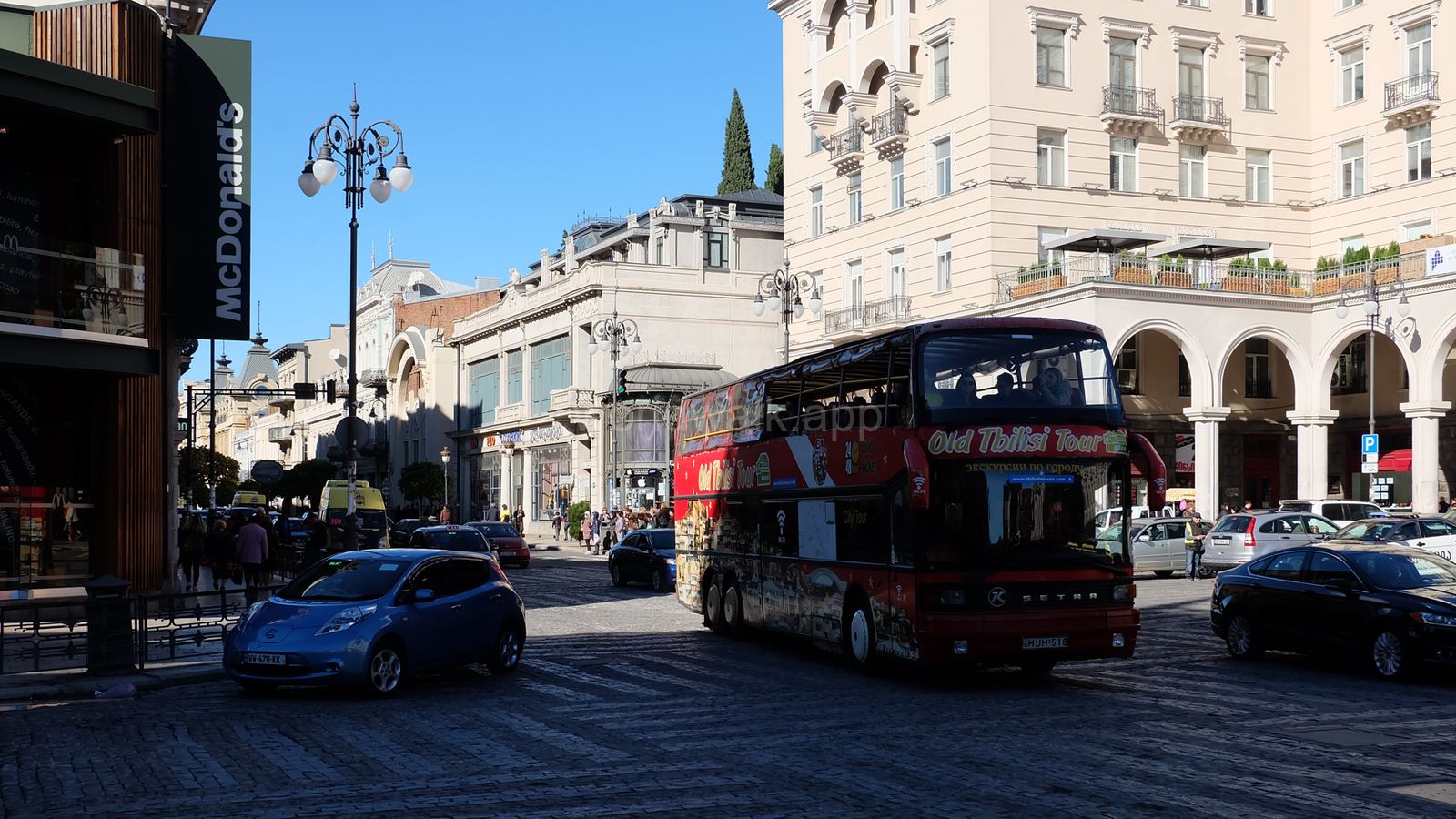
So let's deal with that first, because nothing else matters until you've sorted it out.
Quick answer
Payment: a Metromoney transport card or a contactless bank card. No cash on the metro or the buses.
Cost: around 1 GEL per ride, with free transfers within 90 minutes.
Metro: two lines, running roughly from 6 am to midnight.
Buses: blue city buses go almost everywhere, and there are some night routes.
Minibuses (marshrutkas): yellow minibuses, also paid by card.
Taxis: Bolt and other apps, cheap. More in our separate guide.
The main way to get around the centre: on foot, after all.
How to pay
This is the first thing to sort out when you arrive.
Option 1: a bank card
The simplest. Tap any contactless card on the validator on the bus or at the metro turnstile, and that's it.
It works with most foreign Visa and Mastercard cards. If your card is declined or doesn't support contactless payment, you'll need a Metromoney card.
The downside: the fare with a bank card can be slightly higher than with Metromoney, and the free transfer only works if you tap the same card each time.
Option 2: a Metromoney card
The local transport card. It's sold at metro ticket desks and machines, costs very little, and can be topped up at machines and payment terminals (Pay Box, TBC Pay and similar).
The advantages: a slightly lower fare, transfers that work reliably, one card can pay for several people one after another — and you need it for the cable car up to Narikala.
If you're in the city for more than a couple of days, get a Metromoney card.
Option 3: the app
There's an official Tbilisi transport app with maps, routes and payment. It's most useful for tracking buses in real time.
Metro
Two lines:
- Line 1 (red), Akhmeteli – Varketili: passes through Station Square, Marjanishvili, Rustaveli, Freedom Square, Avlabari and Isani.
- Line 2 (green), the Saburtalo line: short, branching off at Station Square.
You change between the lines at Station Square.
Things to know:
- The stations are deep. Tbilisi sits in a valley with steep terrain, and the escalators here are long and fast. Some rides down take a couple of minutes.
- Intervals are a few minutes at rush hour and longer in the evening.
- Hours — roughly 6 am to midnight. Check the exact times, as they have changed before.
- Signs are also in Latin script, and announcements are in Georgian and English.
- Mobile signal isn't available everywhere underground.
For visitors, the metro is useful on two or three routes: from the railway station into the centre, from the centre to Marjanishvili and Rustaveli, to Avlabari (for Sameba Cathedral) and to Saburtalo. It's no use inside the Old Town — you walk everywhere there.
Buses
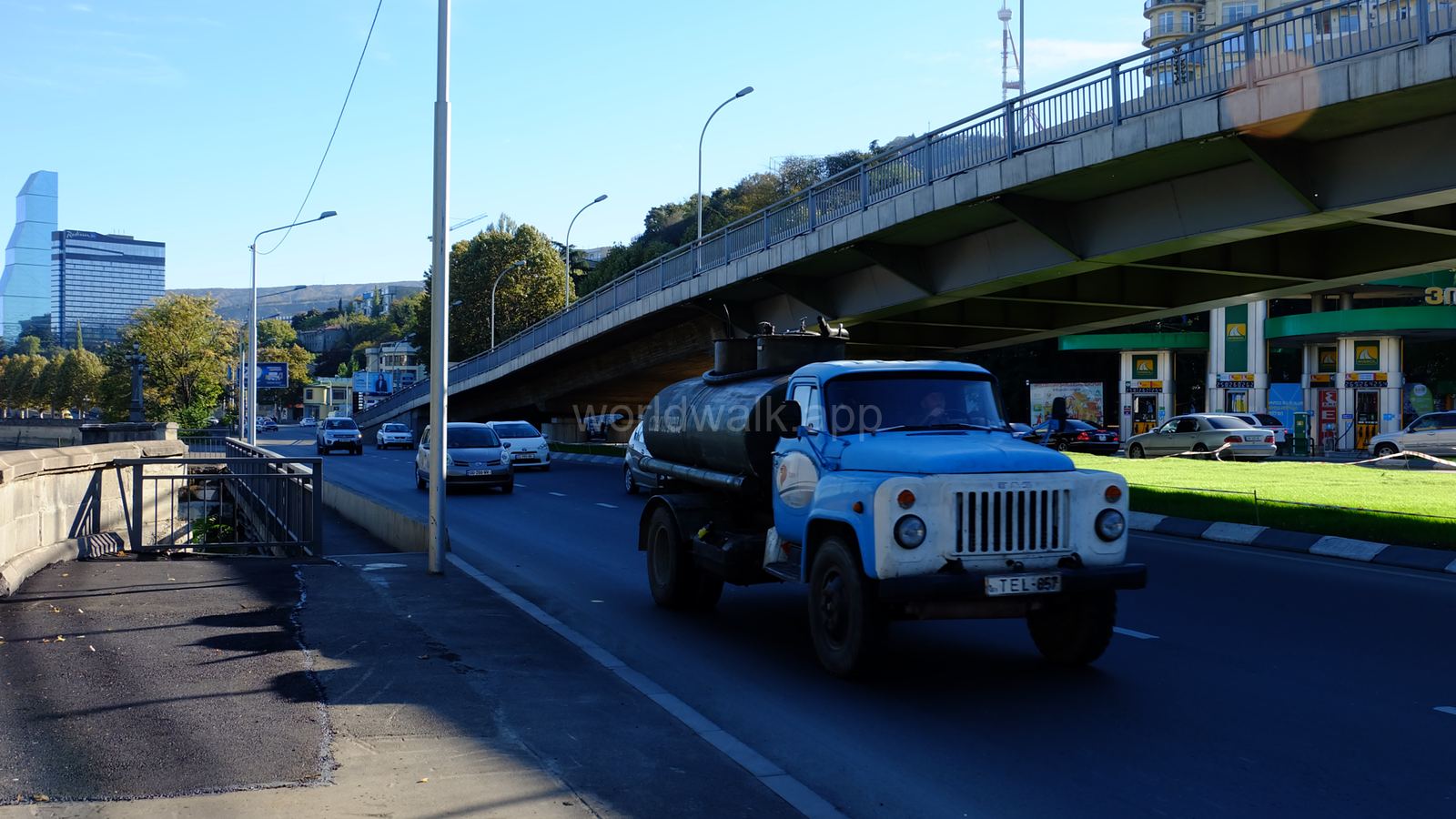
Blue city buses are the main form of surface transport. The network is dense, the buses are new, and there are displays and stop announcements.
Payment — the same card, on the validator by the door.
Transfers are free within 90 minutes, including between the metro and buses. That makes cross-town journeys very cheap.
Night routes exist, but the intervals are long. At night it's easier to call a car.
Useful for visitors:
- No. 337 — the airport and the centre. It runs roughly from 7 am to 11 pm, and while Rustaveli Avenue is closed for reconstruction it follows a diversion. Details in Tbilisi Airport to city centre.
- routes along Rustaveli and the embankments — handy if you don't want to walk in the heat.
How to work out which bus you need: Google Maps shows Tbilisi's public transport accurately, with timetables. It's the most practical tool.
Minibuses (marshrutkas)
Yellow minibuses that duplicate and supplement the bus routes. They're also paid by card.
Visitors rarely need them: the routes aren't obvious, they stop on request and the signs are in Georgian. Unless you live in the city, stick to buses, the metro and Bolt.
Cable cars and the funicular
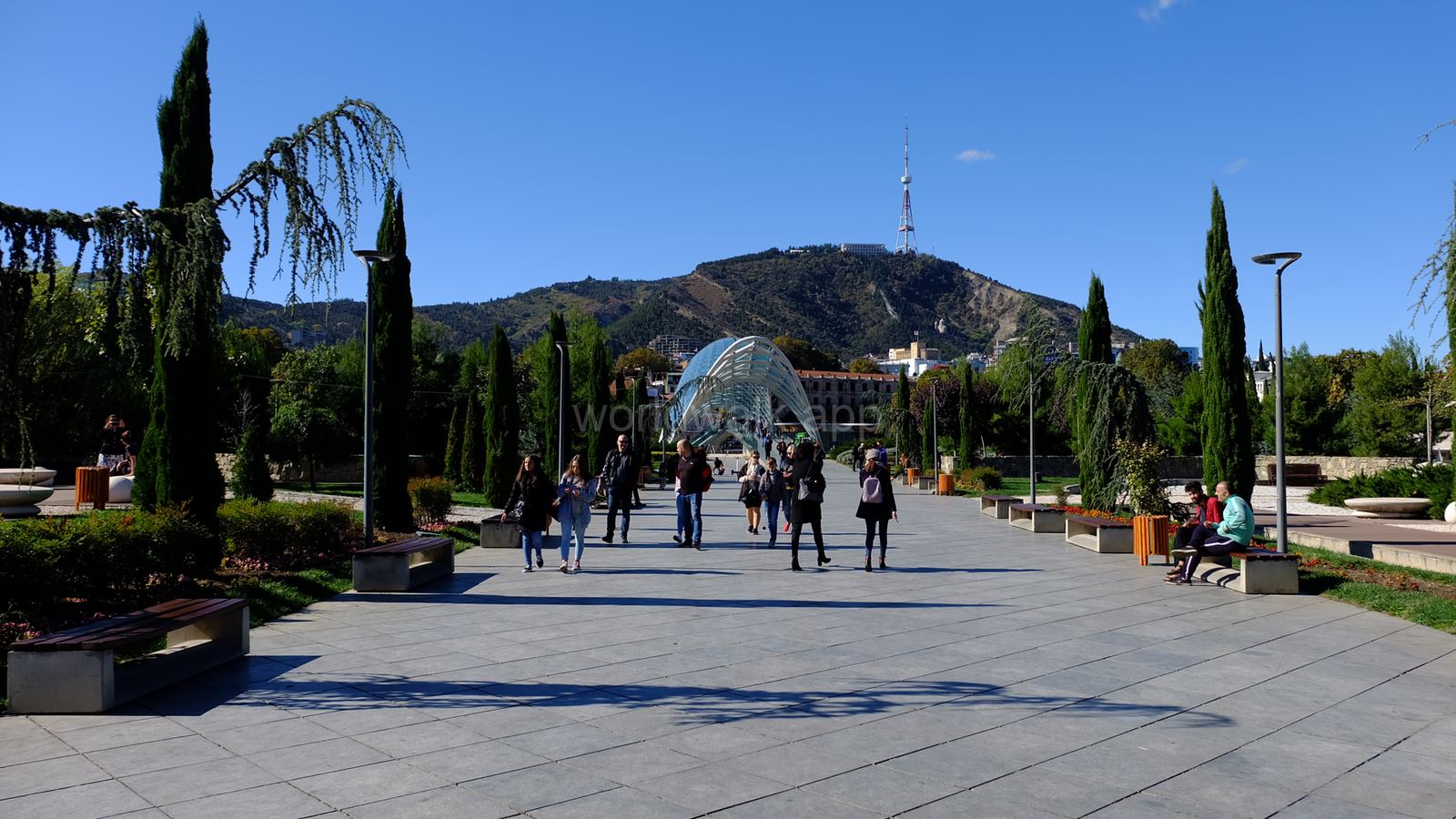
Rike – Narikala cable car. A couple of minutes up, with a great view. It's paid only with a Metromoney card — a bank card won't work here, and that's the most common reason visitors get turned away at the turnstile.
The Mtatsminda funicular. A separate payment system with its own card, bought on the spot. At the top are a park, the Pantheon and the widest view of the city.
The Turtle Lake cable car — from Vake Park, running daily; hours may change with the season.
All the lines, fares and opening hours are in our guide to Tbilisi's cable cars.
On foot: the centre's main transport
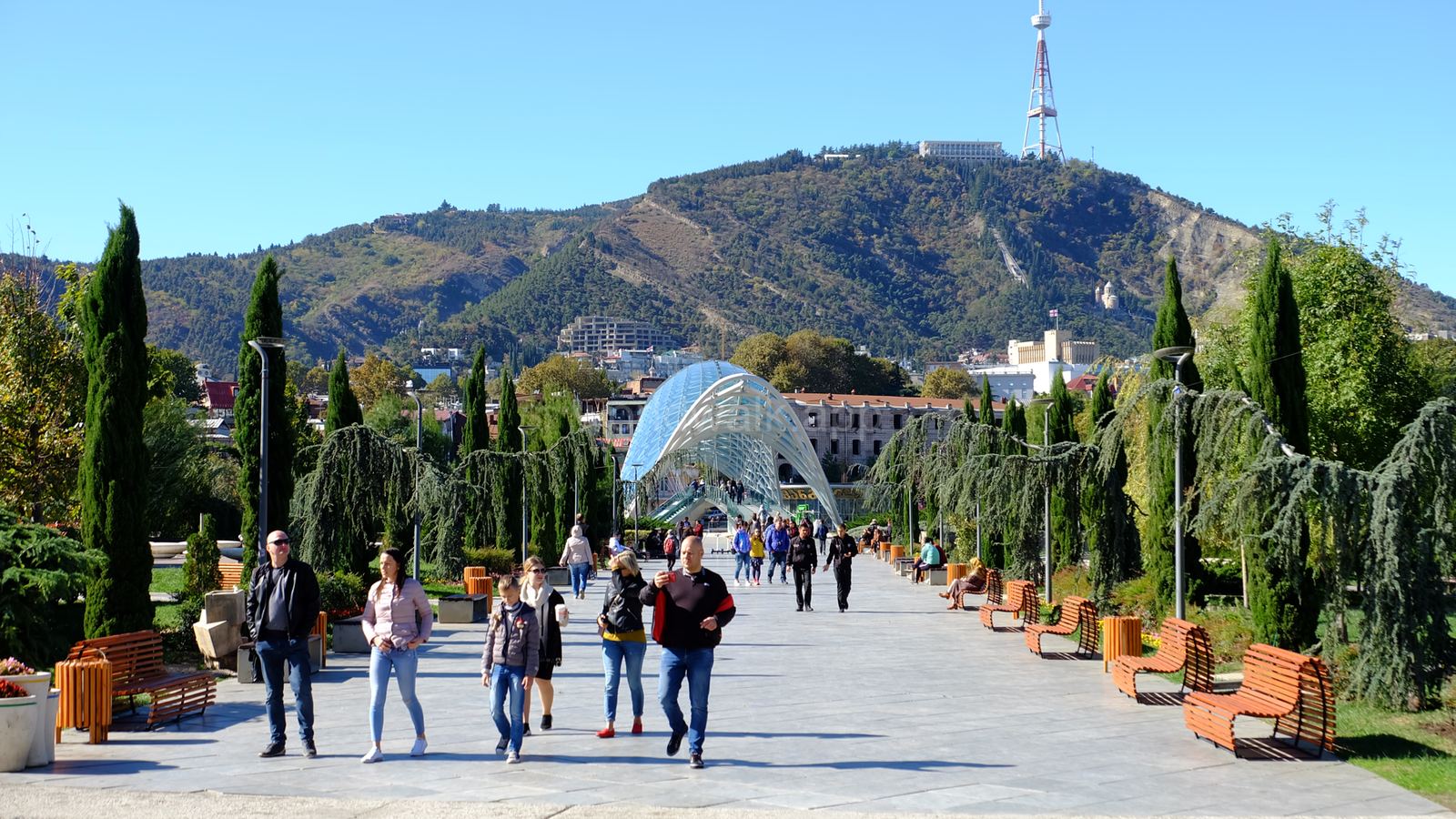
You can cover central Tbilisi entirely on foot, and that's the right way to do it. The Old Town, Sololaki, Rustaveli and the embankments are all within an hour's walk of each other.
Keep in mind:
- Hills. Tbilisi is a city of stairs. Sololaki and Mtatsminda run uphill, and you'll feel it.
- Pavements are uneven and sometimes blocked by parked cars.
- Crossings. Traffic in Georgia is assertive. Use pedestrian crossings and don't assume drivers will stop for you.
- Summer heat. Long walks in the middle of the day in July and August are hard going — plan for mornings and evenings.
Do you need a car?
In Tbilisi, no — it mostly gets in the way: narrow streets in the Old Town, paid parking zones, a shortage of spaces and an assertive driving style.
Renting a car only makes sense if you're heading out of town — to Kakheti, Kazbegi or Borjomi. And even then, the alternative is a driver for the day, which is often more convenient and not much more expensive.
Georgian traffic rules, fines and cameras are the same across the country and are covered in a separate guide.
Compared with Batumi
If you're visiting both cities, it helps to know the difference: Batumi has no metro and its own transport card (Batumi Card), but Tbilisi's Metromoney is accepted there too. The "no cash" rule applies in both — details in our guide to getting around Batumi.
Frequently asked questions
Can I pay for public transport in Tbilisi in cash?
No. Not on the metro, the buses or the minibuses. You need a Metromoney card or a contactless bank card.
How much is a ride in Tbilisi?
Around 1 GEL, with free transfers within 90 minutes.
What if my bank card doesn't work on the validator?
Buy a Metromoney card at a metro ticket desk or machine and top it up.
How many metro lines does Tbilisi have?
Two, with a transfer at Station Square.
Until what time does the Tbilisi metro run?
Until about midnight, opening at around 6 am. Check exact times on the spot.
Do I need Metromoney if I have a bank card?
Not for buses and the metro. But the Narikala cable car only accepts Metromoney.
Do I need a car in Tbilisi?
Not in the city. Only for trips out of town — and even then, hiring a driver for the day is often more convenient.