Visitors mainly lose money in two places: at the airport and at the first exchange office they see next to a tourist sight. Everything else is detail.
Quick answer
Best rates: at exchange offices, not banks or the airport.
At the airport, exchange the minimum — just enough to get into town.
Commission: reputable exchange offices don't charge any. If you're quoted one, walk away.
Cards are accepted almost everywhere in the centre, but you'll need cash for markets, small cafés and some taxis.
What to bring: US dollars and euros get the best rates.
ATMs are everywhere, and withdrawing lari with a foreign card works fine.
Where to exchange
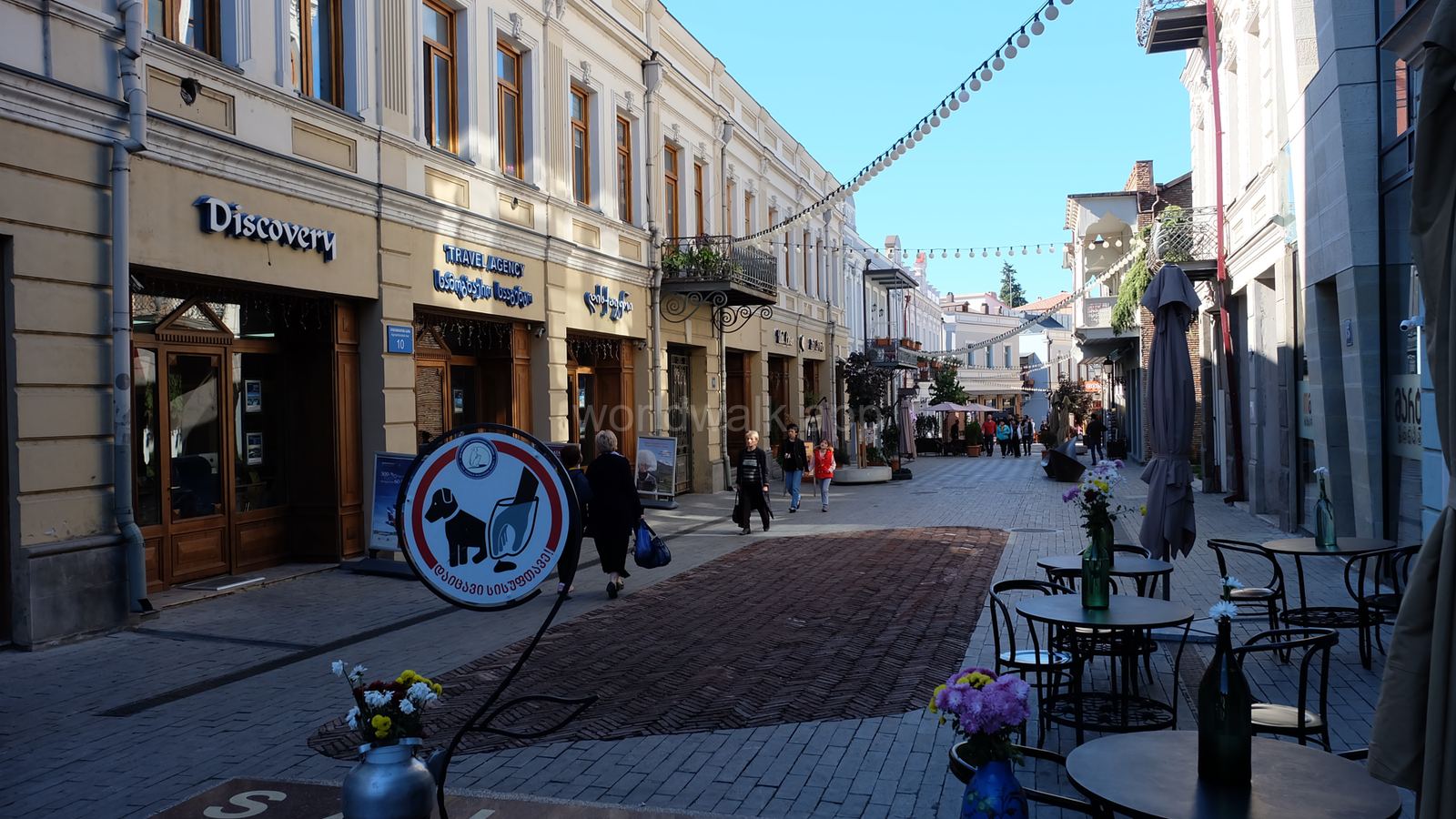
Exchange offices in the centre. They're most concentrated on Rustaveli Avenue, around Freedom Square, near Marjanishvili metro and by the railway station. Rates are posted in large figures in the window, which is handy: you can compare two or three offices just by walking a hundred metres.
Near the station and markets, rates are traditionally among the best in the city: competition is high and so is footfall.
Banks offer more modest rates than exchange offices, but they're predictable. A reasonable choice for large sums, if a receipt and reliability matter more to you.
The airport has the worst rates. Change only enough to get into town there, or withdraw a little from an ATM.
Hotels — don't change money there at all.
How not to lose out on the rate
- Compare two or three offices. The difference between neighbouring ones can be noticeable, and walking between them takes a minute.
- Confirm the rate before handing over your money. Sometimes the big figure in the window applies only to amounts over $500, and a smaller sum gets a different rate. Ask directly: "how much will I get for this amount?"
- There should be no commission. No reputable exchange office charges one. The word "commission" is your cue to leave.
- Count your money on the spot, before you step away from the window.
- Don't change money with people on the street. An offer of "a good rate" outside an office is always a bad idea.
Card or cash
Cards are accepted in restaurants, cafés, supermarkets, shops, hotels, pharmacies and most taxis. In central Tbilisi, you can get through almost your entire trip on a card.
You'll need cash for:
- markets — the Dezerter Bazaar, the Dry Bridge flea market and food markets;
- small bakeries, shops and family-run cafés;
- some taxis, if the driver asks for cash;
- tips;
- the sulphur baths — some accept cash only;
- trips out of town, where cards are accepted much less often.
A sensible approach: carry a moderate amount in lari, keep the rest on your card, and top up your cash as needed.
ATMs
They're everywhere, and withdrawing lari with a foreign card works normally.
Things to keep in mind:
- Your bank's fee for foreign withdrawals is often higher than the difference in rates between exchange offices. Check in advance.
- The ATM's own fee — some Georgian ATMs charge one, and the screen warns you about it.
- Currency conversion. If the ATM offers to charge you in your home currency instead of lari, decline. The rate in that case is almost always worse. Always choose to be charged in lari.
Which currency to bring
US dollars and euros are the best option: they're exchanged everywhere at the best rates.
Other currencies, such as Turkish lira, are also accepted at many offices, but usually at a less favourable rate.
Bring notes that are in good condition: worn or torn notes may get a worse rate or be refused altogether.
Crypto exchange offices
There are quite a few in Tbilisi, especially in the centre and on Rustaveli. They operate legally and the process is standard. Compare rates in advance — the spread between locations can be significant.
How much cash do you need?
It depends on your travel style:
- If you mostly pay by card and eat in restaurants, a small amount will last a week: markets, tips, transport out of town.
- If you're exploring markets, bakeries and small places, expect about half your spending to be in cash.
The general principles for money in Georgia are the same across the country — see also our guide to exchanging money in Batumi.
A note on public transport
A small but important detail: Tbilisi's public transport doesn't accept cash. Not the metro, not the buses. You need a Metromoney card or a contactless bank card, and cash lari won't help at all.
It's a separate topic, covered in public transport in Tbilisi.
Frequently asked questions
What currency does Georgia use?
The Georgian lari (GEL).
Where is the best place to exchange money in Tbilisi?
At exchange offices in the centre — on Rustaveli, around Freedom Square, by the railway station and near markets. Not at the airport or in hotels.
Do exchange offices charge commission?
Reputable ones don't. If you're quoted a commission, go next door.
Can I pay by card in Tbilisi?
Yes, almost everywhere in the centre. You'll need cash for markets, small places, some taxis and tips.
Is it better to exchange cash or withdraw from an ATM?
Exchanging cash is usually better if your bank charges a high fee for foreign withdrawals. Check your own bank's terms.
Which currency is best to bring?
US dollars or euros — they're exchanged everywhere at the best rates.