Quick Answer
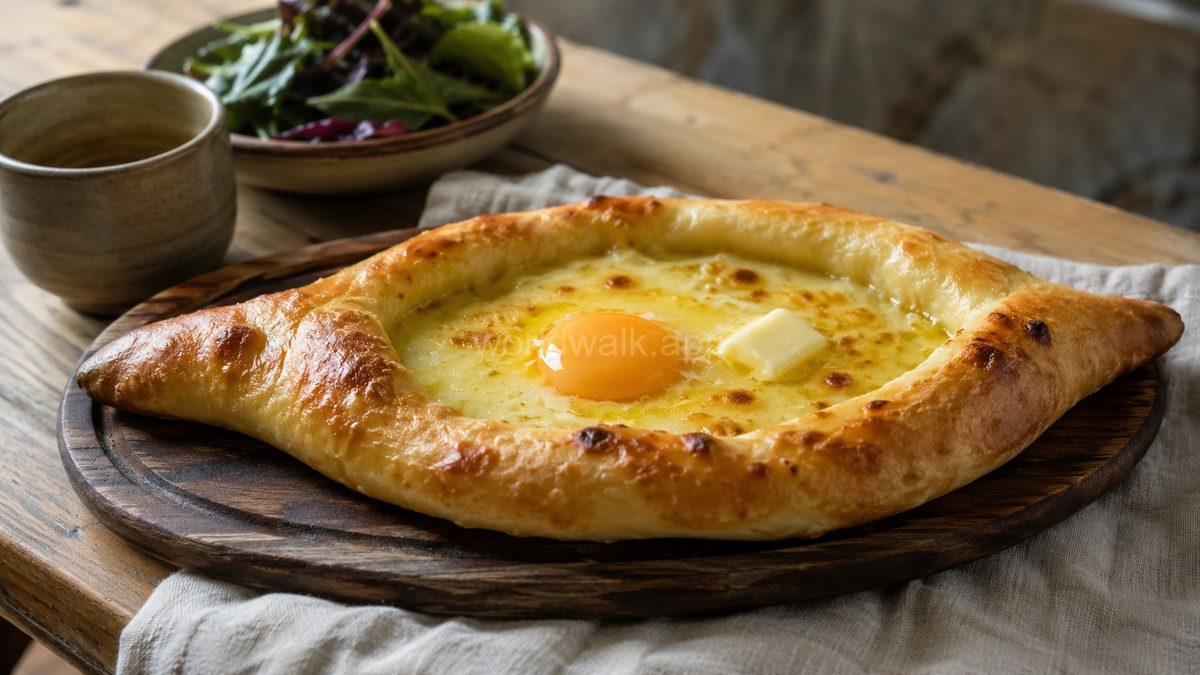
Adjarian khachapuri is a boat-shaped Georgian cheese bread from Adjara, the region where Batumi is located. It is filled with hot melted cheese and finished with butter and an egg yolk just before serving. Unlike Imeretian or Megrelian khachapuri, it is open rather than closed — eaten by tearing off pieces of bread crust and dipping them into the cheese. One portion is usually substantial enough to be a full meal.
What Is Adjarian Khachapuri?
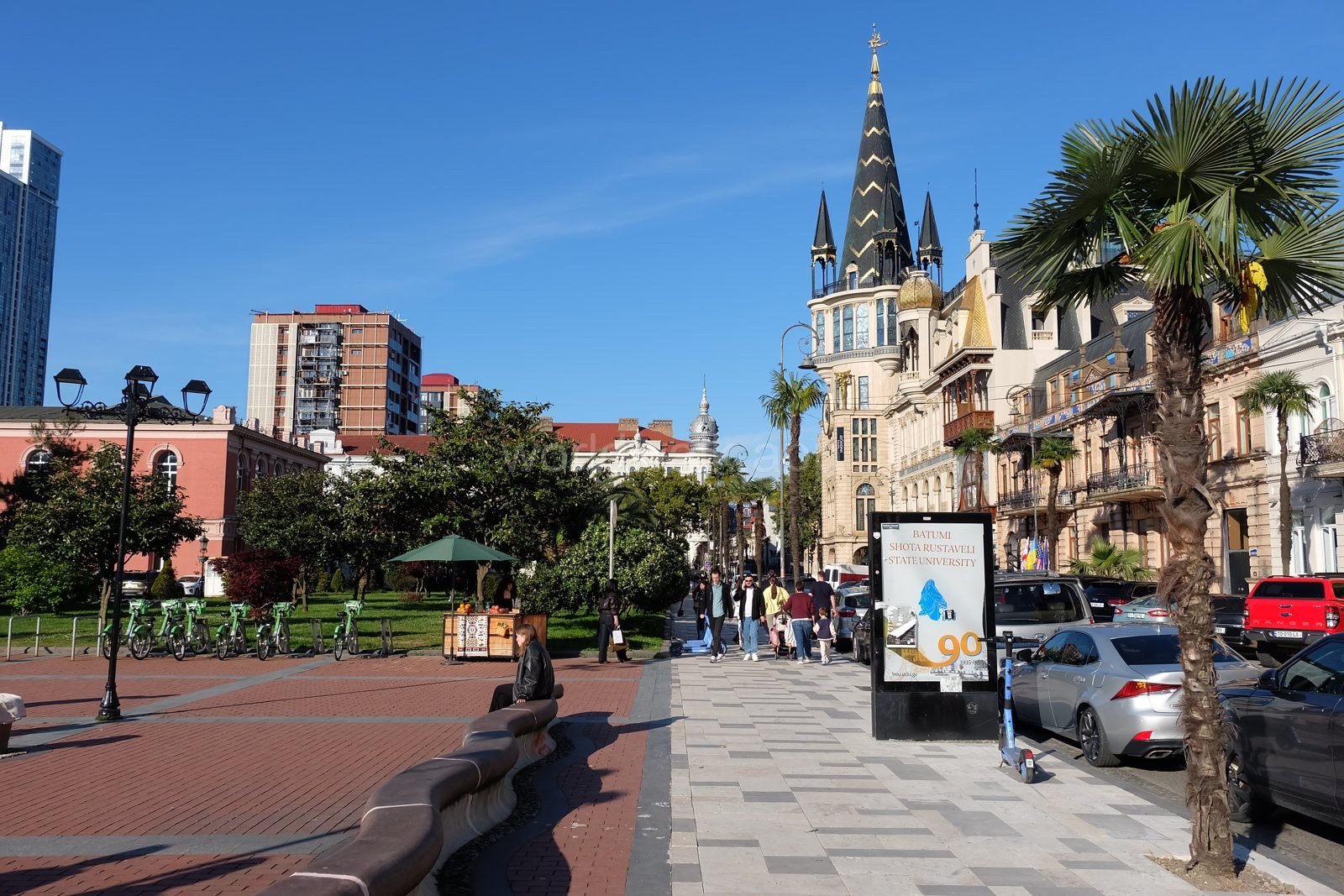
Adjarian khachapuri — also written as Acharuli or Adjaruli in Georgian transliteration — is a bread associated with the Adjara region of western Georgia, where Batumi is the main city. It is made from a leavened dough shaped into an open boat, filled with cheese, and baked until the cheese is melted and the bread is cooked through.
Just before serving, a pat of butter and an egg are added to the hot cheese centre. You stir the mixture at the table. The cheese filling in the classic recipe uses Imeretian cheese — a fresh, slightly salty curd cheese — combined with sulguni, a stretched-curd cheese with a more pronounced, lightly tangy flavour.
Also from WorldWalk
The Port Where Empires Met and Mixed — a separate 46-stop Batumi walking tour, about 2.5 hours. Available on VoiceMap.
Explore the tour on VoiceMap → Start our tour in Telegram →The boat shape has a specific origin story. According to Georgia's official tourism sources, the Laz people — who historically lived along the Black Sea coast and were known as boatmen and fishermen — shaped the dough like a vessel and cracked an egg into the centre as a symbol of the sun setting into the sea. The butter was added as a symbol of prosperity.
The WorldWalk Batumi audio tour covers 29 stops through Old Town, Europe Square and the port streets. Self-guided — start after a meal or build a walk around one.
Start the audio tour →Read also: What to Eat in Batumi, Georgia: 12 Local Dishes
Why Batumi Is the Natural Place to Try It
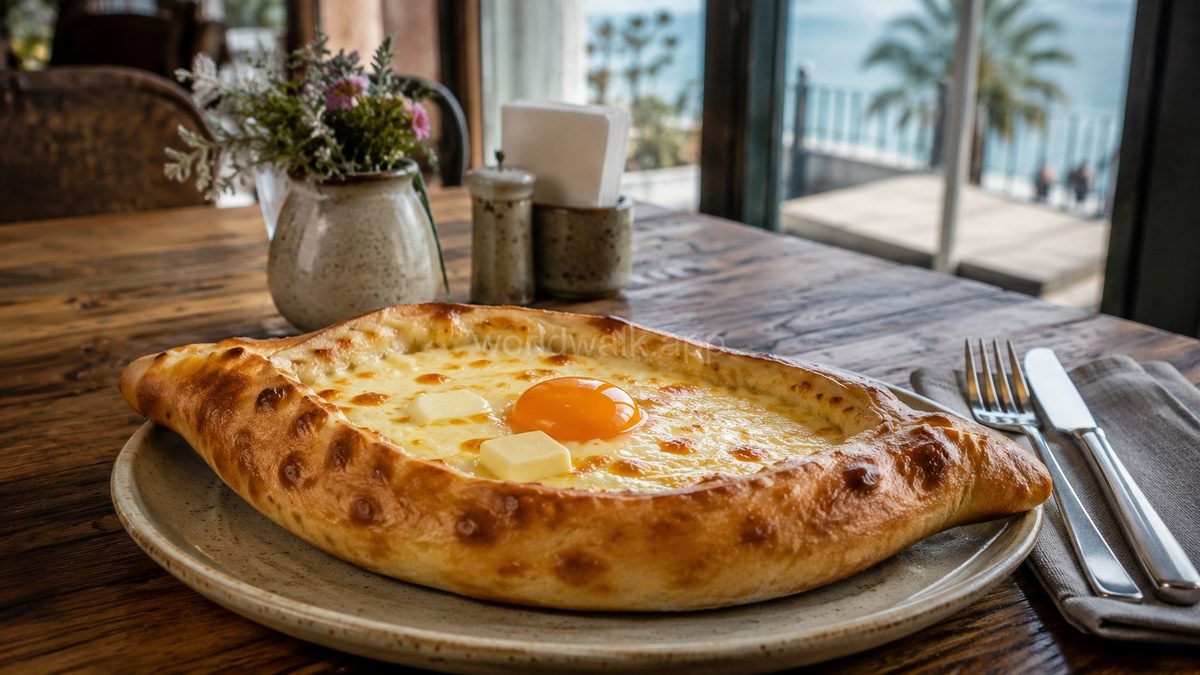
Batumi is the capital of Adjara, which means eating Adjarian khachapuri here connects the dish to its actual region — its landscape, its dairy culture, its Black Sea coast. Plenty of restaurants across Georgia serve Adjarian khachapuri. You can order it in Tbilisi or anywhere with a Georgian restaurant. But trying it in Batumi situates it. The boat shape and the sea imagery mean something different when the water is visible from the city.
If you are planning around food, a one day in Batumi itinerary gives you a sensible structure for fitting a proper meal into a walk through the city.
How to Eat Adjarian Khachapuri
The egg and butter arrive at the table fresh from the oven. Stir the egg and butter into the cheese before eating — once combined, the filling becomes richer and more fluid. Use a spoon, fork, or the bread itself.
To eat: tear a piece from the outer edge of the boat and dip it into the cheese mixture. The crust functions as both vessel and utensil. Work your way inward. One portion is substantial — most people find it enough for a full meal on its own. If eating with one other person and wanting to try several dishes, sharing one khachapuri and adding a Georgian salad or one lighter dish is a more comfortable approach.
Read also: One Day in Batumi
How Adjarian Khachapuri Differs from Other Georgian Khachapuri
Georgia's official tourism site refers to 47 regional varieties of khachapuri. Here is how the main types most likely to appear on menus in Batumi and across Georgia compare.
| Type | Shape | Filling | Best for |
|---|---|---|---|
| Adjarian | Open boat | Melted cheese, butter, egg | First time in Batumi; full meal |
| Imeretian | Round, closed | Cheese inside | Sharing; everyday Georgian meal |
| Megrelian | Round, closed | Cheese inside and on top | Rich cheese flavour |
| Penovani | Square or diamond | Cheese in puff pastry | Quick bakery snack |
| Achma | Layered | Boiled dough sheets and cheese | Breakfast or bakery meal |
| Gurian | Crescent-shaped | Cheese and boiled egg | Regional or seasonal experience |
Imeretian Khachapuri (Imeruli)
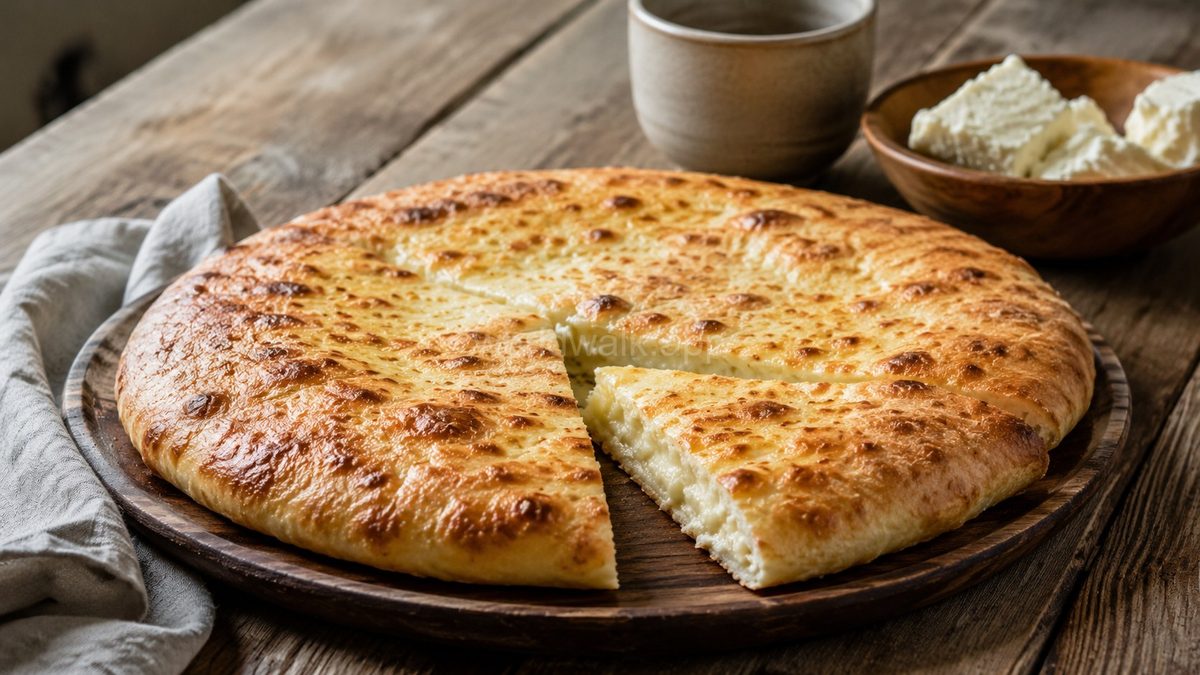
The most widespread style in Georgia. Round, closed on top, filled with Imeretian cheese inside the dough. Both sides are typically lightly browned. Georgian culinary tradition describes Imeretian khachapuri as the baseline — the "mother of khachapuri" — because it is found in every region of the country, in bakeries and restaurants alike. It is simpler and less theatrical than the Adjarian version: no open boat, no egg added at the table, no melted cheese centre to stir. It is also generally less filling per portion, which makes it easier to eat alongside other dishes.
Megrelian Khachapuri (Megruli)
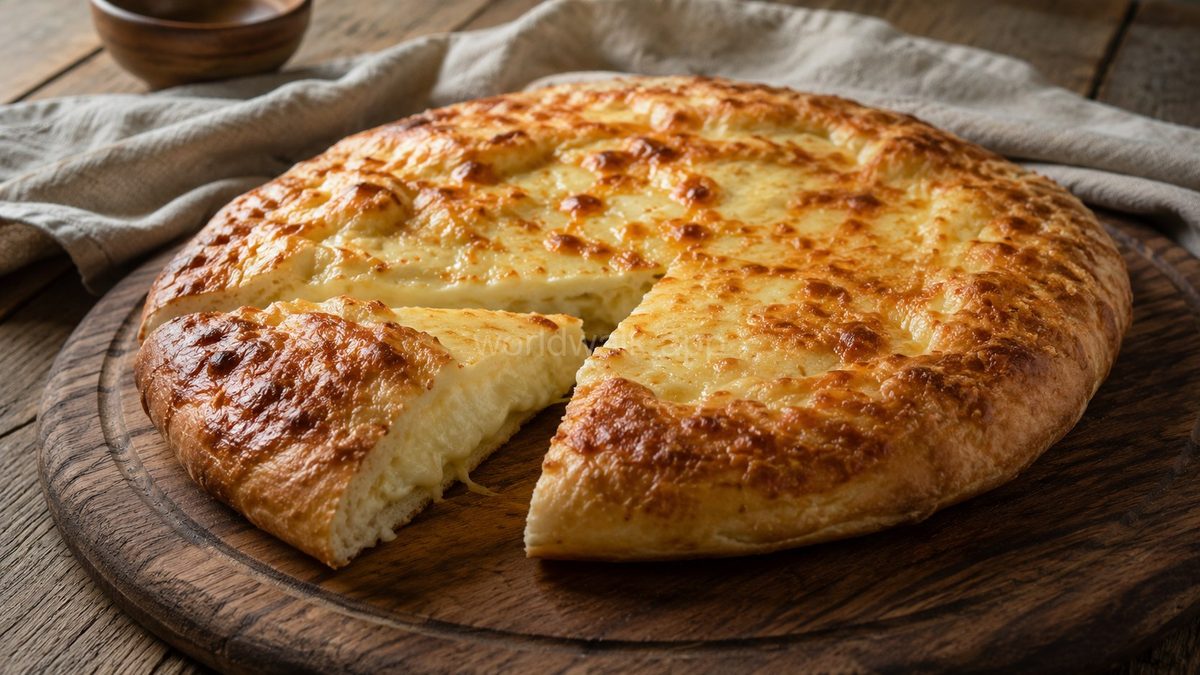
Similar to Imeretian in shape — round, closed — but richer. Megrelian khachapuri has cheese both inside and melted on top during baking. The characteristic combination uses two cheeses: a fresh squeaky cheese (chkinti) and sulguni, which is also grated on top. Associated with the Samegrelo region of western Georgia. If the appeal of Adjarian khachapuri for you is the cheese intensity rather than the boat shape, Megrelian is worth ordering when you encounter it.
Penovani Khachapuri
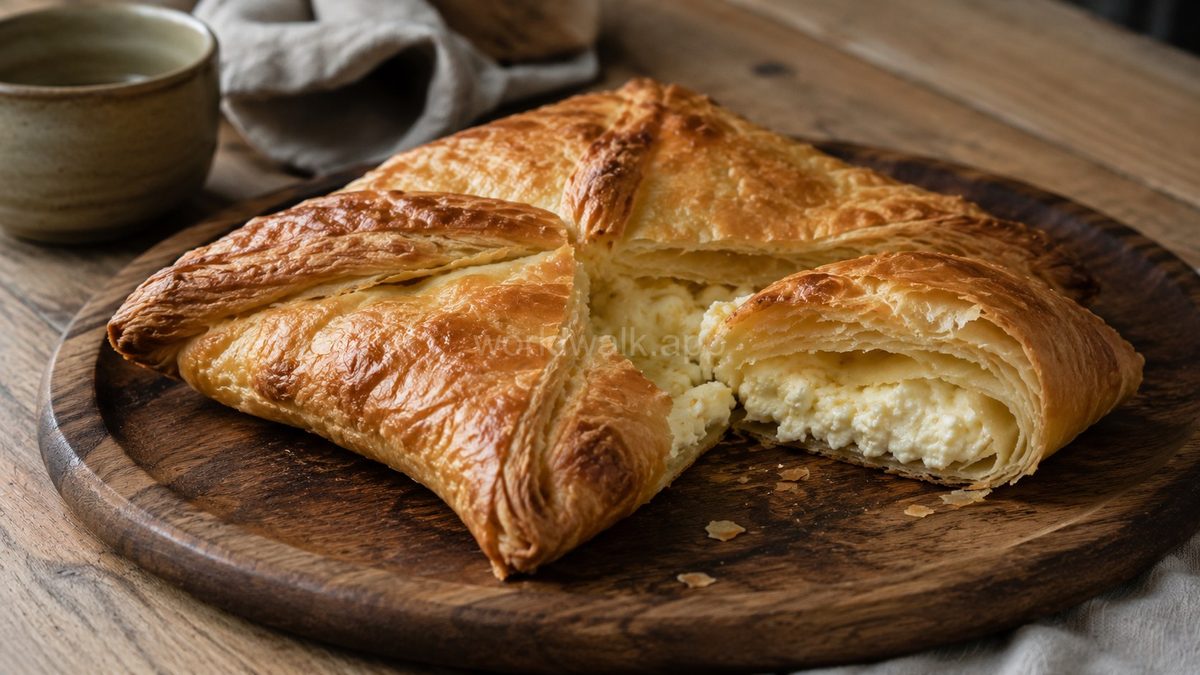
The name means "layered" — and refers to the dough, which is made from puff pastry rather than yeasted bread dough. The result is flaky and crispy rather than chewy, more similar in texture to a pastry than a bread. For travellers, penovani is best understood as a common bakery format found across Georgia. Typically cut into squares or diamonds and stacked behind bakery counters throughout the country. For a quick breakfast or a snack during a walk, penovani is the most practical option — no sitting required, available from early morning.
Achma
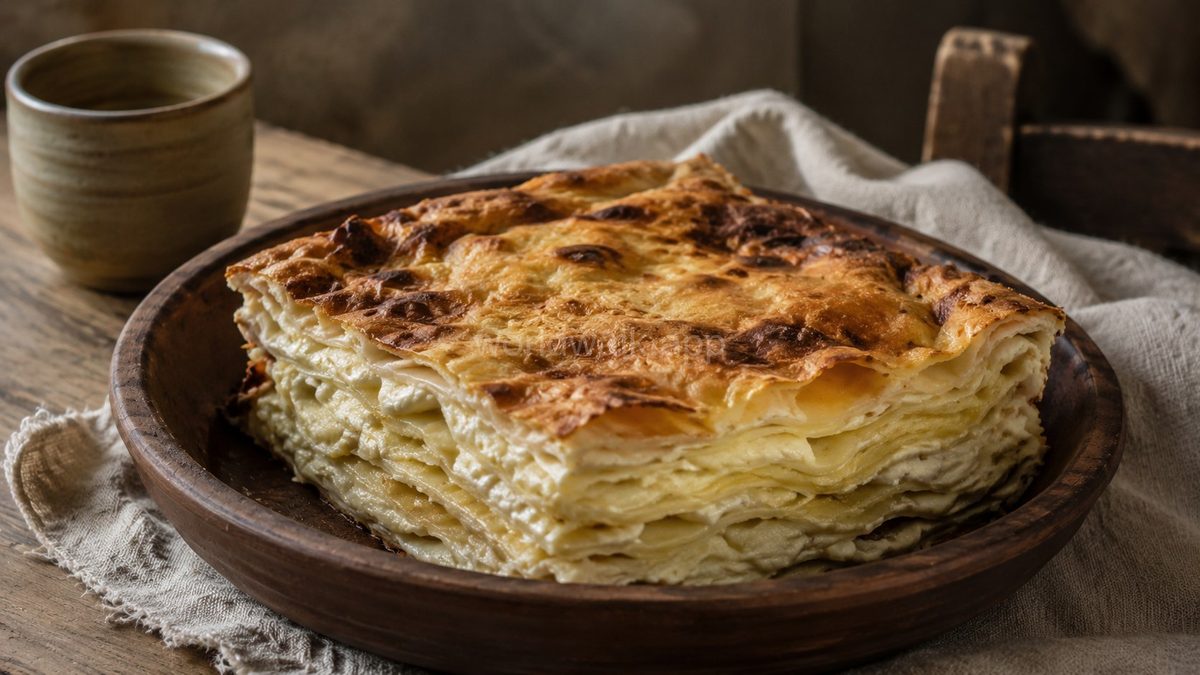
A layered dish made with sheets of boiled dough and cheese, baked until the layers meld together. Associated with Abkhazia and western Georgia more broadly, it appears commonly in Batumi. Achma is soft, rich and quiet — no boat shape, no egg yolk, no table-side finishing. Better suited to a bakery breakfast or a calm morning meal than to a first dramatic encounter with Georgian food. Batumi bakeries often have it ready from early in the day.
Gurian Khachapuri (Guruli Gvezeli)
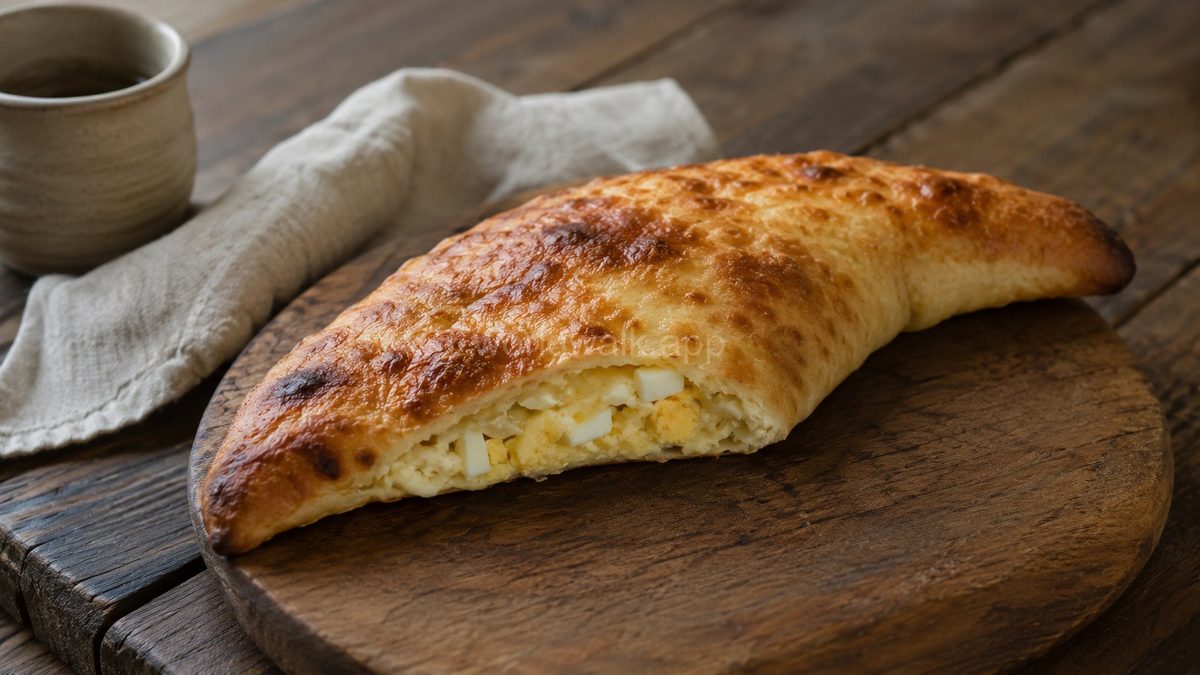
Crescent-shaped — similar in appearance to a calzone — and traditionally filled with cheese and chopped boiled eggs. Associated with the Guria region of western Georgia. Gurians traditionally call it "Christmas pie" and make it for the holiday season. The boiled egg filling sets it apart from every other variety. Less commonly found in Batumi than the other types listed here, but worth knowing about if you are travelling beyond Adjara.
Which Khachapuri Should You Try First?
You are in Batumi for the first time → Adjarian khachapuri. It is the right dish in the right place.
You want something easy to share across a larger table → Imeretian or Megrelian. Both are round, closed and easier to divide.
You want a quick breakfast or something from a bakery → Penovani. Practical, affordable, no sitting required.
You want something layered and soft, good with morning coffee → Achma. Available in most Batumi bakeries from early in the day.
You are travelling to other regions of Georgia → Look for the local version wherever you are. Imeretian is available everywhere; Megrelian is more natural in Samegrelo.
What to Order Alongside Adjarian Khachapuri
Adjarian khachapuri is a meal. If you are sharing one portion between two people, a Georgian salad — sliced cucumber and tomato with walnut dressing and fresh herbs — is the most natural companion. It is lighter, cold and cuts through the richness of the cheese.
If you are eating one portion alone: that is usually enough. Adding soup, khinkali or another bread-based dish tends to become too much. Avoid ordering lobiani, mchadi, another khachapuri or any other dough-heavy dish at the same table.
The full Batumi food guide covers what else is worth ordering beyond khachapuri, including lighter Adjarian dishes and wider Georgian cooking.
Where to Try Khachapuri in Batumi
Local bakeries are a reliable first stop for penovani and achma — open early and working through batches rather than preparing to order. Simple Georgian restaurants without laminated English-language menus at the door are where Adjarian khachapuri is most likely to be prepared properly. The dish needs a hot oven and time; places that take it seriously bake it fresh when ordered.
Restaurants around the Old Town are convenient and often decent. Quality varies, but the concentration of options means you can see what is being served at neighbouring tables before you commit. On a difficult day, knowing what to do in Batumi when it rains makes a rainy-day meal feel like a decision rather than a defeat.
Look for khachapuri that arrives hot, with the egg and butter added at the table. A version where the egg has been stirred in before serving is not wrong, but it is not the full experience.
FAQ
What is Adjarian khachapuri?
Adjarian khachapuri is a boat-shaped Georgian cheese bread associated with the Adjara region. It is filled with melted cheese — typically Imeretian cheese and sulguni — and finished with butter and an egg added just before serving. It is one of the most recognisable regional styles of khachapuri in Georgia.
How do you eat Adjarian khachapuri?
Stir the butter and egg into the hot cheese at the table, then tear pieces from the bread edges and dip them into the cheese mixture. One portion is typically enough for one person as a full meal.
What is the difference between Adjarian and Imeretian khachapuri?
Imeretian khachapuri is round and closed, with cheese baked inside the dough — the most common type across Georgia. Adjarian khachapuri is open and boat-shaped, with exposed melted cheese topped with butter and egg. It is richer and specifically associated with the Adjara region.
Is Adjarian khachapuri the same everywhere in Georgia?
The basic preparation is similar, but quality and exact recipes vary by restaurant. Batumi — as the capital of Adjara — is the most natural place to try it in its own regional context.
What other types of khachapuri should I try in Georgia?
For sharing: Imeretian or Megrelian. For a quick bakery snack: penovani. For something layered and soft: achma. For a seasonal regional experience if you are travelling to Guria: the Gurian pie.
Also worth reading: Georgian Wine Explained: Qvevri, Amber Wine and 8,000 Years of Winemaking.