What changed in 2026
This is the main reason to read a recent article rather than search results from two years ago.
1 May. A package of Interior Ministry amendments came into force. The minimum fine for speeding rose to 100 GEL, the seatbelt fine went from 40 to 50 GEL, and using a phone while driving went from 30 to 50. Driving on the pavement started to cost 200 GEL and minus 30 points. The fine for breaking parking rules was raised to 50 GEL in Batumi, Mtskheta, Poti, Telavi, Kutaisi, Akhaltsikhe, Zugdidi, Ozurgeti and the resorts.
27 June. The speeding package was rolled back. Drivers were unhappy that 16 km/h over and 39 km/h over drew the same 100 GEL. Parliament passed a three-step scale unanimously, by 80 votes, and it's the one in force now.
An amnesty is a separate story. From 1 January 2026, licences were returned to those who had lost them by using up their points, together with a fresh 100 points; from 1 February, to those deprived of them for drink-driving and leaving the scene of an accident. The amnesty covered offences committed before 10 December 2025.
Speed limits
Set by Article 33 of the law "On Road Traffic". They apply unless a sign says otherwise.
| Where | Car (cat. B) | Motorcycle (A, A1, B1) | Lorry (C, CE) |
|---|---|---|---|
| Built-up area | 60 | 60 | 60 |
| Outside a built-up area | 90 | 80 | 70 |
| Motorway | 110 | 80 | 80 |
An important detail: 60 km/h in a built-up area is the default rule. Counting starts from the sign marking entry into the settlement, not from how dense the buildings are. On stretches inside a city where a sign allows more, the "out-of-town" figures from the table apply.
Fines start at more than 15 km/h over the limit. So 74 km/h in town is formally unpunished; 76 is not.
Fines in 2026: table
| Offence | Fine | Points |
|---|---|---|
| Speeding by 15–30 km/h | 50 ₾ | −10 |
| Speeding by 30–50 km/h | 100 ₾ | −10 |
| Speeding by more than 50 km/h | 300 ₾ | −10 |
| Speeding by more than 30 km/h, creating a dangerous situation | 400 ₾ | −25 |
| The same, with damage to infrastructure | 600 ₾ | −40 |
| Seatbelt not fastened (driver or front passenger) | 50 ₾ | −10 |
| Phone while driving | 50 ₾ | −15 |
| Driving on the pavement | 200 ₾ | −30 |
| Driving without a licence or vehicle documents | 100 ₾ | — |
| Crossing a solid centre line | — | −10 |
| Driving into oncoming lane | — | −30 |
| Failing to give way to a pedestrian | 100 ₾ | −5 |
| Breaking parking rules in Tbilisi | 50 ₾ | — |
| Stopping by a fire hydrant in Tbilisi | 200 ₾ | — |
Drink-driving is a separate matter: the penalty for it in Georgia is among the strictest in the code, up to suspension of the right to drive, and the points deducted for it are among the largest in the system (see the points table below). Check the exact fine and the alcohol limit on official resources before you travel — this part of the code changed more often than others in 2026, and we don't want to give a figure we couldn't confirm from a primary source.
Parking fines in Tbilisi work separately and are covered in detail in our guide to parking in Tbilisi, including towing and impound lots.
The points system: 100 points a year
The mechanism is simple. Every driving licence gets 100 points on 1 January. Points are deducted for offences during the year. Any unspent balance doesn't carry over: on 1 January the counter shows exactly 100 again, whether you had a perfect year or got down to your last ten. If you run out of points during the year, you'll have to get your licence again — by taking the exams again.
What is deducted:
- speeding by more than 15 km/h — 10 points;
- the same, if a dangerous situation or a traffic jam results — 25;
- the same, if a vehicle, load, road, structure or someone else's property is damaged or a person suffers minor injuries — 40;
- drink-driving — 30, 40 for a repeat within a year;
- handing the wheel to a person who is drunk — 30, under the influence of drugs — 40;
- phone while driving — 15;
- seatbelt — 10;
- crossing a solid centre line — 10, 20 for a repeat within a year, driving in the oncoming lane — 30;
- failing to give way to a pedestrian — 5, 10 for a repeat, 20 if it creates a dangerous situation;
- breaking rules in relation to pedestrians with minor damage to property or health — 30;
- driving on the pavement — 30.
For drivers engaged in regular passenger transport, the deductions are higher: 20 or 25 points instead of 10 for the same speeding.
The practical takeaway for a visitor: two phone incidents and one serious speeding offence is already 65 points out of 100. The system is designed for Georgian licences, and the available documents contain no direct statement about applying it to foreign licences. Still, don't assume it doesn't concern you: fines and points are different penalties, and the fine will be issued in any case.
Cameras and how a fine reaches you
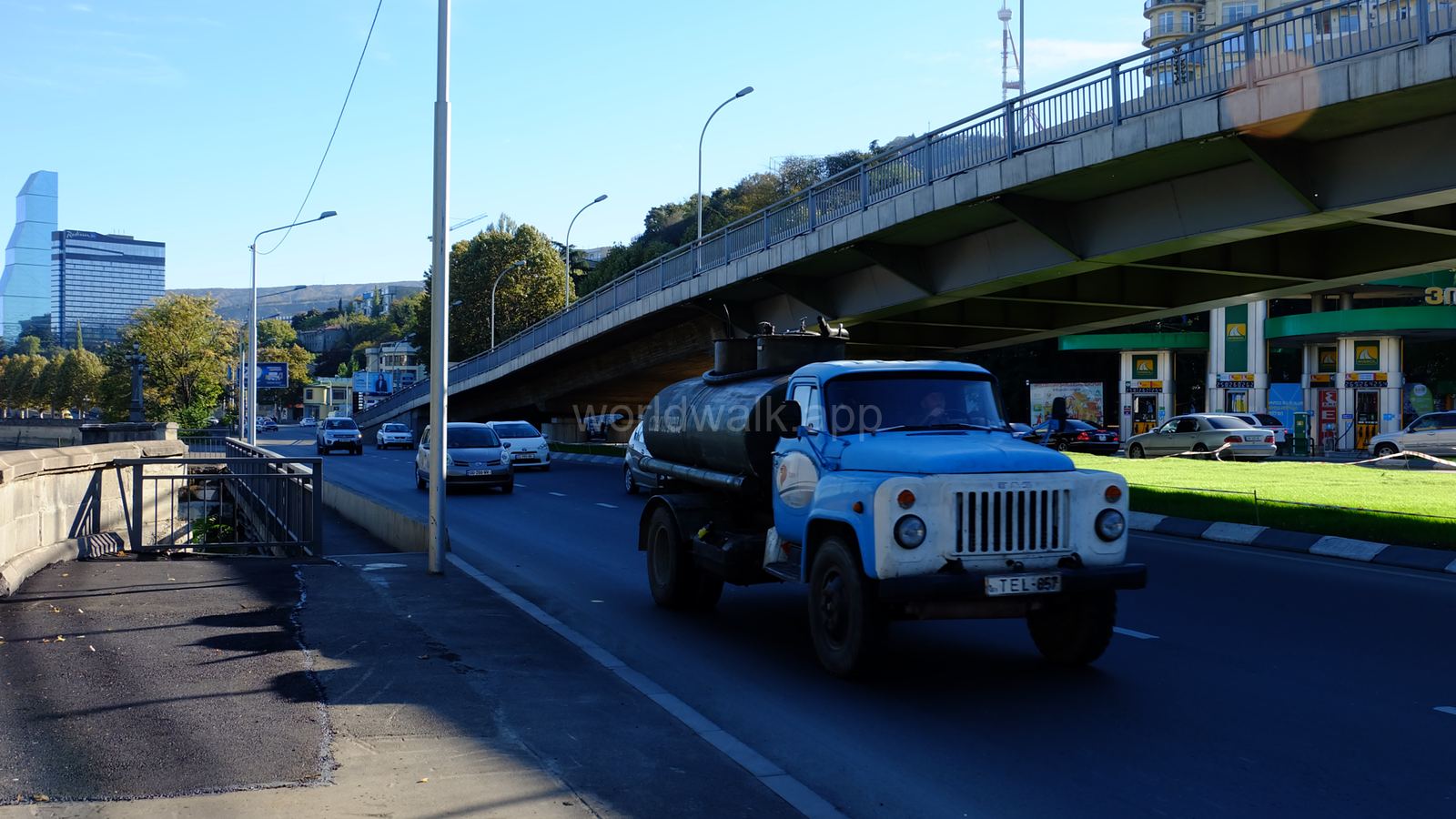
Cameras in Georgia stand at the entrances to settlements, on highways and at city junctions; there's also so-called contactless patrolling, where equipment rather than an officer with a baton records the offence. The Interior Ministry doesn't publish precise statistics on the number and types of cameras, so there are no figures here.
But here's what really matters — and what almost nobody writes.
A decision on a fine must be served in the manner set out in the Administrative Offences Code. But if it can't be served — and with a foreigner who has gone home, that's almost guaranteed — the receipt is published on the Interior Ministry's public information site. And from that moment it is treated as served. So the payment period runs and the penalty accrues, while you know nothing about it, because nobody phoned and no letter arrived.
Hence a simple rule: if you've driven in Georgia, check your plate against the database before leaving the country and again a month later.
How to check a debt by licence plate
All methods work by vehicle plate, and no registration is needed.
The Interior Ministry site police.ge — the section for checking fine receipts. The main official source, and where unserved decisions are published.
The BFine app. Works for foreigners too: when registering, choose the option for other countries and enter your passport number or the vehicle's plate. It shows the offence, date, amount and the photo evidence.
Terminals and online payment sites: bogpay.ge, tbcpay.ge, pay.ge. On a terminal's screen, choose the fines section and enter the licence plate; sometimes they also ask for the vehicle registration number.
The description of the offence will be in Georgian, but the key words are recognisable, and the amount and date are visible in any case. If you need an exact translation, photograph the screen.
How to pay
You can pay online through video.police.ge, through bogpay.ge, tbcpay.ge and pay.ge, in cash at a street payment terminal or at a branch of any Georgian bank.
As of 2026, some government payment pages have problems with foreign cards. If your card doesn't go through, the most reliable option is a street terminal with cash: it asks for neither a Georgian ID nor a local card.
Deadlines. You have 30 days for voluntary payment. After that a penalty accrues and the fine doubles — don't count on discounts for quick payment; we found no official confirmation of such a practice.
You can appeal a decision to the body that issued it and then in court, within the Administrative Offences Code's time limits. In practice, for a visitor this rarely makes sense: the costs of the procedure exceed the fine.
Foreign plates and rented cars
The rules and fines for foreign plates are the same as for Georgian ones. An offence is recorded against the plate, and the debt is attached to it and doesn't go away: it can surface on your next entry or when you do something with the vehicle.
Renting is more complicated. A camera fine goes to the owner company, which passes it on to you under the rental contract — often after you've flown home, by deducting from your deposit or linked card. What to do:
- the day before you return the car, check the plate against the database and pay whatever turns up — that's cheaper than the rental company's service fee on top of the fine;
- record in the handover form that there are no unpaid fines;
- ask the rental company how exactly it notifies you of late fines and which card it charges.
What to carry
Your driving licence, the vehicle's documents and the insurance policy. For a foreign visitor, a national licence is enough if its details are also given in Latin letters; an international driving permit makes conversation with a patrol officer easier but isn't compulsory. The car must carry a first-aid kit, a fire extinguisher and a warning triangle.
If you're in Tbilisi and don't want to deal with cameras or parking, the metro and buses cover almost all of the centre, and Bolt covers the rest. You only really need a car out of town: day trips from Tbilisi.
In short
- Town — 60 km/h, main road — 90, motorway — 110. Fines start at 15 km/h over.
- Speeding: 50 GEL up to 30 km/h over, 100 up to 50, 300 above that. The scale has applied since 27 June 2026 — anything older is out of date.
- Seatbelt and phone — 50 GEL each. Pavement — 200 GEL.
- Every licence gets 100 points each year. Run out and you have to retake the test.
- Drink-driving carries one of the strictest penalties in the code, up to suspension of your licence.
- If a receipt can't be served, it's published on the Interior Ministry's site and treated as served. The debt grows silently.
- You have 30 days to pay, then the amount doubles.
- Check your plate on police.ge, in BFine or on bogpay.ge — before leaving the country and a month later.
More about the city is in our Tbilisi section. To see what's around you right now, try our free WorldWalk Nearby bot in Telegram.
Frequently asked questions
What is the fine for speeding in Georgia in 2026?
Speeding by 15–30 km/h is 50 GEL, by 30–50 km/h is 100 GEL, and over 50 km/h is 300 GEL. This scale has applied since 27 June 2026; before it, from 1 May, any speeding from 15 to 40 km/h cost 100 GEL.
What is the maximum speed in Georgia?
In a built-up area it's 60 km/h, outside one 90 km/h, and on a motorway 110 km/h for cars. For motorcycles outside towns it's 80, and for lorries 70–80. A sign on a particular stretch takes priority.
How do I check fines in Georgia by licence plate?
Enter the plate in the receipt-checking section of the Interior Ministry site police.ge, in the BFine app, or on bogpay.ge, tbcpay.ge or pay.ge. No registration is needed, and foreign plates are in the database.
What happens if I don't pay a fine in Georgia?
You have 30 days for voluntary payment, after which a penalty accrues and the amount doubles. The debt stays attached to the licence plate and can surface on your next entry into the country or when you do something with the vehicle.
Do fines reach foreign plates in Georgia?
Yes, the rules are the same for everyone. What's more, if a decision couldn't be served in person, it's published on the Interior Ministry's public information site and treated as served from then — the payment period runs even if you've already left.
What are the 100 points on a Georgian licence?
Every driving licence gets 100 points on 1 January, and points are deducted for offences: phone — 15, seatbelt — 10, speeding — from 10. If the points run out during the year, you have to get your licence again by taking the exams. The balance doesn't carry over into the new year.
Who pays a fine for a rented car in Georgia?
The decision goes to the rental company as owner, but under the rental contract the amount is passed on to the renter and often taken from the deposit after the trip. Check the car's plate against the database the day before you return it and pay the fine yourself.