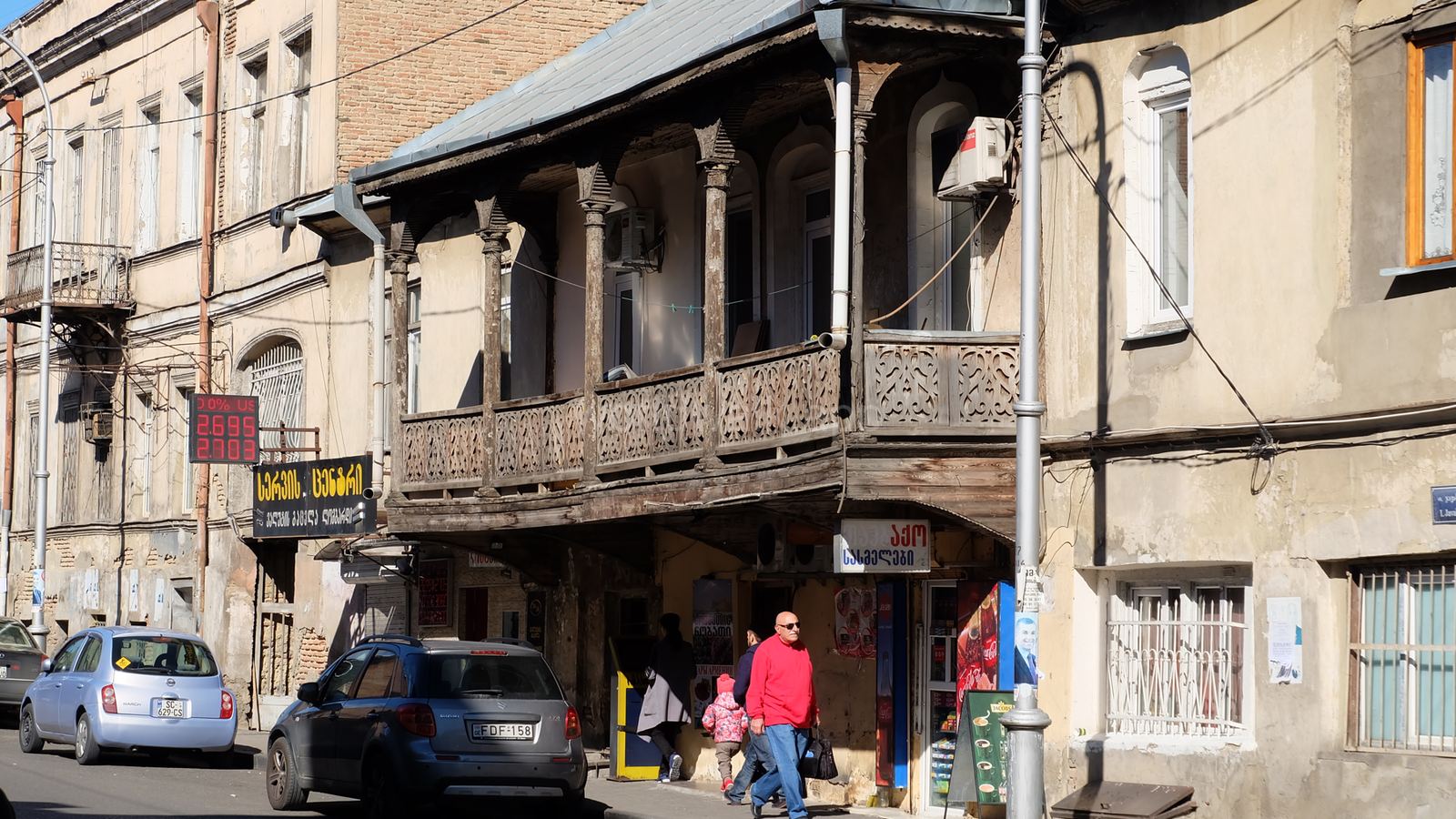
The main thing to understand in advance: Tbilisi isn't seen by ticking off a list of sights. You walk it, district by district, and half of what's good here is the courtyards, staircases and balconies that aren't in any guidebook.
Quick answer
How many days do you need? Two days for the centre, three or four with the districts and a trip to Mtskheta or Kakheti.
When to go? May–June and September–October. July and August in Tbilisi are hot and dry; winter is mild but grey.
Where to stay? Sololaki, Mtatsminda or Marjanishvili — if you want to walk.
The essentials: the Old Town, Abanotubani with its sulphur baths, Narikala, Metekhi, Rustaveli Avenue, Fabrika and the courtyards of Sololaki.
Do you need a car? No. In the centre, it gets in the way.
What does it cost? Cheaper than most European capitals, but dearer than five years ago. Coffee, transport and markets are cheap; good restaurants and accommodation in the centre are not. See Tbilisi prices in 2026 for a full breakdown.
Entry: since 1 January 2026, all foreign tourists must carry health and accident insurance of at least 30,000 GEL — see "Entry requirements" below.
Entry requirements: visa and insurance
Insurance is compulsory. Under the Law of Georgia "On Tourism", since 1 January 2026 every tourist entering Georgia must have a valid health and accident insurance policy covering the whole stay, including the arrival and departure dates. According to the U.S. Embassy in Georgia, the coverage must be no less than 30,000 GEL, and the policy may be issued by a Georgian or a foreign insurer, in paper or electronic form, and must be available in Georgian or English. It must show, among other things, the parties, the covered territory, the start and end dates and the limits. Border officials can check it, and travellers who can't show a valid policy may be refused entry. The rule applies regardless of visa status, so it also covers visitors from visa-free countries. A few categories are exempt, such as people whose entry is provided for by international treaties. Buy the policy before you fly and save the PDF on your phone.
Visas. Citizens of the EU, the UK, the US and many other countries can enter Georgia without a visa, usually for up to a year; travellers from other countries may need a visa or e-visa. The visa-free list is set by government ordinance and is updated from time to time, so check the official list for your passport before you travel.
For what the policy must say, who is exempt and what else to have ready at the border, see Entering Georgia in 2026.
Entry rules change. Check the current requirements with the Georgian authorities or your own government's travel advice before departure.
Where Tbilisi is and how it's laid out
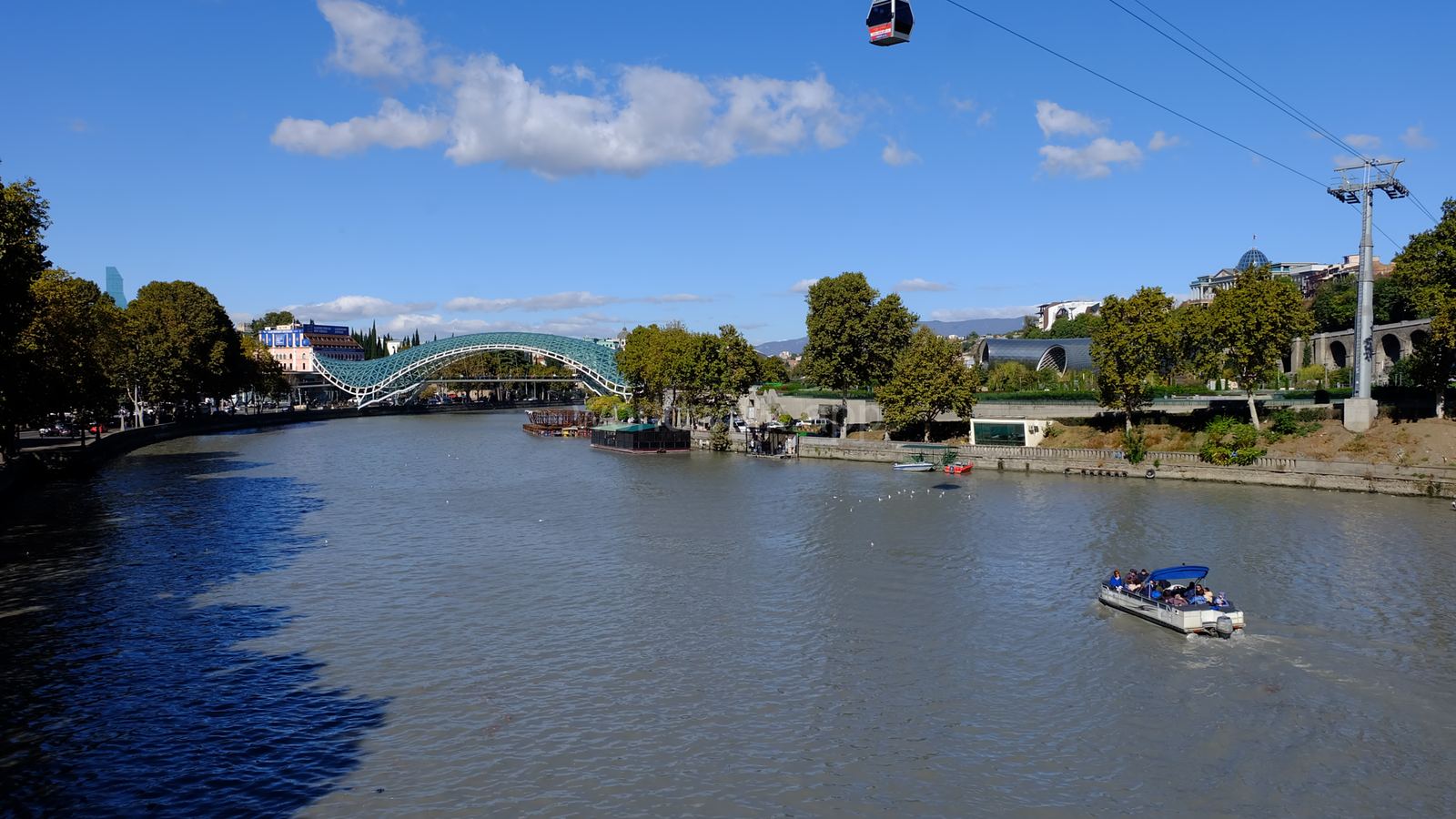
The city lies in the valley of the Mtkvari, stretching along it for dozens of kilometres. For a traveller that means one thing: Tbilisi is long and narrow, and almost everything of interest fits into a strip a couple of kilometres wide along the river.
Roughly, the centre divides like this:
- The Old Town — Abanotubani, Meidan, Sioni, the Betlemi ascent. The densest part, with more per square kilometre than anywhere else.
- Sololaki — a 19th-century district beneath Narikala, with grand entrance halls, plasterwork and painted staircases. The best part of the city for an aimless walk.
- Mtatsminda — the slope above the centre: staircases, quiet streets and the funicular up.
- Rustaveli — the main avenue: theatres, museums, parliament, the Writers' House.
- Vera and Vake — residential districts to the west, with cafés, parks and a calm rhythm.
- Chughureti and Marjanishvili — the left bank, a former German colony, today home to Fabrika, bars and the liveliest part of the city in the evenings.
- Avlabari — the left bank by Metekhi, a historically Armenian district with Sameba Cathedral above it.
You can walk the whole centre. For everything else, there's the metro and Bolt.
How many days you need in Tbilisi
One day. The Old Town, Abanotubani, Narikala, the Bridge of Peace, dinner. You'll see the shape of the city but not its content. The route is in One day in Tbilisi.
Two days. Plus Sololaki with its courtyards, Rustaveli, the Dry Bridge, and the left bank and Fabrika in the evening. That's the minimum at which the city has time to open up.
Three days. Add Mtskheta or Kakheti for a full day, Mtatsminda and the Dezerter Bazaar.
Four or more. Kakheti with an overnight stay, Kazbegi, Borjomi — or a slower pace where you simply live in the city rather than tour it. More options are in day trips from Tbilisi.
A common scenario: Tbilisi plus Batumi on one trip. The logic then is three days in the capital, the train to the coast, and three or four days there. How to get there is covered in Tbilisi to Batumi, and how the two cities differ is in the "Batumi vs Tbilisi" section of our Batumi travel guide.
When to go
Spring (April–June). The best time. Warm, green and not yet hot. May is the ideal month.
Summer (July–August). Dry heat, often above 35°C. In this season the city keeps a Mediterranean schedule: morning, then a pause, then evening. Many Tbilisi residents leave for the mountains or the sea. You can go, but plan your day around the heat.
Autumn (September–October). The second-best window. The heat eases and rtveli — the grape harvest in Kakheti — begins, the best reason for a trip out of town.
Winter (November–March). Mild, rarely snowy, often grey and damp. But cheaper, quieter and cosy in its own way: baths, wine, long dinners. Tbilisi in winter is a city for those who come for food and conversation, not for views.
An important difference from the coast: Tbilisi is dry, Batumi humid and rainy. The same temperature feels completely different.
What to see in Tbilisi
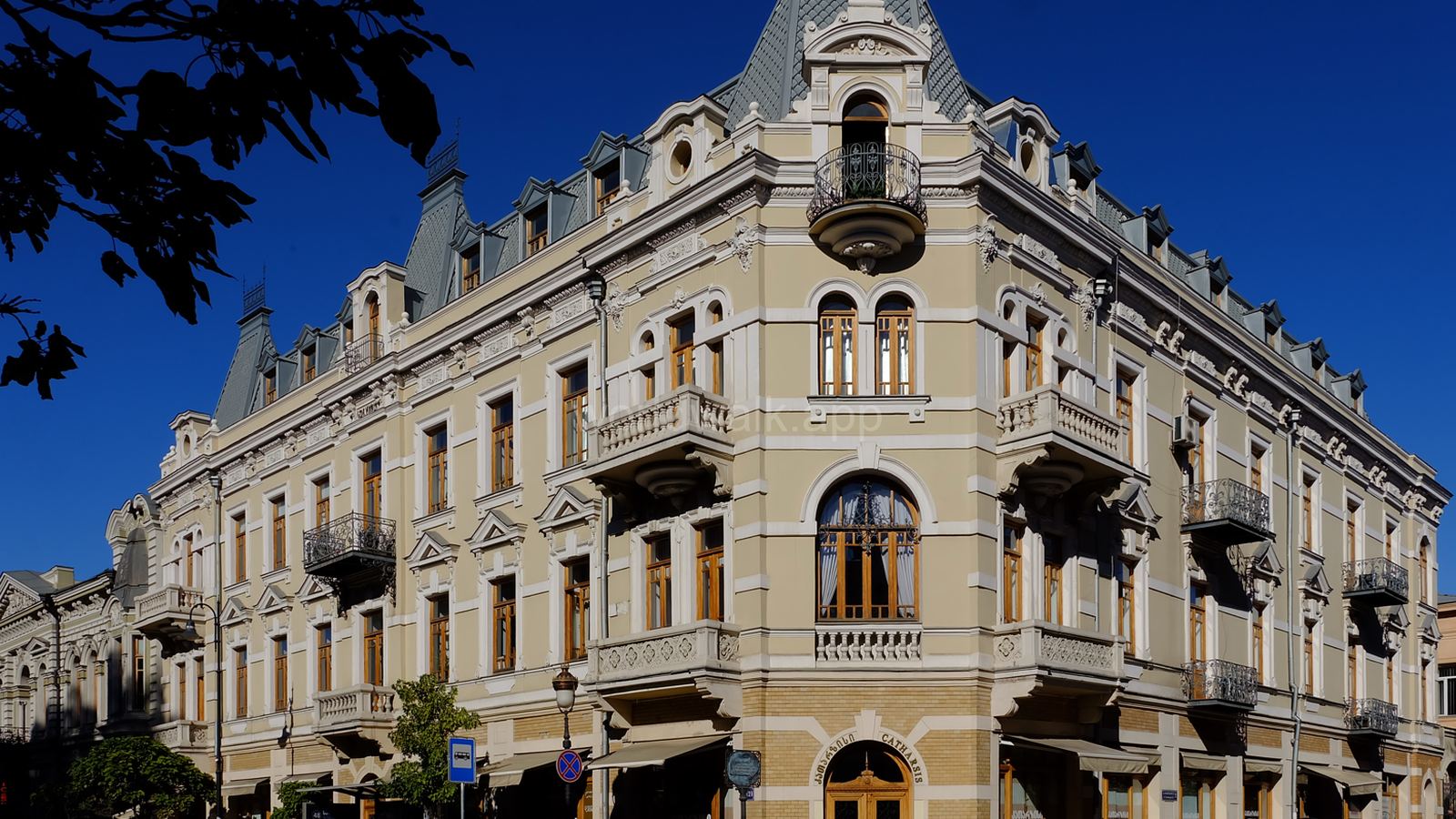
The Old Town and Abanotubani
The heart of the city, and where everyone starts. The brick domes of the sulphur baths sticking straight out of the ground, Meidan, narrow streets, and the waterfall in Leghvtakhevi behind the baths. A detailed route is in Old Tbilisi walking route.
The baths themselves are a story of their own, and something worth doing once without fail: Tbilisi's sulphur baths.
Narikala Fortress and the cable car
A fortress above the city, a cable car from Rike Park and a view over the whole valley. Fifteen minutes up, or an hour if you walk down via the Betlemi ascent. Fares, hours and how to pay are in Tbilisi's cable cars, and the best places for the view are in Tbilisi viewpoints.
Sololaki and its courtyards
The district beneath the fortress, built in the late 19th century with oil and merchant money. Carved doors, stained glass, painted staircases. Many entrance halls are open, and stepping into them is normal local practice if you keep quiet.
Rustaveli Avenue
The city's ceremonial axis: the opera house, the National Museum, parliament, the Writers' House. People come here not for atmosphere but for specific sights — and to understand how an imperial and Soviet capital looked.
The Bridge of Peace and Rike Park
A glass pedestrian bridge over the Mtkvari, as controversial as it is recognisable. Lit up in the evening. The cable car to Narikala leaves from Rike.
Sameba Cathedral
An enormous modern cathedral on the left bank, the dominant feature of the whole city. Opinions on it differ, but the scale is impressive, and the view of Tbilisi from its terrace is one of the best.
Metekhi
A church on a cliff above the Mtkvari, with a monument to Vakhtang Gorgasali, the city's founder. A good place to look across at Abanotubani.
Mtatsminda
The funicular up, an amusement park, the writers' pantheon halfway and the widest view of the city. Best at sunset.
The Dry Bridge and its flea market
A flea market by the river: Soviet badges, crockery, cameras, carpets, books. Even if you buy nothing, it's a good cross-section of what this city is made from.
Fabrika and the left bank
A former sewing factory converted into a hostel with a courtyard, bars and workshops. The centre of evening life for the city's younger crowd. Around it is Chughureti, with the most interesting façades and the cheapest eateries. For an evening plan, see Tbilisi at night.
What to eat in Tbilisi
Tbilisi cuisine is all of Georgia at once plus city traditions: Kakhetian feasting, Imeretian cheeses and street food are all here.
What to try first:
- Khinkali — Tbilisi's are usually meat, with broth. You hold one by the knot on top, bite a small hole and drink the broth first.
- Khachapuri — in Tbilisi it's more often Imeretian or penovani; the Adjarian "boat" is a guest from the coast. The differences between the types are in Adjarian khachapuri.
- Mtsvadi — shashlik cooked over vine cuttings.
- Lobio in a clay pot with mchadi and pickles.
- Kubdari, chashushuli, ojakhuri — hearty classics.
- Georgian wine — Tbilisi is better than Batumi for tastings: wine bars on every corner and Kakheti two hours away. The basics are in Georgian wine explained.
- The Dezerter Bazaar — cheeses, spices, pickles and churchkhela. The best place to understand local food. What churchkhela is: What is churchkhela?
The topics common to all Georgia — cheeses, churchkhela and wine — are covered in detail in our Batumi series, and they're exactly the same in Tbilisi. For a broader look at Georgian dishes, see What to eat in Batumi.
Where to stay
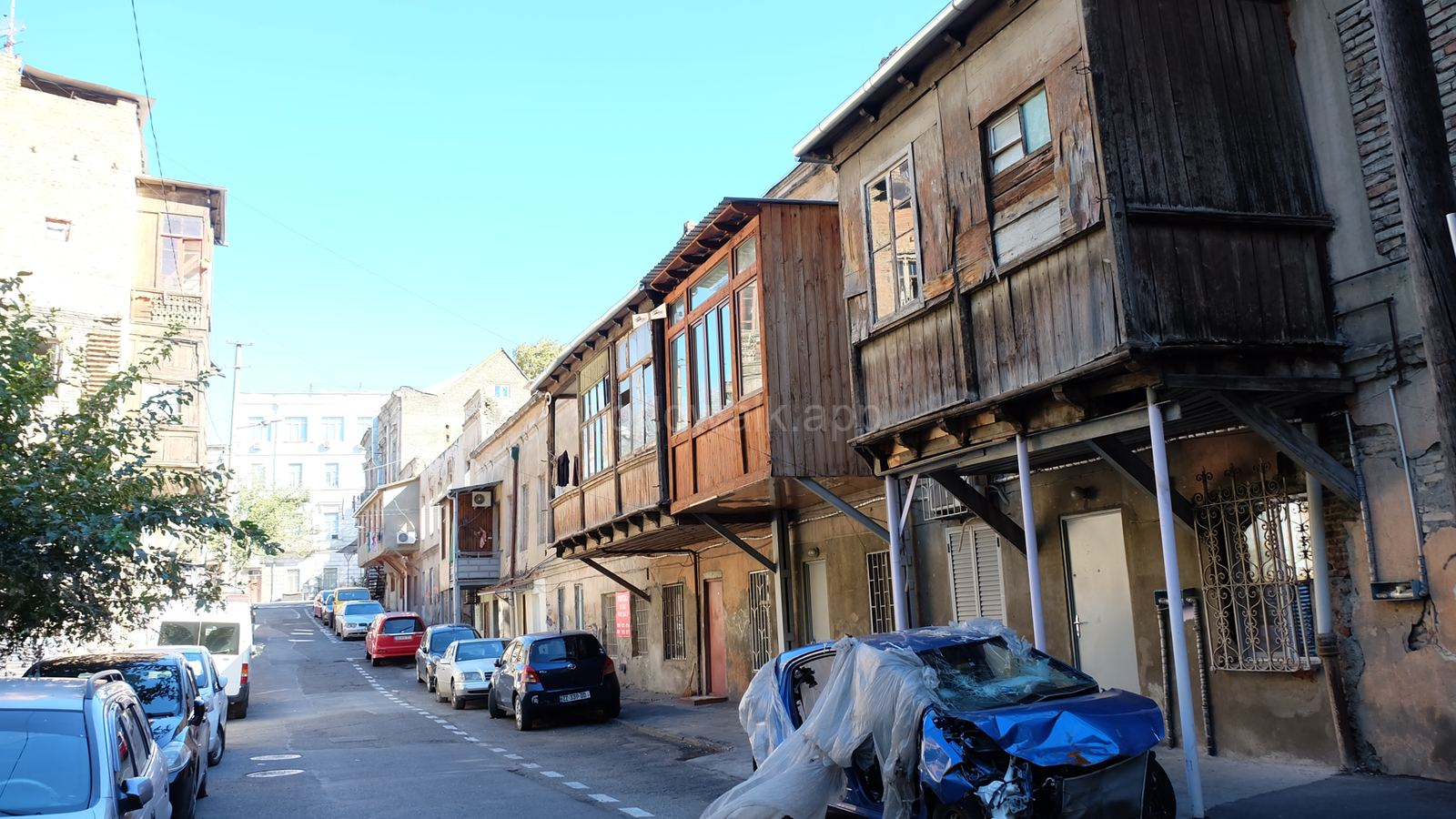
Sololaki is the best choice for a first visit. Central, atmospheric, everything on foot.
The Old Town is as close to everything as it gets, but noisy and touristy.
Mtatsminda is quiet and beautiful, but there are staircases. Bear that in mind if you have a heavy suitcase.
Vera is a calm residential district 15 minutes from the centre, with lots of cafés.
Marjanishvili and Chughureti — the left bank: cheaper, livelier in the evening and with the metro close by.
Vake is green, expensive and family-friendly. Far from the Old Town.
What to avoid on a first trip: districts along the highways and new-builds on the outskirts. A saving of fifteen dollars turns into forty minutes' travel each way.
A full breakdown by area is in Where to stay in Tbilisi.
Getting around
On foot — the main way in the centre. Allow for the terrain: Tbilisi is a city of staircases and climbs.
The metro — two lines, fast, cheap, running from early morning to midnight. Pay with a Metromoney card or a bank card; cash isn't accepted. The stations are deep and the escalators long.
Buses — blue city buses, also paid by card. They work noticeably better than you'd expect. Full details in public transport in Tbilisi.
Bolt and Yandex Go — cheap and everywhere. The main way in the evening and with luggage. See taxis in Tbilisi.
Marshrutkas — they exist, but you won't need them at first.
By car — in the centre more of a hindrance: narrow streets, scarce parking, paid zones. See parking in Tbilisi and traffic rules and fines in Georgia.
From the airport — Tbilisi Airport to city centre.
Money, connectivity and practicalities
All of this works the same across Georgia, so I won't repeat it:
- Cards, ATMs and cash — how foreign cards work, which ATMs to use and why to decline currency conversion: see Money in Georgia 2026.
- Exchanging money — exchange offices give a better rate than banks and the airport: see where to exchange money in Tbilisi.
- SIM cards and internet — the same three operators as elsewhere in the country; buy a local SIM or eSIM on arrival, since taxi apps and maps depend on mobile data.
- Tap water in Tbilisi is drinkable, and unlike on the coast it doesn't turn cloudy after rain.
- Cards are accepted almost everywhere in the centre, but you need cash at markets and on marshrutkas.
Day trips from Tbilisi
Mtskheta — 20 km away, the ancient capital, with Jvari and Svetitskhoveli. Half a day, the simplest trip.
Kakheti — Sighnaghi, Telavi and wineries. A full day, best with a driver.
Kazbegi (Stepantsminda) — three hours along the Georgian Military Road, with Gergeti Church beneath the glacier. A long but the most spectacular day.
Borjomi — mineral water and a park, 2.5 hours away.
David Gareja — a cave monastery in semi-desert on the border with Azerbaijan.
Batumi — no longer a day trip but the second half of the journey: how to get there.
The full list, with how long each takes and how to get there, is in Day trips from Tbilisi.
What a trip costs
Tbilisi is still inexpensive by European standards, but it has become dearer in recent years.
Cheap: transport, markets, bakeries, street food, wine in shops, coffee in ordinary cafés.
Mid-range: lunch in an ordinary Georgian restaurant, taxis around the city, museums.
Expensive by local standards: accommodation in the centre in season, new-wave restaurants, specialty coffee, designer wine bars.
Between a modest day and a comfortable one there's roughly a threefold difference. For the actual figures — per day, for three days and for a week, for one person and for a couple — see Tbilisi prices in 2026.
Frequently asked questions
Is Tbilisi worth visiting?
Yes, if you like cities with layers — where imperial architecture, Soviet heritage and lively street life sit side by side. It isn't a one-postcard city.
How many days is enough for Tbilisi?
Two days for the centre, three or four to add the districts and a trip out of town.
When is the best time to go to Tbilisi?
May–June or September–October. Summer is hot, winter grey but cheap.
Do I need travel insurance to enter Georgia?
Yes. Since 1 January 2026, all foreign tourists must carry health and accident insurance of at least 30,000 GEL, valid for the whole stay. Check the current rules before you travel.
Do I need a visa for Georgia?
Citizens of many countries, including the EU, the UK and the US, can enter without a visa, usually for up to a year. Check the official list for your passport.
Is Tbilisi safe?
Generally yes, the city is calm. The main everyday risks are traffic and uneven pavements.
Do I need to speak Georgian or English?
In the centre you can manage with English and Russian. Outside tourist areas it varies, but friendliness gets you through.