The problem is that almost nothing here announces itself. A sixth-century church looks like a small stone building in a courtyard. The city's most beautiful courtyard hides behind an ordinary door. The street where silk was once traded looks no different from the one next to it.
This route — roughly 3 km with a climb, two to three hours at an easy pace — is designed to take you through the quarter not by the shortest line, but by the right one.
Quick answer
Length: about 3 km, 2–3 hours with stops.
Start: Meidan Square.
Finish: Anchiskhati and Rike Park, or back to Meidan.
Difficulty: there is a climb to Narikala and plenty of steps.
When to go: in the morning before the heat, or after 5 pm. In the rain, the quarter only gets better.
Don't miss: the Leghvtakhevi waterfall, the Betlemi steps, Anchiskhati.
1. Meidan — the starting point
Meidan ("square" in Persian) was the city's trading centre for centuries: roads from Persia, Turkey and the Caucasus met here, and this was where the bazaar stood. The name tells you more about the city than any plaque: Tbilisi was always a crossroads, not a remote fortress.
Today it is a square with cafés, but the geography hasn't changed — all the old quarters still fan out from here.
2. Abanotubani — the bath quarter
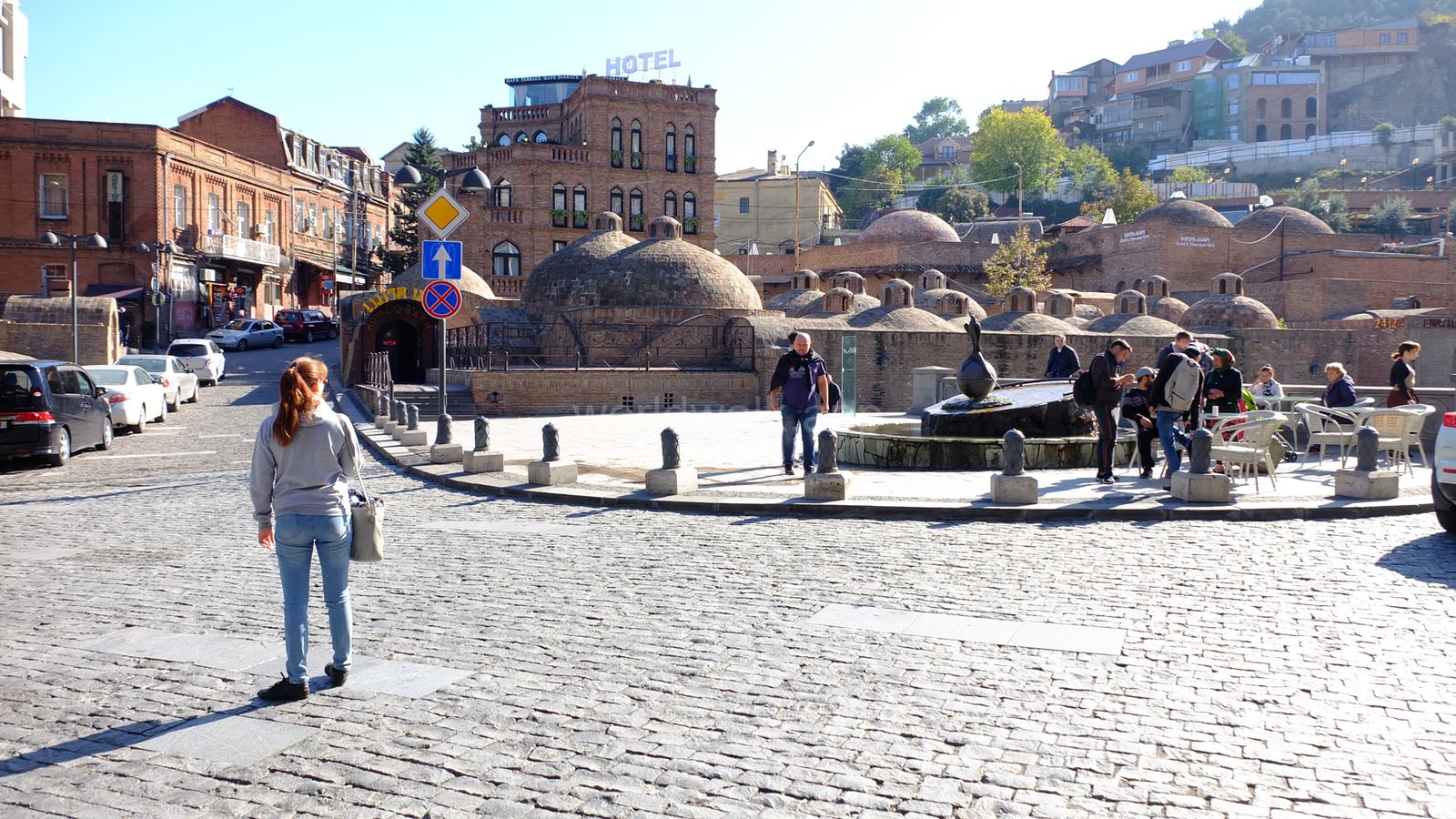
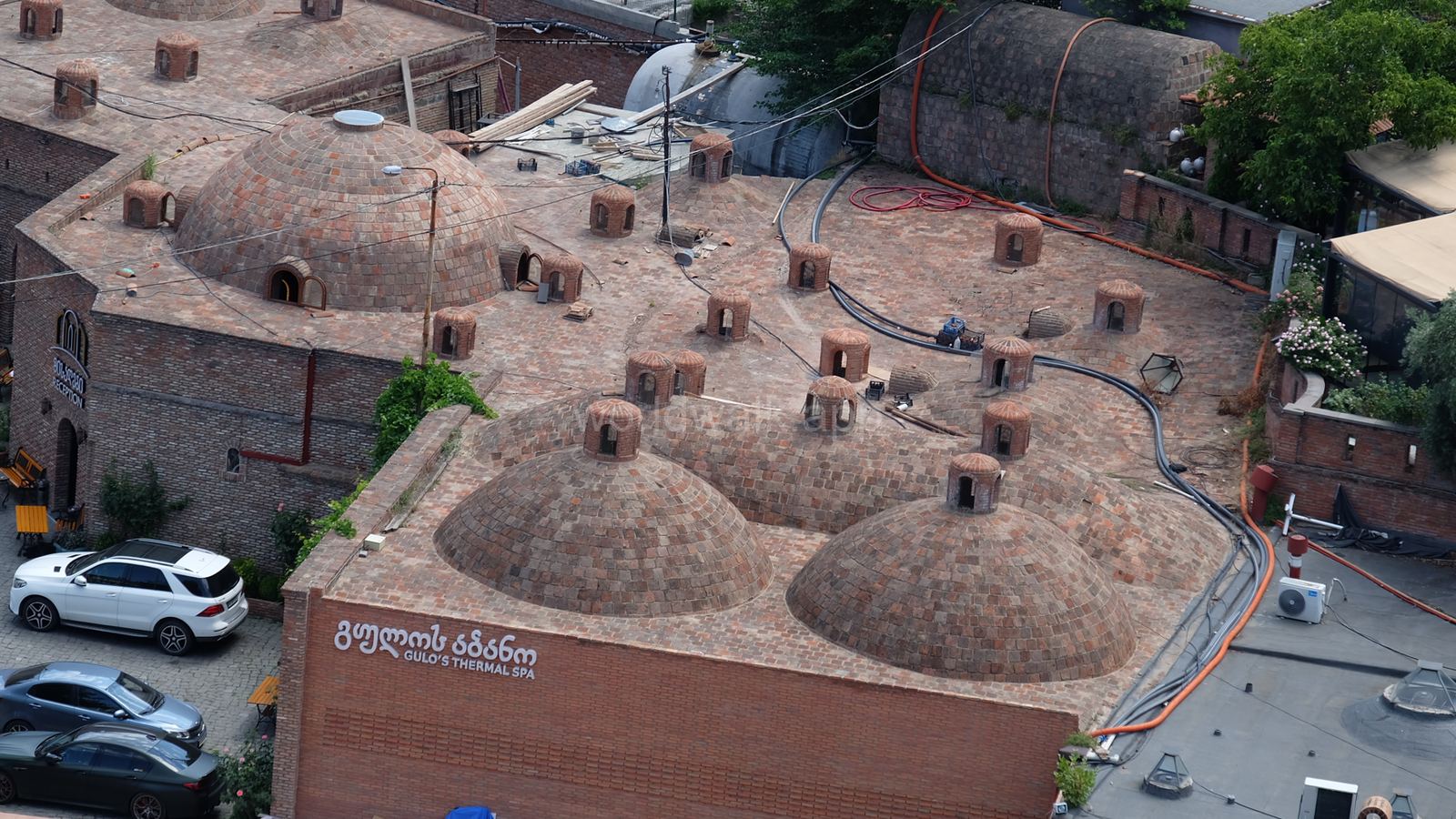
Five minutes downhill, the city's most recognisable sight begins: brick domes rising straight out of the pavement. The baths are built underground, above the sulphur springs, and only the vaults — with openings for light and steam — show above the surface.
The founding legend explains why the capital is here at all: King Vakhtang Gorgasali's pheasant, shot during a hunt, fell into a hot spring and was cooked. The city's name comes from the word tbili, meaning "warm".
The quarter's showpiece is Chreli Abano ("the colourful bath"), with its blue tiled façade in Persian style. After the Bridge of Peace, it is probably the most photographed spot in Tbilisi.
If you want to go in rather than just look, everything you need to know is in our guide to Tbilisi's sulphur baths.
3. Leghvtakhevi gorge and waterfall
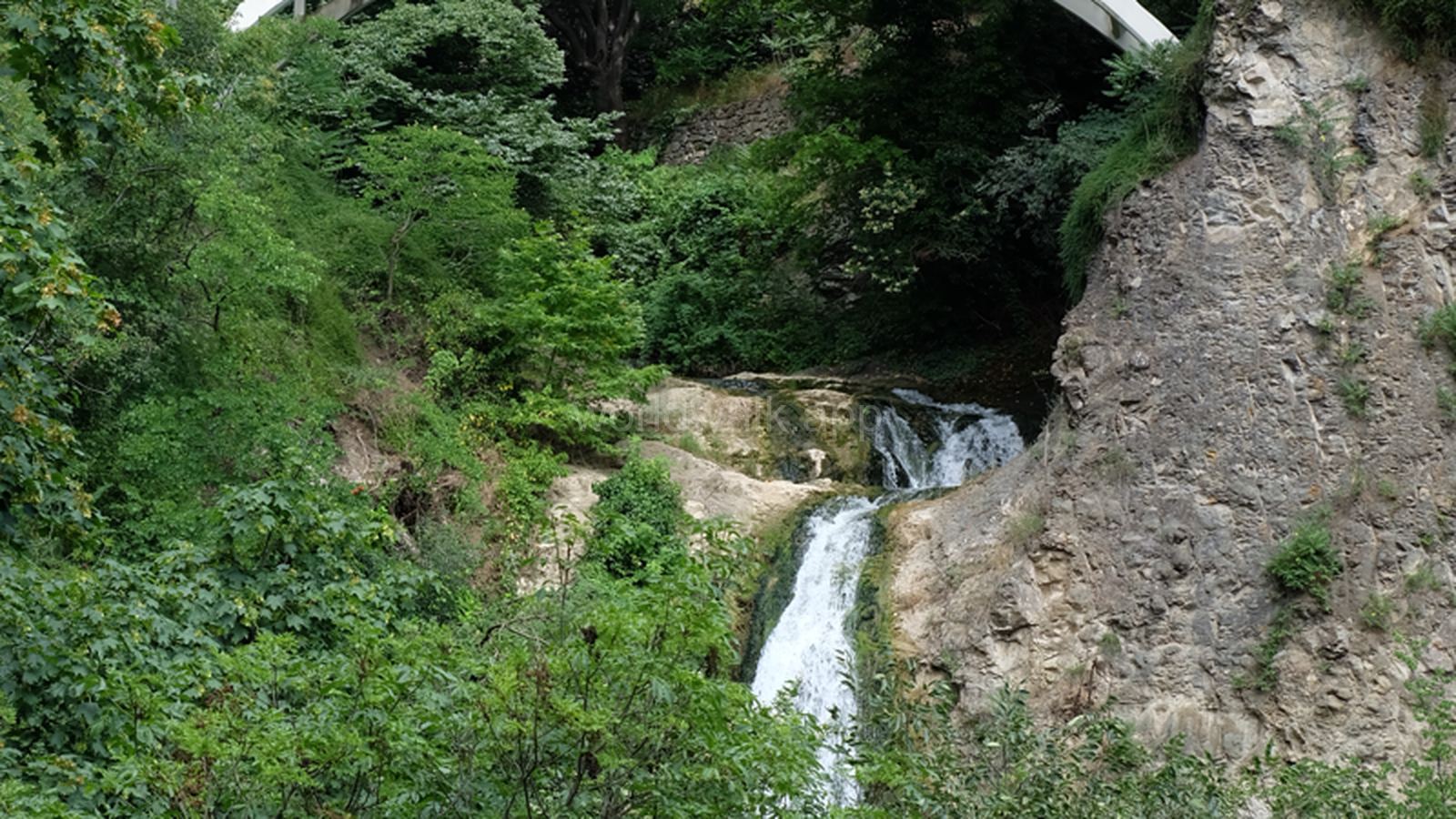
Past the baths, a path leads into the Leghvtakhevi gorge ("fig gorge"). Five minutes on, you reach a waterfall about twenty metres high — in the middle of the capital, and yet only a minority of visitors ever get here.
In summer it is noticeably cooler here than on the square. This is the best breather on the route.
4. Jumah Mosque
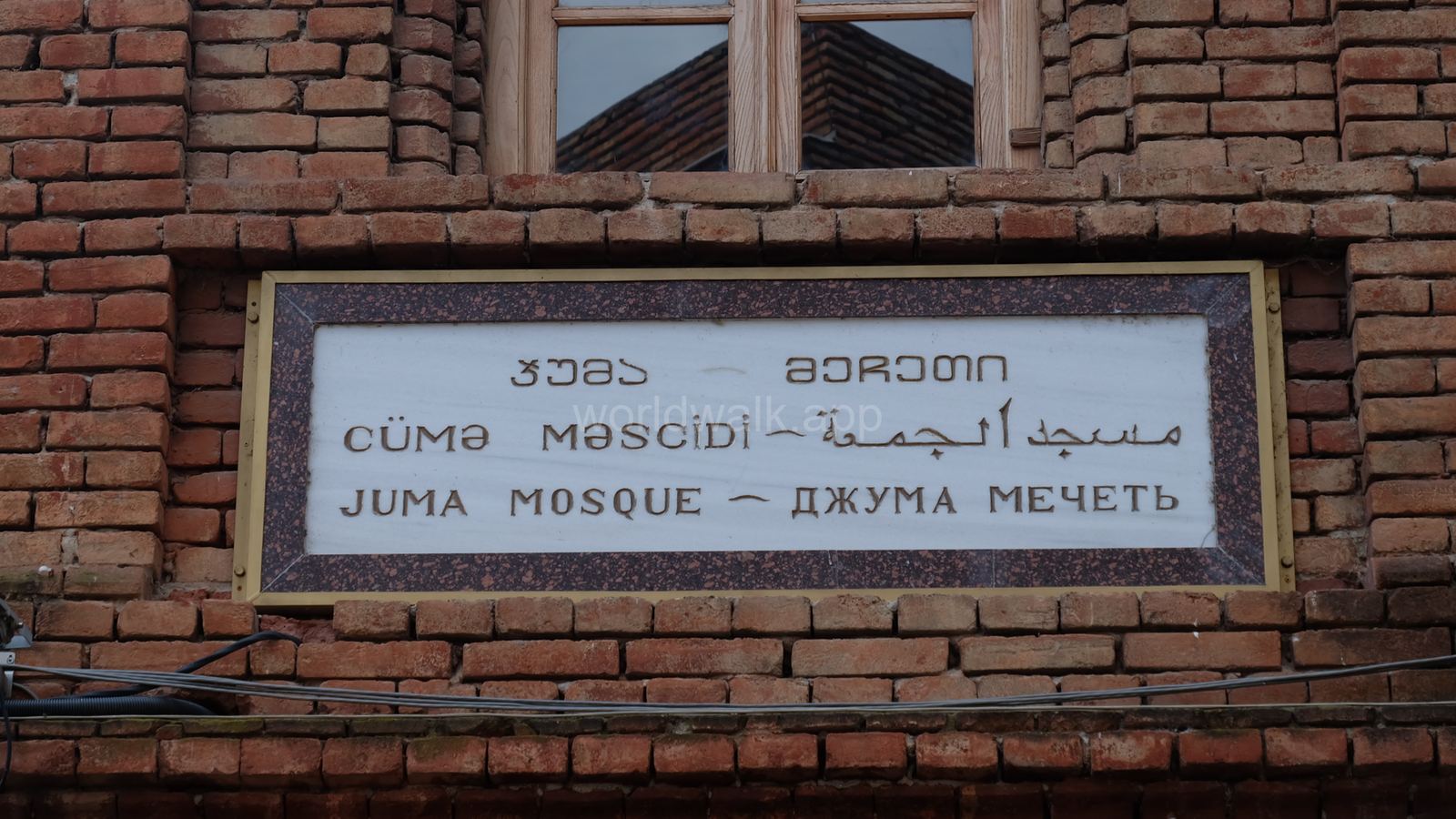
Tbilisi's only working mosque stands at the entrance to the gorge. What makes it special: after the city's Shia mosque was demolished in Soviet times, the Sunni community took the Shia worshippers in — and ever since, both have prayed in the same building. That is rare for the region, and worth knowing.
The building is modest, made of brick, with a single minaret. You can go in outside prayer times if you follow the usual rules: shoulders and knees covered, a headscarf for women, shoes off.
5. The Betlemi steps
This is where the climb begins — and the best residential stretch of the route. The Betlemi ascent is a staircase running up the slope below the fortress, past houses with wooden balconies, washing lines, cats and inner courtyards.
People live here, and you can tell. Walk slowly, look around, and don't peer into windows.
Along the way are the Upper and Lower Betlemi churches — plain on the outside and older than they look.
6. Narikala Fortress
At the top is the fortress. Its foundations date back to the fourth century, and it was rebuilt in turn by Persians, Arabs, Mongols and Georgian kings. Inside is the restored Church of St Nicholas; around it are walls you can walk along.
The main reason to come up is the view: the whole Mtkvari (Kura) valley, old roofs below, Sameba Cathedral on the opposite bank and mountains on the horizon.
Nearby stands the Mother of Georgia monument (Kartlis Deda): a woman holding a bowl of wine in one hand and a sword in the other. The idea is simple — wine for the guest, the sword for the enemy — and it is a fairly accurate description of the local culture.
You can go down by cable car to Rike Park or on foot. Cable car details and the best times to be up here are in our guide to Tbilisi viewpoints.
7. Shardeni Street and Sioni
Head back down into the quarter. Shardeni Street is pedestrian, lined with bars and terraces, and named after the 17th-century French traveller Jean Chardin, who left one of the first European descriptions of Georgia. In the evening it is the liveliest street in the Old Town; during the day it is simply pleasant.
Close by is Sioni Cathedral, for centuries the city's main church. Inside is the cross of St Nino, said to be made of grapevine bound with her own hair — a symbol where Christianity and winemaking meet, which is very Georgian.
8. Anchiskhati — the oldest building in the city
A few minutes from Sioni, in a courtyard, stands the Anchiskhati Basilica — sixth century, the oldest surviving church in Tbilisi.
It looks so ordinary that people walk past without noticing it. A simple stone volume, a small courtyard, a brick bell tower. Inside, it is dark, cramped and quiet.
That is exactly why it belongs at the end of the route: after Narikala and the panoramas, it brings everything back to human scale. The city is fifteen hundred years old, and this building has seen most of them.
9. Bridge of Peace and Rike Park — the finale
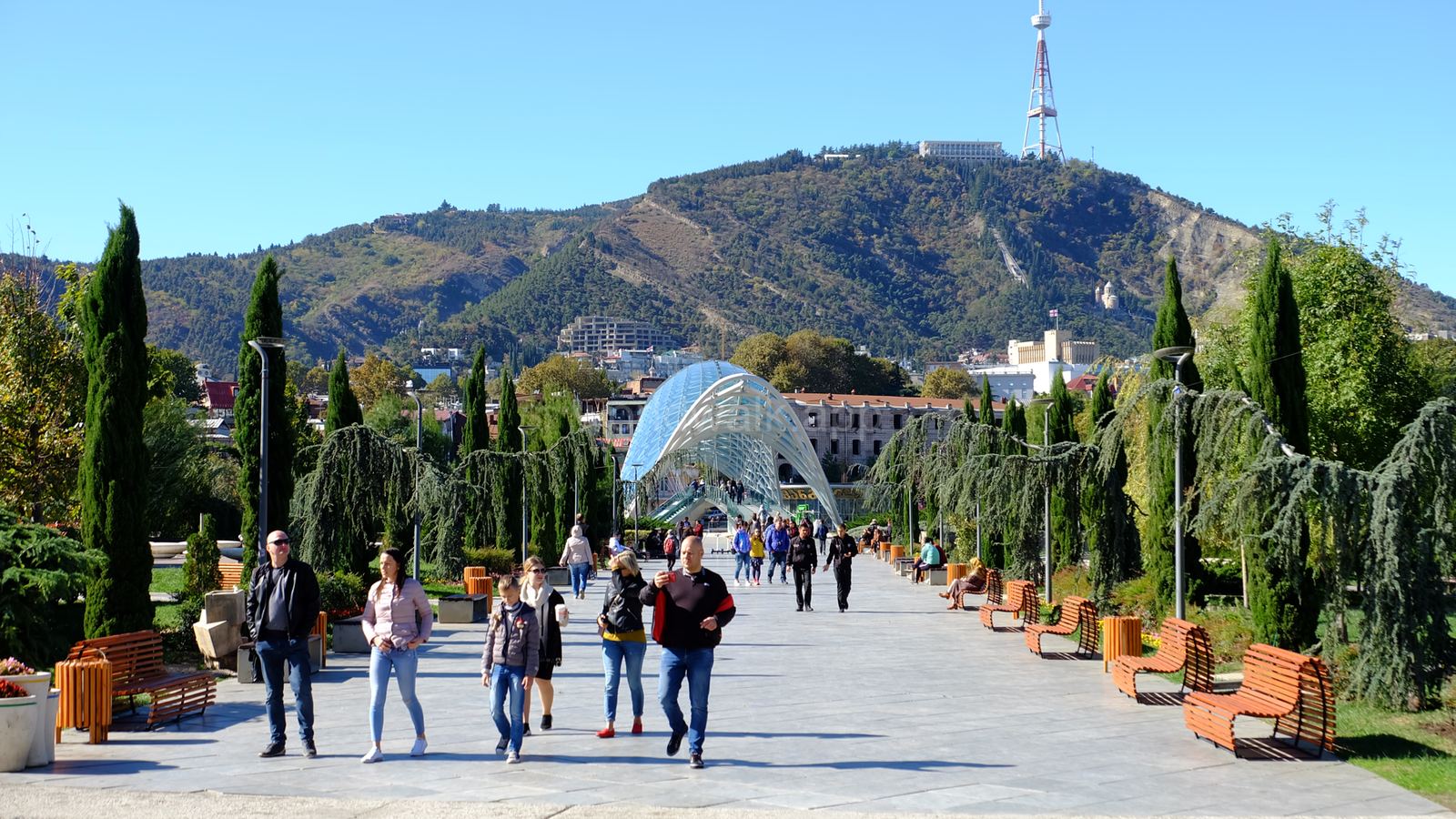
From Anchiskhati, walk down to the river. The Bridge of Peace is a glass structure that stirs exactly the same debates among locals as any modern intervention in a historic centre — and yet it offers the best angle on the river and the Old Town.
On the other side is Rike Park, the lower cable car station and a view back across everything you have just walked through.
If you still have energy, climb up to Metekhi: a church on a cliff, the statue of Vakhtang Gorgasali and the best view of Abanotubani, where the route began.
Practical tips
- Shoes. Steps, cobbles, climbs. This matters more than anything else.
- Time. 2–3 hours travelling light; half a day with the baths and lunch.
- Heat. In summer, go before 11 am or after 5 pm. In the middle of the day, the climb to Narikala is hard work.
- Rain. The quarter is more beautiful in the rain than in sunshine. Just be careful on the cobbles — they get slippery.
- Courtyards. Many are open, and walking into them is normal. But these are homes: keep quiet, don't come in groups, and don't photograph people's windows.
- Money. Small cafés and shops may not take cards — carry some cash.
How to walk the route with context
Old Tbilisi is a place where almost all the value lies in the stories rather than the sights. Without context, a sixth-century building looks like a shed in a courtyard; with context, it is the oldest thing you will see all day.
We built our Batumi Old Town audio tour on the same idea: a route, a story at every stop and your own pace, with no group. A Tbilisi route is in the works.
Frequently asked questions
How long does a walk around Old Tbilisi take?
Two to three hours at an easy pace. Half a day if you add the baths, lunch and the climb to Narikala.
What is the oldest building in Tbilisi?
The Anchiskhati Basilica, sixth century. It stands in a courtyard near Sioni Cathedral and is easy to miss.
Can you walk up to Narikala?
Yes, via the Betlemi steps. It is a staircase through a residential slope — the most atmospheric part of the route, but a noticeable climb. Going down, the cable car is convenient.
Do I need to pay for anything on the route?
The fortress, the churches and the gorge with the waterfall are free. You pay only for the cable car and the baths themselves.
Is it OK to walk into the courtyards of old houses?
If the door is open, yes — it is common practice here. But these are people's homes: keep your voice down and don't go in as a big group.
What order is best?
Uphill and back down to the river: Meidan → Abanotubani → waterfall → Betlemi → Narikala → Shardeni → Sioni → Anchiskhati → Bridge of Peace.