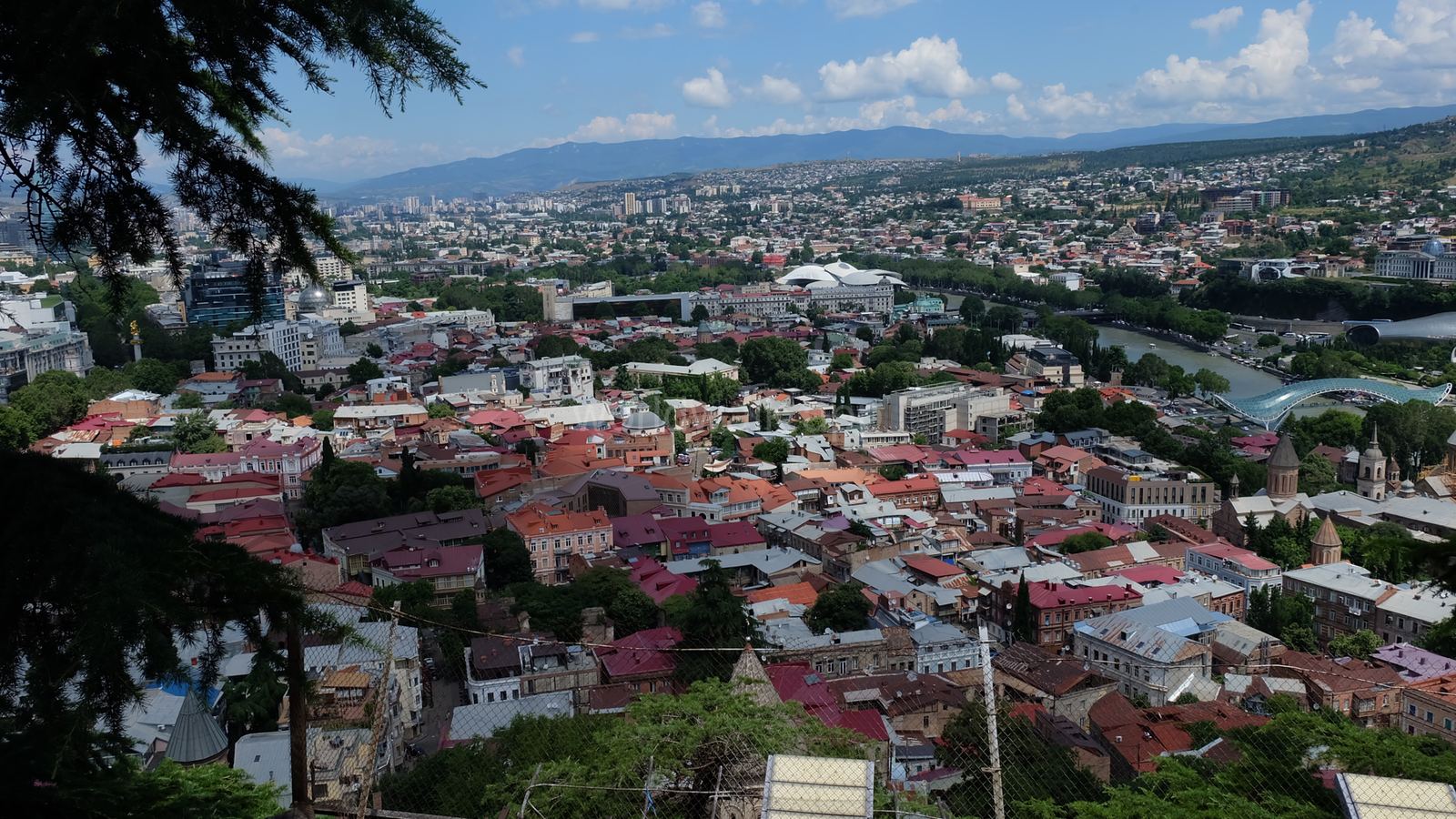
Below is a route of roughly 6–8 km with a climb, planned so that the heat and the queues fall during your breaks and the best light comes in the evening.
Quick answer
Total distance: 6–8 km on foot, a full day with breaks.
Start: Freedom Square or Meidan.
Finish: the Bridge of Peace and the left bank after sunset.
Transport: not needed, apart from the cable car up the hill.
What to bring: comfortable shoes (there are a lot of steps), water, and small cash for the market.
If you only have one day and it is hot: shift everything an hour earlier and plan a long lunch from 2 to 4 pm.
Morning: Meidan and Abanotubani (9:00–11:00)
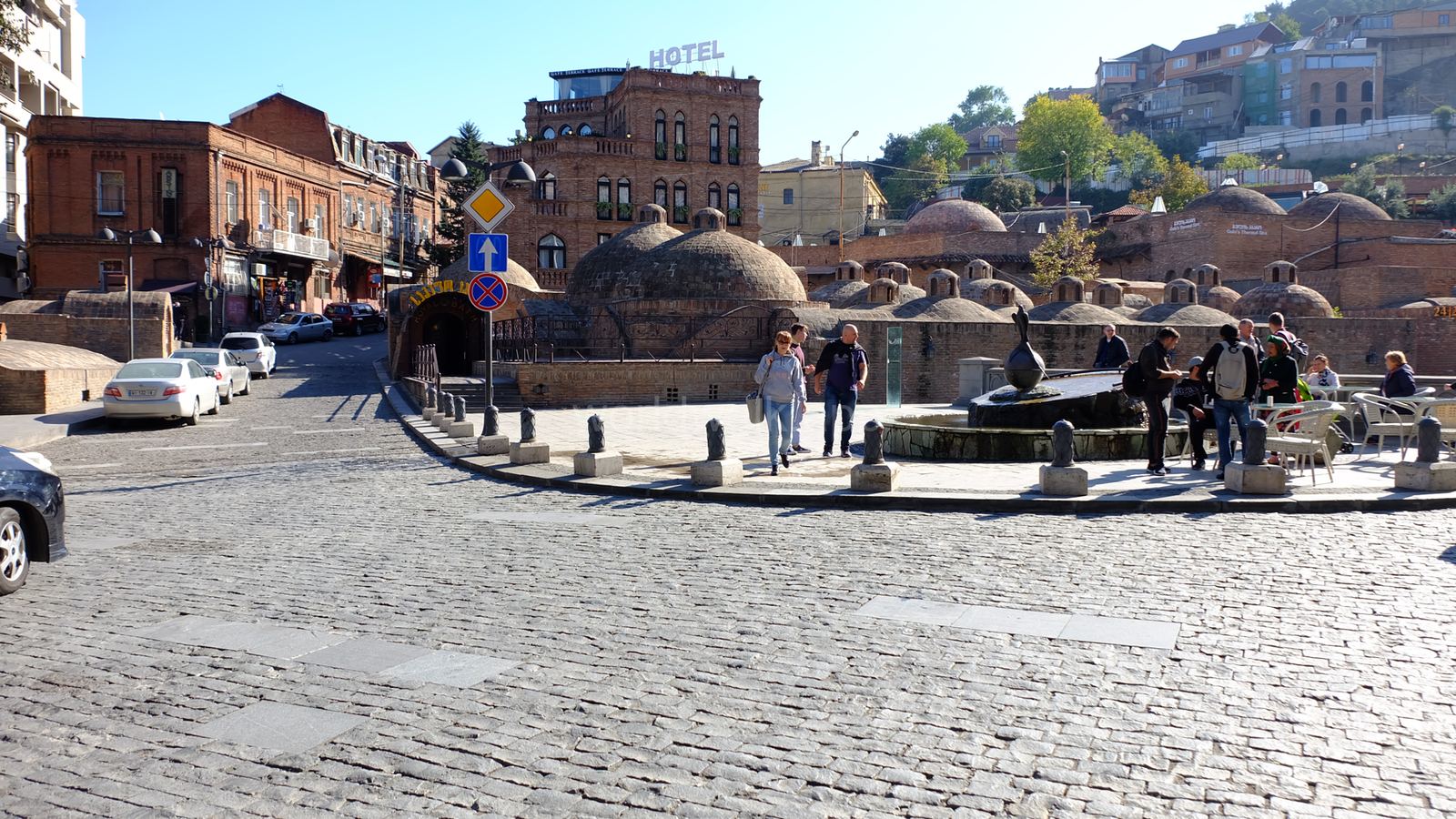
Start at Meidan Square, the city's historic trading hub, where all the old quarters meet. From here it is five minutes to Abanotubani, the bath quarter.
This is Tbilisi's most recognisable sight: brick domes sticking out of the ground, because the baths themselves are underground, above the springs. Walk between them and turn into the Leghvtakhevi gorge — a couple of minutes on, there is a real waterfall right in the middle of the city. Most visitors never make it this far.
Nearby is the Jumah Mosque, the only one in the city where, through a historical twist, Sunni and Shia Muslims pray together. The road past it leads to the painted façade of the Chreli Abano bathhouse, the most photographed in the quarter.
If you plan to visit a bathhouse yourself, go in the evening at the end of the day, not in the morning. What happens inside and how much it costs is covered in our guide to Tbilisi's sulphur baths.
Late morning: up to Narikala (11:00–12:30)
There are two ways up.
On foot — from Abanotubani up the Betlemi steps: stairs, courtyards, washing lines, cats. This is the best part of the route, but it is a climb, and you will feel it in the heat.
By cable car — from Rike Park on the other bank: five minutes, with a panorama over the whole city. You pay with a transport card; cash is not accepted.
The best combination: walk up via Betlemi and come down by cable car to Rike Park. That way you see the city from the inside and get the view from above.
At the top are Narikala Fortress, the Mother of Georgia monument and the city's main viewpoint: the whole river valley, tiled roofs and Sameba Cathedral on the opposite bank. More in our guide to Tbilisi viewpoints.
Lunch: Meidan or Sololaki (12:30–14:00)
Head back down and have lunch somewhere between Meidan and Sololaki — that is where you'll find the densest cluster of decent places rather than tourist traps.
What to order on day one: khinkali and something with cheese. Khinkali are eaten by hand, held by the knot on top, and you drink the broth first. Khachapuri in Tbilisi is usually Imeretian or penovani; the Adjarian "boat" is available too, but it comes from the coast — here is how the types differ. For more dishes, see what to eat in Georgia.
Pair it with a glass of Georgian wine. If you're not sure where to start, here is a short guide.
In summer, stretch lunch out until 3 or 4 pm. It isn't laziness, it is local logic: in the hottest hours, the city slows right down.
Afternoon: Sololaki and its courtyards (14:00–16:00)
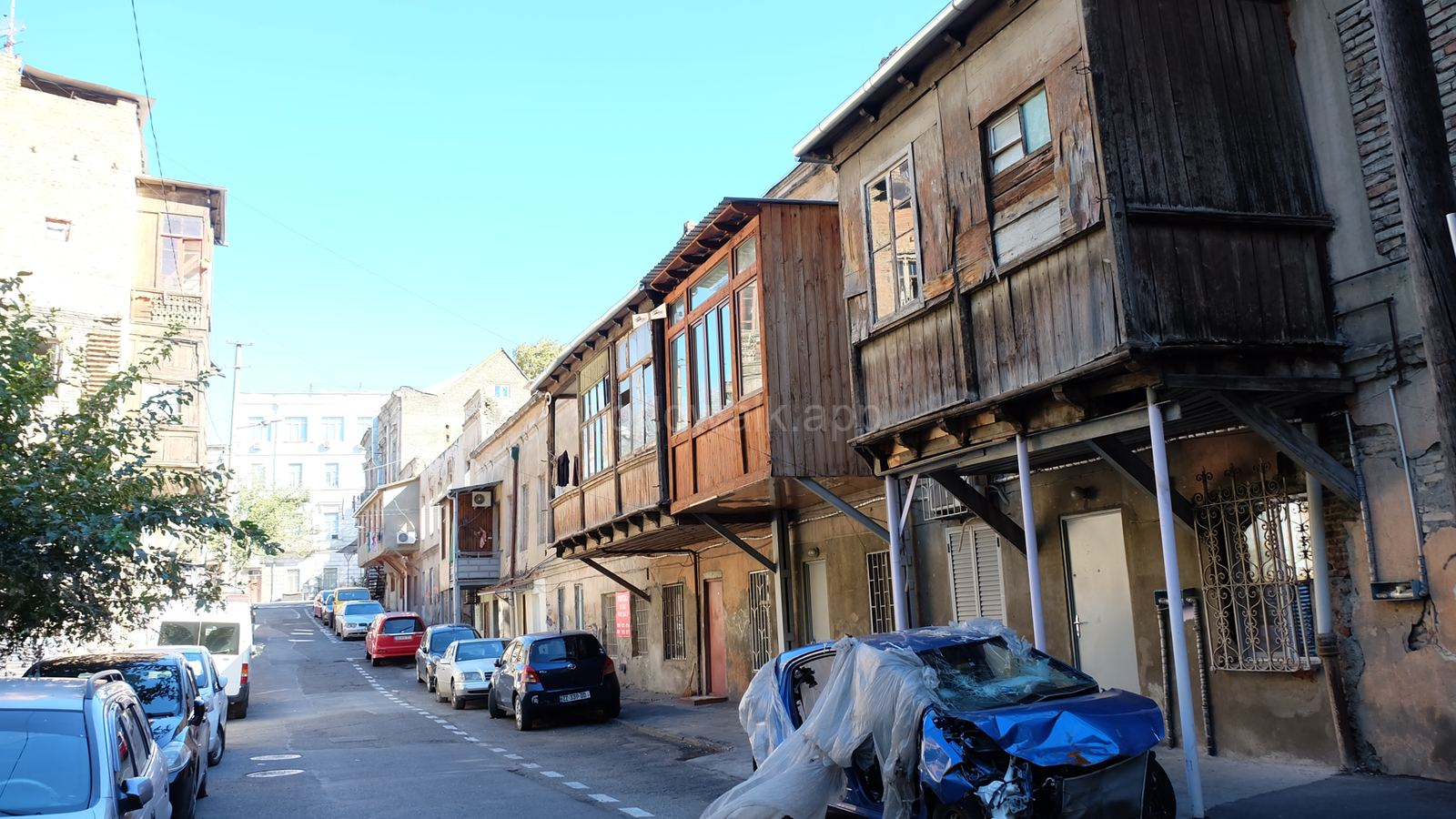
Sololaki is the district below the fortress, built in the late 19th century with money from oil and merchant families. Here it makes sense not to follow a route, but simply to wander along Amaghleba, Lermontov and Asatiani streets and look into open entrance halls.
What to look for:
- carved wooden doors with their original handles;
- stained glass on the landings;
- painted stairwells — some are decorated from floor to ceiling;
- inner courtyards with shared balconies all the way round.
The rules are simple: if the door is open, you may go in — but quietly, because these are people's homes. Don't ring doorbells, don't make noise and don't go in as a group.
Finish the walk at Freedom Square, with its golden statue of St George.
Early evening: Rustaveli and the Dry Bridge (16:00–18:00)
From Freedom Square runs Rustaveli Avenue, the city's grand main street: the Moorish-style Opera House, the National Museum, Parliament and the Art Nouveau Writers' House. Allow an hour for the walk, or longer if you go into a museum.
If the day isn't too hot and you still have energy, detour to the Dry Bridge, a flea market along the river: Soviet badges, cameras, crockery, carpets, books. It's a great place even if you buy nothing.
Sunset: the Bridge of Peace and Rike Park (18:00–20:00)
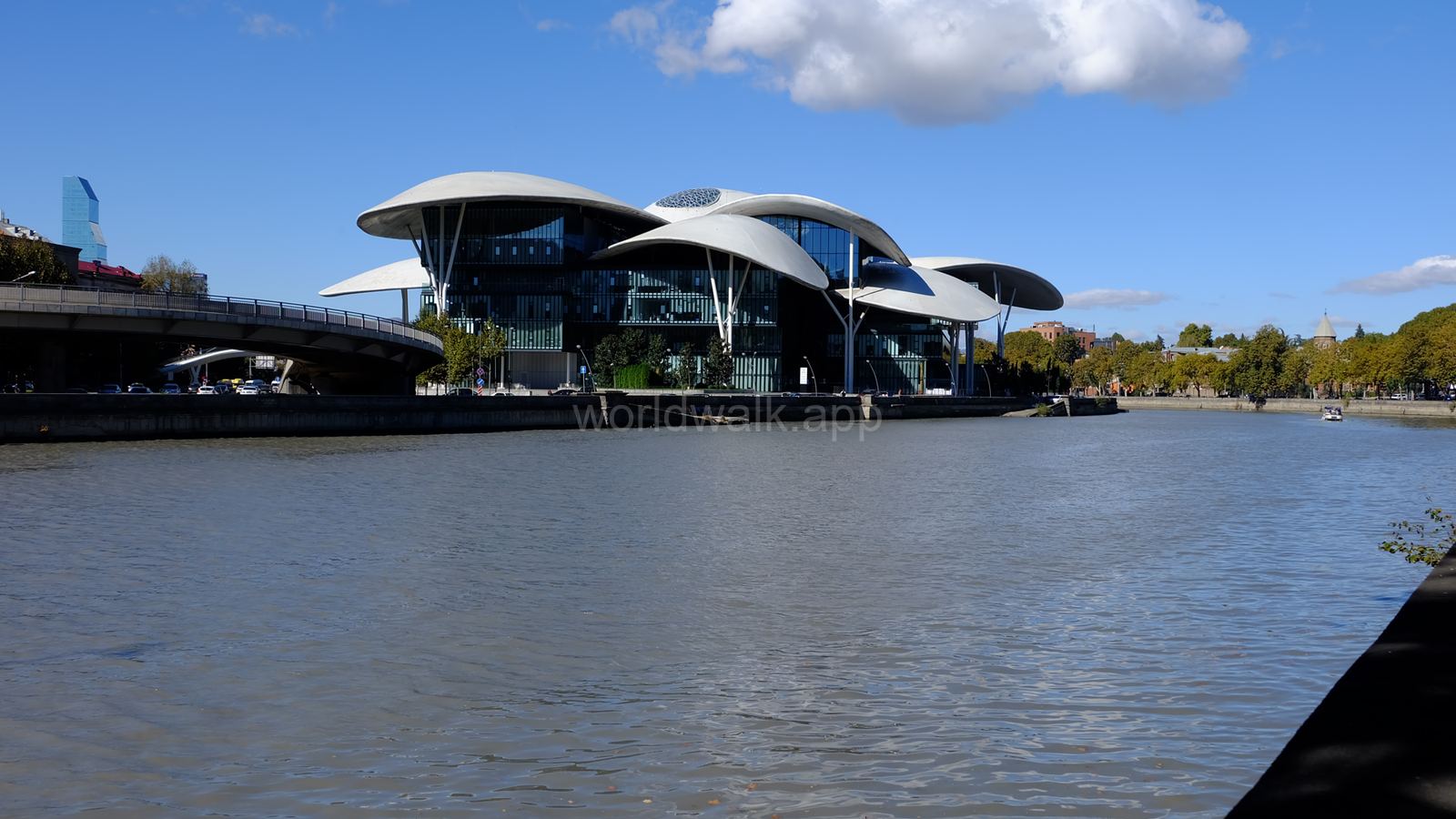
Head back to the river. The Bridge of Peace is a glass pedestrian bridge that divides opinion among locals — but at sunset, it photographs beautifully.
Cross it to Rike Park on the left bank, which has the best view of the illuminated Narikala and the Old Town opposite.
From here, walk up to Metekhi, a church on a cliff above the river, with a statue of the city's founder, Vakhtang Gorgasali. Legend has it that he was hunting here when a pheasant he had shot fell into a hot spring and was cooked — and so the sulphur springs were discovered, and Tbilisi grew up around them. This is also the best angle on Abanotubani, where your morning began.
Dinner and the evening (20:00 onwards)
Three options, depending on your mood:
Relaxed. Dinner in Sololaki or around Meidan, then the sulphur baths — the perfect end to a day in which you've walked eight kilometres with a climb.
Lively. Cross the river to Chughureti and Marjanishvili: Fabrika with its courtyard and bars, cheap local canteens, the youngest part of the city.
Wine. Wine bars in Vera and Sololaki, where wine is poured by the glass and you can try qvevri wines.
If the day turns out rainy
Tbilisi copes with rain better than the coast — it simply gets less of it. But if you are unlucky:
- the sulphur baths become the main plan for the day rather than an option;
- the Georgian National Museum, including its Soviet Occupation Hall, fills two or three hours;
- the Dezerter Bazaar is covered;
- Sololaki has its own charm in the rain, if you have an umbrella and don't mind wet shoes.
What didn't fit — and where to go on day two
If you're staying another day:
- Mtatsminda — the funicular, the park, the Pantheon and the widest view of all;
- Sameba Cathedral — sheer scale and the view from its terrace;
- Mtskheta — the ancient capital, 20 km away, half a day;
- Dezerter Bazaar — cheeses, spices and pickles;
- Turtle Lake and the Open Air Museum of Ethnography — greenery and a break from the city.
A plan for several days is in our Tbilisi travel guide, and if the coast is your next stop, see how to get from Tbilisi to Batumi.
Frequently asked questions
Can you see Tbilisi in one day?
The centre, yes. One day gives you the shape of the city: the Old Town, Narikala, Sololaki and the riverside. For other districts and day trips, you need a second and third day.
How many kilometres will I walk?
Roughly 6–8 km with a noticeable climb. Your shoes matter more than you might think.
Do I need transport for this route?
No, except for the cable car. Everything else is walkable.
Should I go to the sulphur baths on the same day?
Yes — ideally in the evening. After a long walk, it is exactly what you need.
What if it is very hot?
Start the route an hour earlier and plan a long lunch from 2 to 4 pm. In summer, that is how the city itself lives.
Where should I start if I arrive in the evening?
With the Bridge of Peace and Rike Park: the lights, the view of Narikala and a short walk along the river.