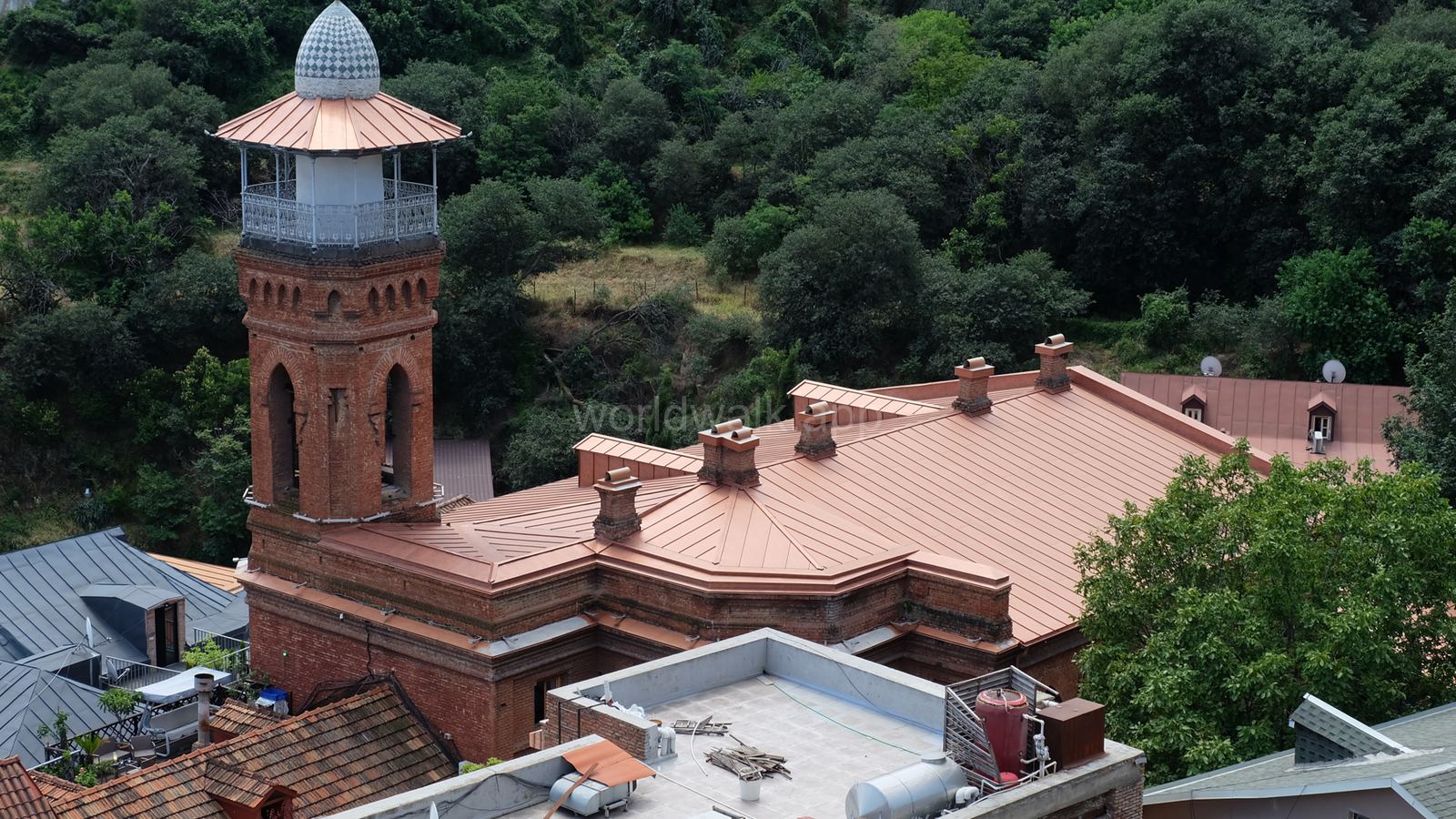
That is why the sulphur baths here are not a spa treatment but part of the city's biography. Pushkin wrote that he had never come across anything more luxurious than the baths of Tiflis. Alexandre Dumas wrote about them too. And surprisingly little has changed in how they work since then.
It is worth going at least once — but it helps to know what to expect, because this is neither a Finnish sauna nor a Turkish hammam.
Quick answer
Where: the Abanotubani quarter in the Old Town, below Narikala Fortress.
What it is: underground rooms with pools of natural sulphur water that arrives hot straight from the ground.
Two formats: the public hall (cheaper, the local way) and a private room for your group (more popular with visitors).
How long: a private room is usually booked for an hour, which is enough.
Swimwear: not worn in the public hall; optional in a private room, since you are on your own.
The smell: sulphur does smell. You notice it for the first five minutes, then you stop noticing.
When to go: in the evening, after a long walk. Go in the morning if you want to catch the public hall in its everyday, local rhythm.
How the baths work
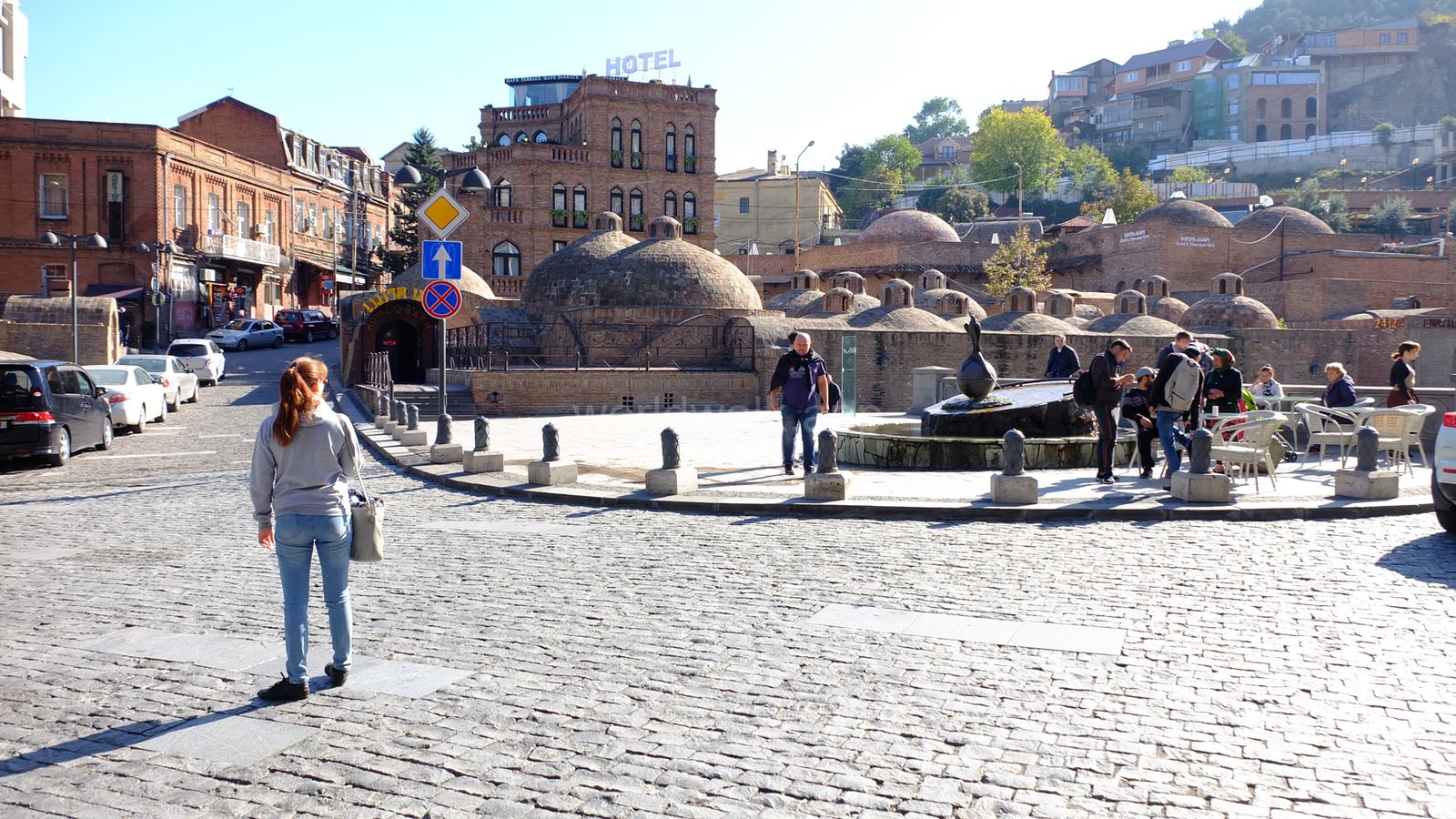
The baths are built underground, above the springs. Only the brick domes with glass openings show above ground; they let light into the rooms below — these are the domes rising out of the pavement that you've seen in every photo of Tbilisi.
The water arrives hot and sulphurous, at around 40°C or more. It isn't heated — it comes out of the ground that way. Hence the distinctive smell and the feel on your skin: after sulphur water, skin is noticeably softer.
Inside, there is usually a pool of hot sulphur water, a shower or a tub of cold water, and sometimes a steam room. There is no elaborate infrastructure — this is a functional place, not a spa resort.
Public hall or private room
This is the main decision, and it shapes the whole experience.
Public hall
Separate halls for men and women, a cheap ticket, no booking needed.
What it's like: a large underground room, a pool, local regulars, conversation and no ceremony whatsoever. Nobody wears swimwear — it's the norm, and after ten minutes it stops being an issue.
Who it suits: people who are interested in the city rather than in comfort. It's the most authentic version of a Tbilisi bath, and it costs several times less.
Who it doesn't suit: anyone who feels shy, or anyone looking for privacy.
Private room
A small room for your group: your own pool, a shower, sometimes a steam room and a lounge with a sofa. You rent the whole room, usually for an hour. Book in advance — in the evening, rooms get taken.
What it's like: you're on your own. Swimwear or not, it's up to you; you can even bring wine. The standard of finish varies hugely — from simple tiles to glazed tiles and mosaics — and the price follows.
Who it suits: couples, groups, and anyone who values privacy. Most visitors choose this option, and for a first time it makes sense.
Kisa — the scrub and massage
A separate service, paid on top of the entrance fee — and the main reason to go.
Kisa is a rough scrubbing mitt, and the mekise is the person who uses it on you. You lie on a marble slab, your whole body is scrubbed thoroughly with the coarse mitt, then you are covered in a huge mound of soap foam squeezed from a cloth bag and rinsed off.
Two warnings. First, it's quite intense — closer to a procedure than to relaxation. Second, the amount of skin that comes off you tends to impress people deeply.
It takes 15–20 minutes. If you're only going to a bathhouse once in your life, get the kisa — without it, all you've had is a pool.
What to bring
- A towel and slippers — often provided or available to rent, but not everywhere and not always of good quality. Your own are more reliable.
- Swimwear — optional for a private room, not needed in the public hall.
- Cash — many bathhouses take cards, but not all, and tipping the mekise is easier in cash.
- A comb and toiletries — hairdryers and mirrors aren't available everywhere.
- Water — in hot sulphur water you dehydrate faster than you think.
What not to bring: jewellery. Sulphur tarnishes silver.
Where to go
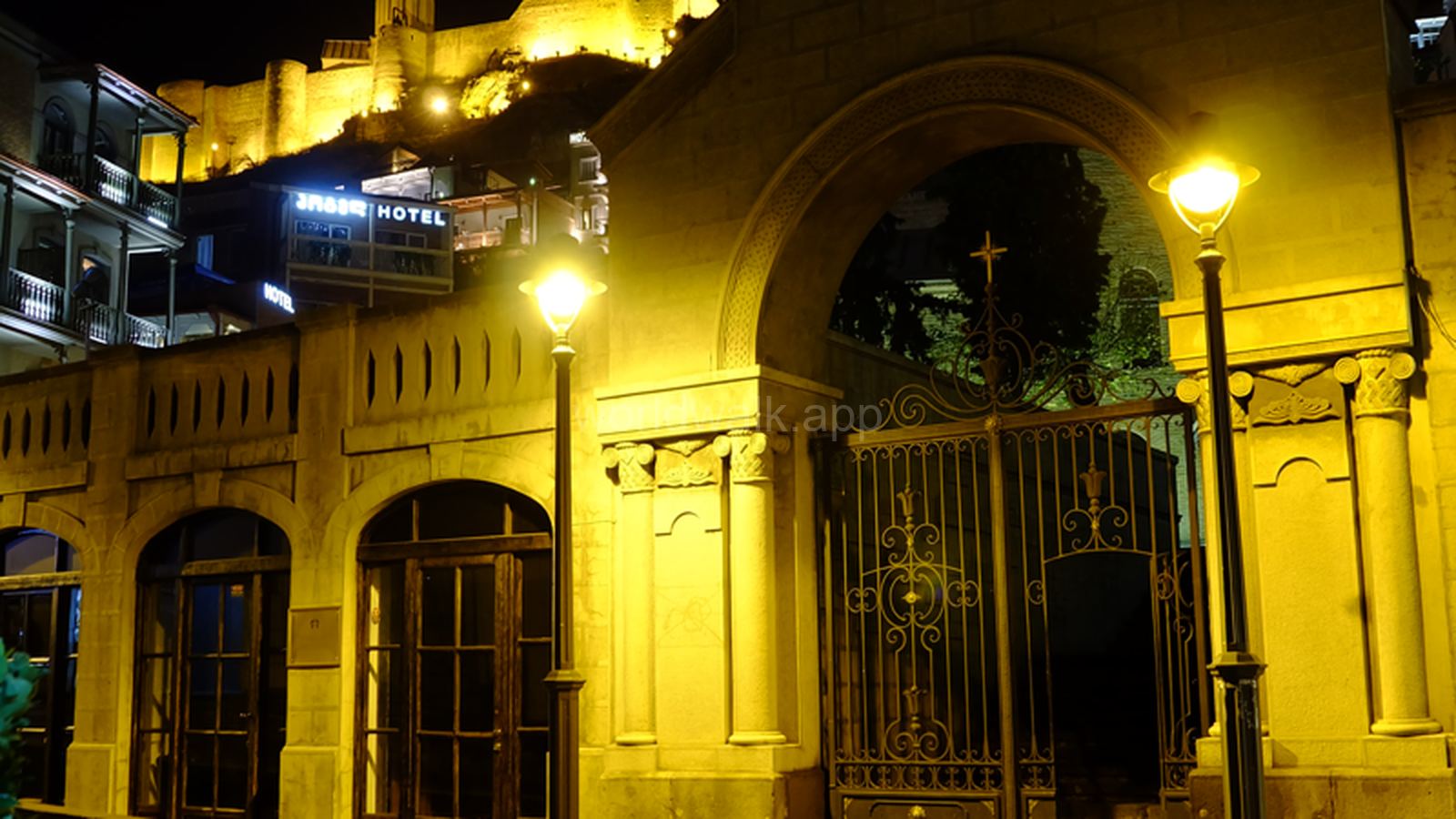
There are several bathhouses in Abanotubani within walking distance of each other, and the differences between them are mostly in the décor and the price rather than the water — they all share the same source.
Chreli Abano ("the colourful bath") is the one with the blue tiled façade in Persian style. It's the most recognisable, and therefore the most expensive and in-demand. Book ahead.
Bathhouse No. 5 and its neighbours are simple and inexpensive, with public halls. This is where people go for authenticity.
Gulo's, Sulphur and other bathhouses in the quarter are the middle option, with private rooms of different standards.
Prices and opening hours change, so it's best to check specific figures on the spot or by phone. The gap between the simplest and the most ornate bathhouse is significant — even though the water is the same.
When to go
In the evening — ideal. After a day on your feet and the climb to Narikala, it's exactly what you need. Many bathhouses are open late.
In the morning — if you want to see the public hall in its normal routine, with locals.
In the rain — the best bad-weather plan in Tbilisi. Of all the things to do in the city, it's the only one that rain actually improves.
In winter — peak season. The contrast between the cold street and the hot water is the whole point.
In the summer heat, the experience is weaker: the temperature contrast is smaller, and stepping out of hot water into a 35°C day is a questionable pleasure. If you're travelling in summer, go late in the evening.
Who should skip it
Sulphur water is hot, and the strain on the heart and blood vessels is real. It's not a good idea if you have blood pressure or heart problems, if you're pregnant, or during a flare-up of a skin condition. And don't go on a full stomach or after drinking — wine followed by 40-degree water is harder on the body than it seems at the planning stage.
How to fit it into your day
It works best at the end of the day, because the baths are right where any walk around the Old Town begins.
A day route: Meidan → Abanotubani → Leghvtakhevi waterfall → the climb to Narikala → Sololaki → dinner → baths. The full plan is in One day in Tbilisi, and the quarter itself is covered in detail in our Old Tbilisi walking route.
Frequently asked questions
How much do the sulphur baths in Tbilisi cost?
The public hall is cheap; a private room costs noticeably more and depends on the bathhouse's décor. The kisa scrub is paid separately. Prices change, so check on the spot.
Do I need a swimsuit for the sulphur baths?
Not in the public hall — it isn't done there. In a private room, it's up to you, since you're on your own.
How long does it take?
An hour in a private room is more than enough. With a kisa, allow an hour and a half.
Does it really smell of sulphur?
Yes. The smell is noticeable for the first few minutes, then you get used to it. It doesn't linger on your skin and hair for long.
What is a kisa?
A scrub with a coarse mitt followed by soap foam, done by a mekise. It takes 15–20 minutes, is paid separately and is well worth it.
Can I bring children?
To a private room, yes — but watch the water temperature and don't stay long. Hot sulphur water is not suitable for small children.
Do I need to book?
For private rooms in the evening, yes — especially at the popular bathhouses. For the public hall, just turn up.