Quick Answer
Is Batumi worth visiting? Yes, especially for travellers who enjoy walking, food, architecture and a seaside atmosphere that is not entirely built around tourism.
How many days do you need? Two to three days covers the essentials. Four or more lets you add day trips and slow down.
Also from WorldWalk
The Port Where Empires Met and Mixed — a separate 46-stop Batumi walking tour, about 2.5 hours. Available on VoiceMap.
Explore the tour on VoiceMap → Start our tour in Telegram →Best time to visit: May–June or September–October. Summer is busy and humid; spring and autumn are calmer.
Best area to stay: The Old Town or Europe Square area for first-timers who want to walk everywhere.
Best things to do: Walk the Old Town, eat Adjarian khachapuri, walk the Boulevard, take the cable car, visit the Botanical Garden.
Do you need a car? No — for most first-time activities in central Batumi, walking is enough. Some day trips are easier with a taxi or driver.
Best way to explore the Old Town: On foot, slowly, with some context. A self-guided audio tour is useful for independent travellers who want stories without joining a group.
Where Is Batumi?
Batumi is the capital of Adjara, an autonomous region in western Georgia, on the eastern coast of the Black Sea. It sits close to the border with Türkiye — Sarpi, the main Georgia–Türkiye border crossing, is roughly 20 kilometres south of central Batumi, depending on your starting point.
By distance, Batumi is about 350–380 kilometres from Tbilisi, depending on the route. By road, the journey usually takes around five and a half hours or more. Trains and buses also connect Batumi with Tbilisi and other Georgian cities, but schedules and travel times change, so check current options before booking. From Kutaisi, the drive is approximately two hours.
The city's position matters for travellers: it is a natural endpoint for a Georgia itinerary that starts in Tbilisi and moves west, and it is also a practical standalone destination if you are arriving by air.
Is Batumi Worth Visiting in 2026?
The honest answer is yes — with some caveats.
Batumi rewards travellers who are happy to walk, who care about food and local atmosphere, and who find layered, slightly imperfect cities more interesting than polished resort destinations. The Old Town has genuine character. The food is genuinely good. The Boulevard is a pleasant place to spend time, especially in the evening. The surrounding region — Adjara's mountains, coastline and villages — adds real depth if you have the time. For the best first evening in Batumi, the night-walk guide covers the full Old Town route.
Who may be disappointed: travellers expecting a clean, sandy beach destination similar to the Mediterranean will find Batumi's pebble beaches and unpredictable weather a different experience. Travellers who want a wide range of cultural institutions, nightlife or a large art scene will find the city's offering more limited than Tbilisi. And those arriving in August during peak season should expect crowds, higher prices and significant humidity.
But for a short city break combined with Georgian food, wine, Black Sea atmosphere and the occasional day trip into the mountains or along the coast, Batumi in 2026 is a very practical and genuinely enjoyable destination.
Things to Know Before Visiting Batumi
Batumi is easy to enjoy, but it helps to arrive with the right expectations.
- Batumi is not Tbilisi by the sea. It has its own rhythm: slower, wetter, more coastal and more relaxed.
- The city centre is walkable, but not every district is equally convenient for first-time visitors.
- Most beaches in and around Batumi are pebble beaches, not soft sand.
- Rain is part of the Batumi experience, even outside winter.
- Summer is lively but crowded and humid.
- Comfortable shoes matter: the Old Town, Boulevard and side streets are best explored on foot.
- For a first visit, staying near the Old Town or Europe Square makes the city much easier to understand.
Batumi vs Tbilisi: Which City Should You Choose?
Tbilisi is better for classic urban Georgia: old neighbourhoods, museums, wine bars, nightlife and a deeper capital-city feel. Batumi is better for the Black Sea, Adjara, seaside walks, local food and a slower coastal break.
If this is your first trip to Georgia, Tbilisi usually gives a broader introduction to the country. If you already plan to travel west — to Kutaisi, the coast or the Adjara mountains — Batumi is a natural and worthwhile stop.
The important thing is not to expect Batumi to feel like Tbilisi by the sea. It is a different city, shaped by the port, the border, the coast, rain, summer tourism and Adjara's own history.
How Many Days Do You Need in Batumi?
For a day-by-day plan, follow our 3-day Batumi itinerary.
One Day in Batumi
One day is enough for the essential Batumi: the Old Town, a walk along the Boulevard, Europe Square, Piazza and one meal of Adjarian khachapuri. You will see the shape of the city but not much of its depth. Good as part of a longer Georgia trip. See the detailed one day in Batumi guide for a suggested route.
Two Days in Batumi
Two days lets you cover the city at a more comfortable pace — Old Town on day one, Boulevard and seaside areas on day two, with time for a longer meal, a market visit and one smaller day trip such as the Botanical Garden or Gonio Fortress.
Three Days in Batumi
Three days is a good length for most first-time visitors. Enough time to walk the Old Town properly, do one or two day trips, try several different dishes and spend some time sitting in a café without feeling rushed.
Four or More Days
Four or more days makes sense if you want to explore the Adjara mountain villages, Mtirala National Park, Kobuleti, Ureki or the border town of Sarpi — or if you want to use Batumi as a base for a broader Adjara region trip. At this length, having occasional taxi access or a hired driver for specific day trips will make a real difference.
Best Time to Visit Batumi
Batumi has a subtropical climate — warm, humid and considerably wetter than eastern Georgia. This shapes the experience significantly.
Spring (April–June): Generally the most pleasant time to visit. Temperatures are mild, the city is not yet at peak season and the surrounding landscape is green. May and early June are a strong choice.
Summer (July–August): Hot, humid and busy. Batumi attracts large numbers of visitors in summer, which pushes prices up and makes the beaches and popular areas crowded. The warmth is good for the coast, but heat and humidity combined can make walking the city tiring. Still a perfectly valid time to visit if you plan accordingly.
September–October: A second good window. Temperatures drop from summer peaks, crowds reduce noticeably, the sea is still warm enough for swimming and the light is often good. September in particular is recommended for travellers who want a balance of pleasant weather and manageable crowds.
Winter (November–March): Batumi is considerably quieter in winter, and some businesses reduce hours or close. Rain is more frequent, and the city can feel quieter than some travellers prefer. That said, winter has its own character — the Old Town is easier to photograph without crowds, some travel costs may be lower outside the summer peak, and the city feels more local. Not the obvious choice, but not a bad one if you know what to expect.
Rain: Batumi receives substantially more rainfall than Tbilisi or Kakheti. Rain is possible at any time of year. Pack accordingly, and read the guide to what to do in Batumi when it rains before you arrive — a rainy day in Batumi is manageable if you have a plan.
Where to Stay in Batumi
Do not book the first beachfront apartment you find. Location in Batumi matters more than most travellers realise.
Old Town: The best base for first-time visitors who want to walk everywhere. Central, full of character, close to restaurants and markets, and easy to navigate. The buildings vary in quality, but a good guesthouse or small hotel here puts you inside the experience rather than watching it from a distance.
Europe Square / Port area: Just east of the Old Town, this area includes some of Batumi's more polished accommodation options. Close to the Boulevard and the main central streets. A practical, well-connected base.
Batumi Boulevard (northern section): The Boulevard runs for several kilometres along the seafront. Staying near it means easy access to the beach and the seaside atmosphere, but you may be further from the Old Town restaurants and markets. Better for repeat visitors or those who prioritise the sea.
New Boulevard area: Newer construction, larger hotels, more resort-style atmosphere. Can be further from the Old Town. Suits travellers who want modern facilities and are comfortable walking or using taxis.
Gonio / Kvariati: Small villages south of Batumi on the coast, quieter and more relaxed than the city. Suitable for travellers who want a beach-focused stay and are happy to taxi or bus into Batumi for sightseeing. Gonio has a good beach by local standards and the Gonio Fortress nearby.
Kobuleti: A seaside resort town north of Batumi, about 25–30 kilometres away. Its long beach has a mix of sand and pebbles, and the atmosphere is calmer and more resort-oriented than central Batumi. Practical only if you have transport or are specifically seeking a beach holiday rather than a city break.
For first-time visitors: stay in or near the Old Town. You can always take a taxi to the beach.
Best Things to Do in Batumi
Batumi Old Town
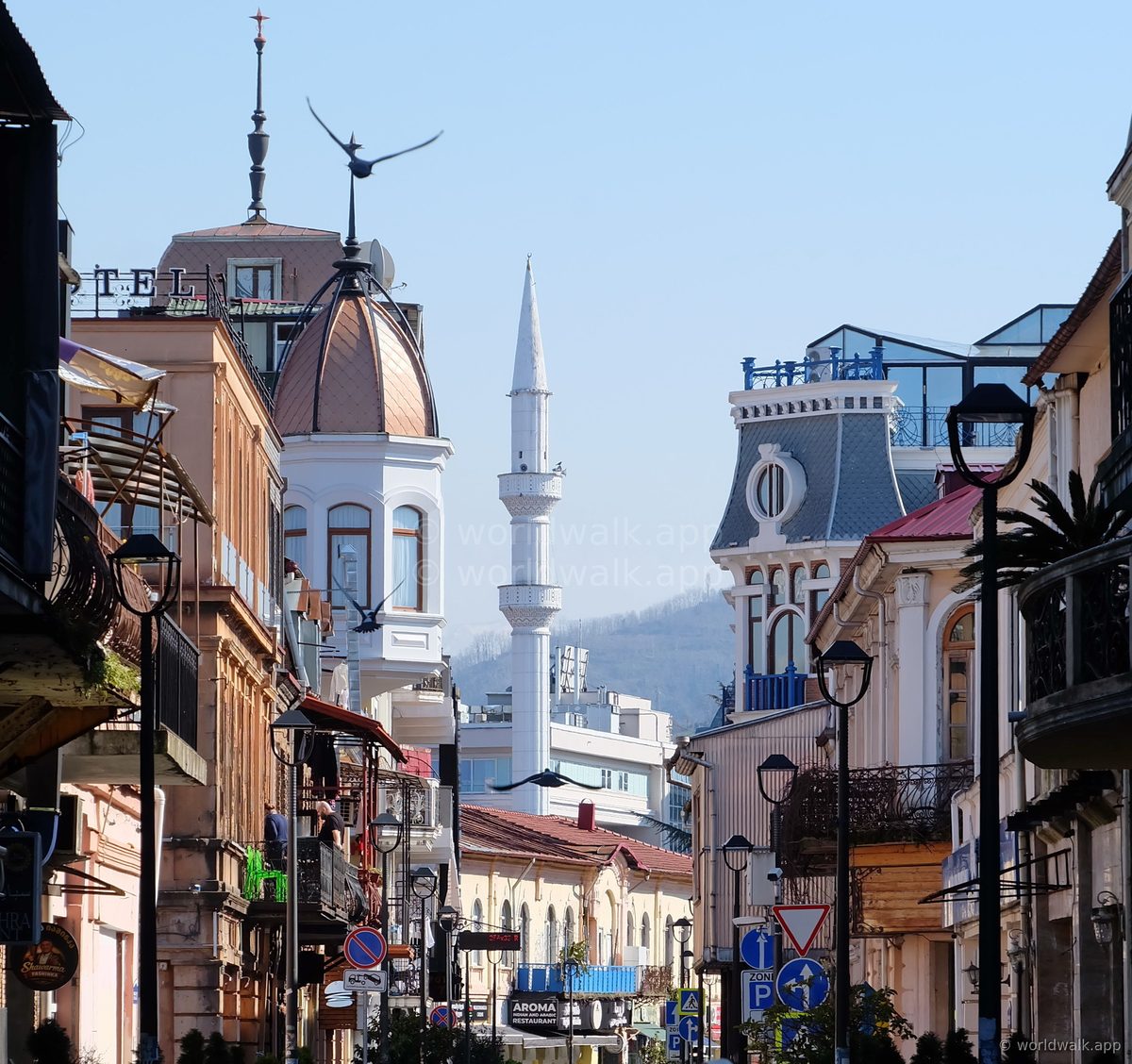
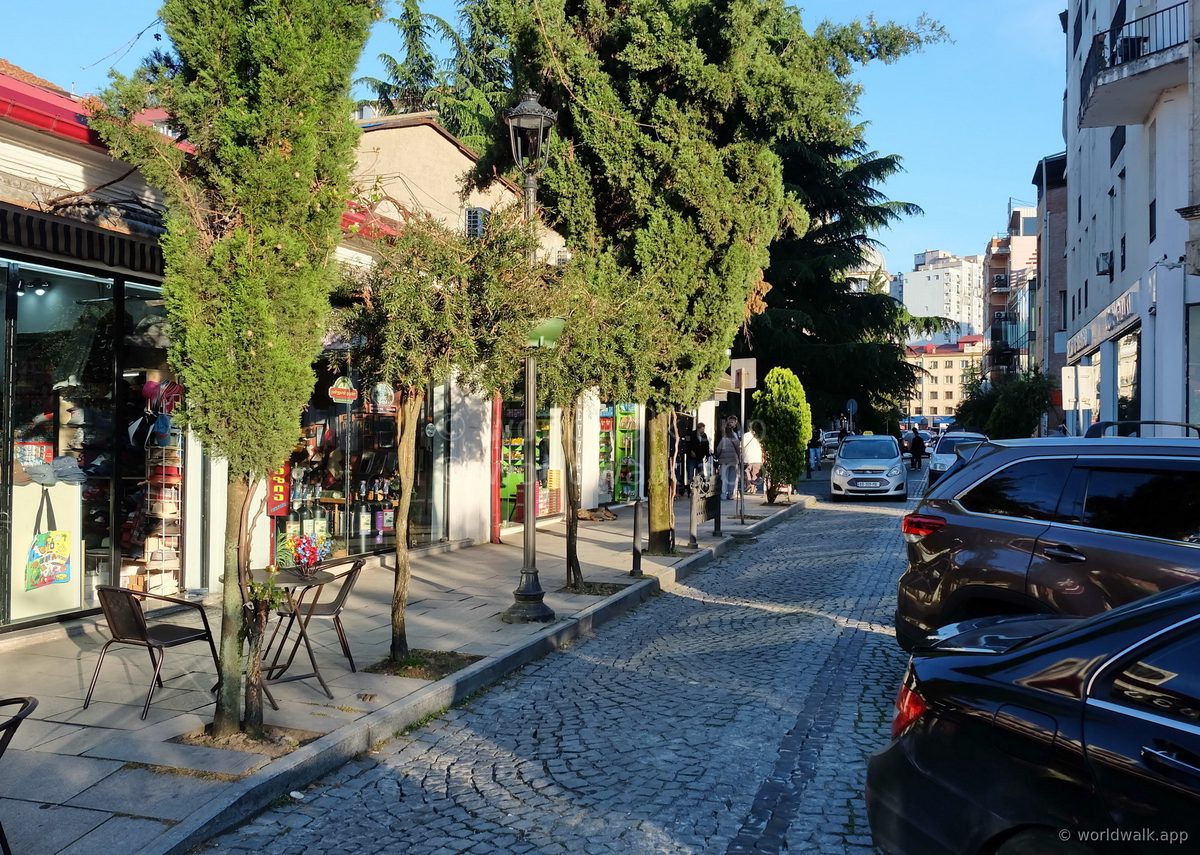
The Old Town is the most interesting part of Batumi for most travellers. It is compact — walkable in under an hour if you move quickly — but it repays a slower approach. Wooden balconies, narrow streets, courtyards hidden behind doors, mosques and Orthodox churches within a few minutes of each other, traces of Ottoman and European architecture side by side. The surface is easy to see; the stories beneath it take more time.
The Batumi Old Town walking guide covers the main streets and points of interest in detail.
Batumi Boulevard
The Boulevard is the long seafront promenade that runs along Batumi's Black Sea coast. It stretches for several kilometres and is one of the city's central social spaces — good for walking, cycling, watching the sea and observing everyday Batumi life rather than just the tourist version of it.
Europe Square and Piazza
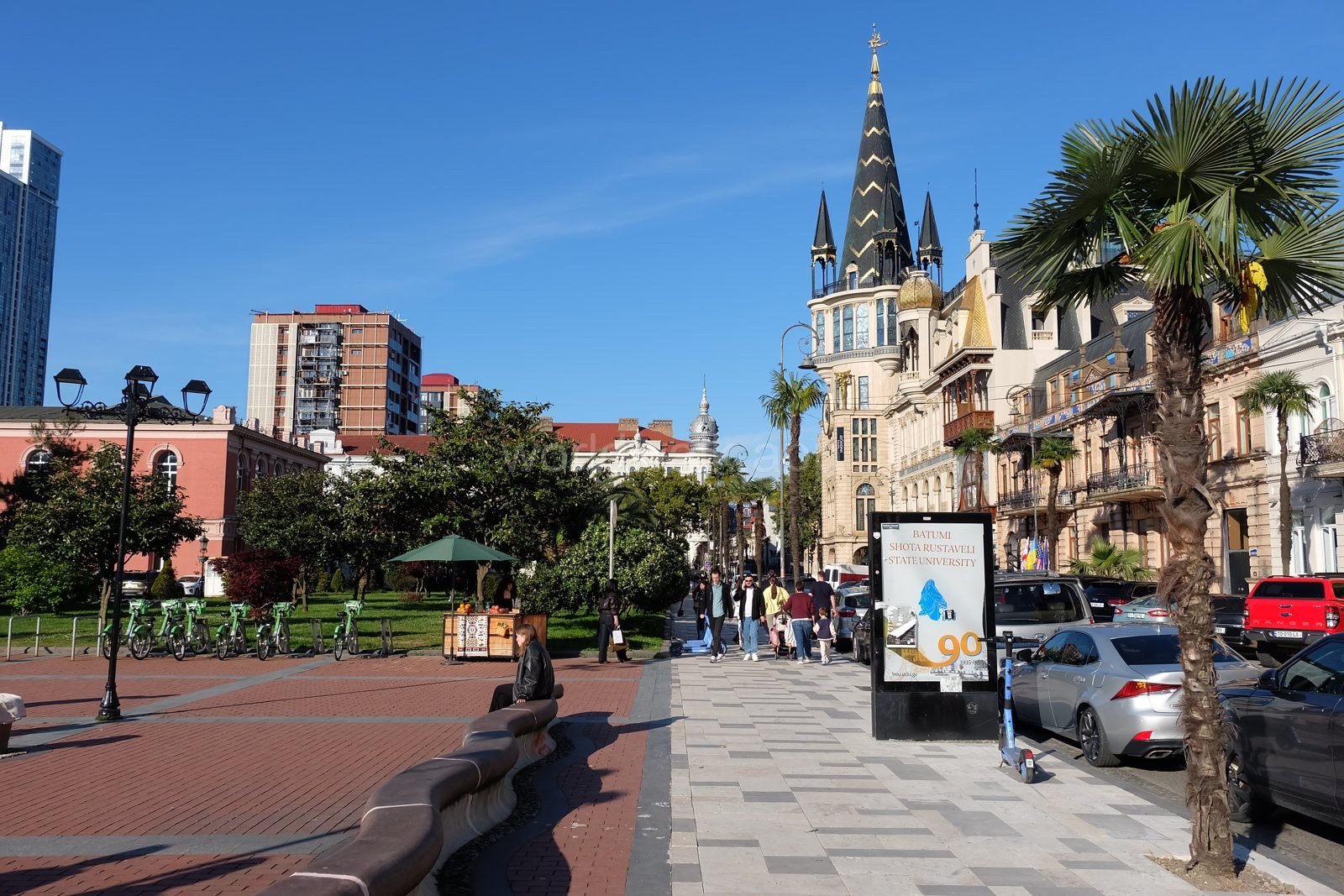
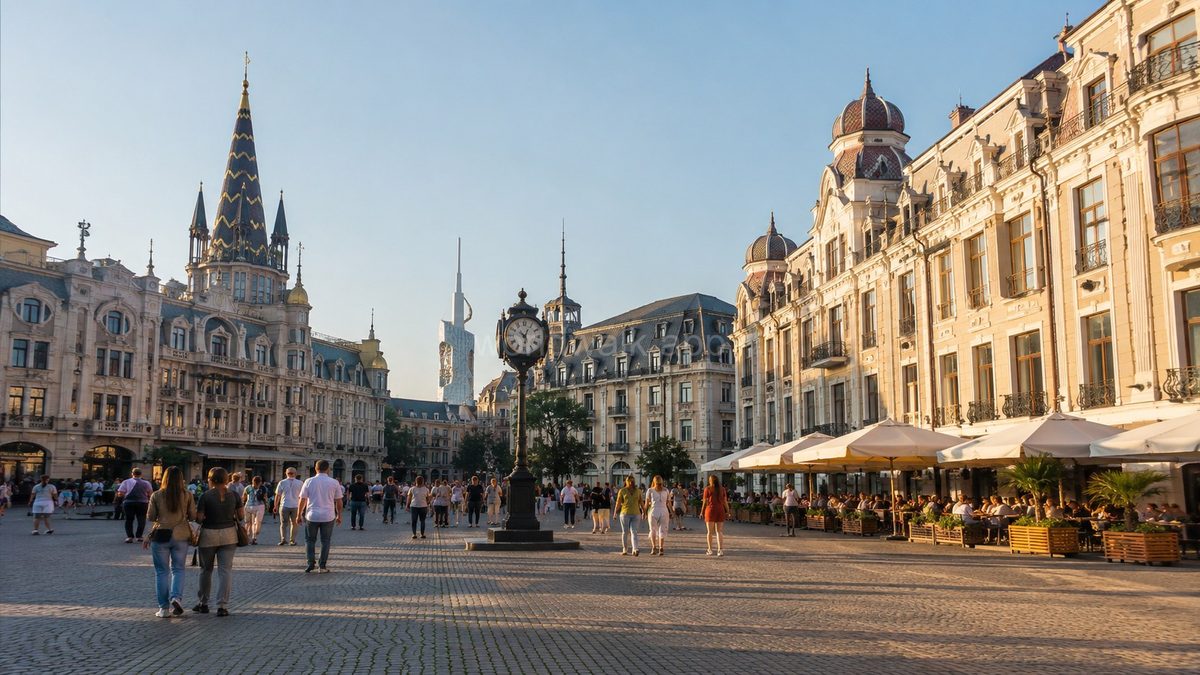
Europe Square is one of Batumi's most photographed spots — a mix of architectural styles around a central fountain, with a column topped by the figure of Medea. Nearby, Piazza is a purpose-built square that can look more theatrical than historical, but it gives a sense of how Batumi has been deliberately reimagined in recent years.
The Port Area and Alphabet Tower
The port has its own atmosphere — working infrastructure alongside newer development. The Alphabet Tower, visible from much of central Batumi, is built in the shape of a double helix and features Georgian script letters running up the exterior. Worth seeing from a distance; observation access may vary.
Cable Car
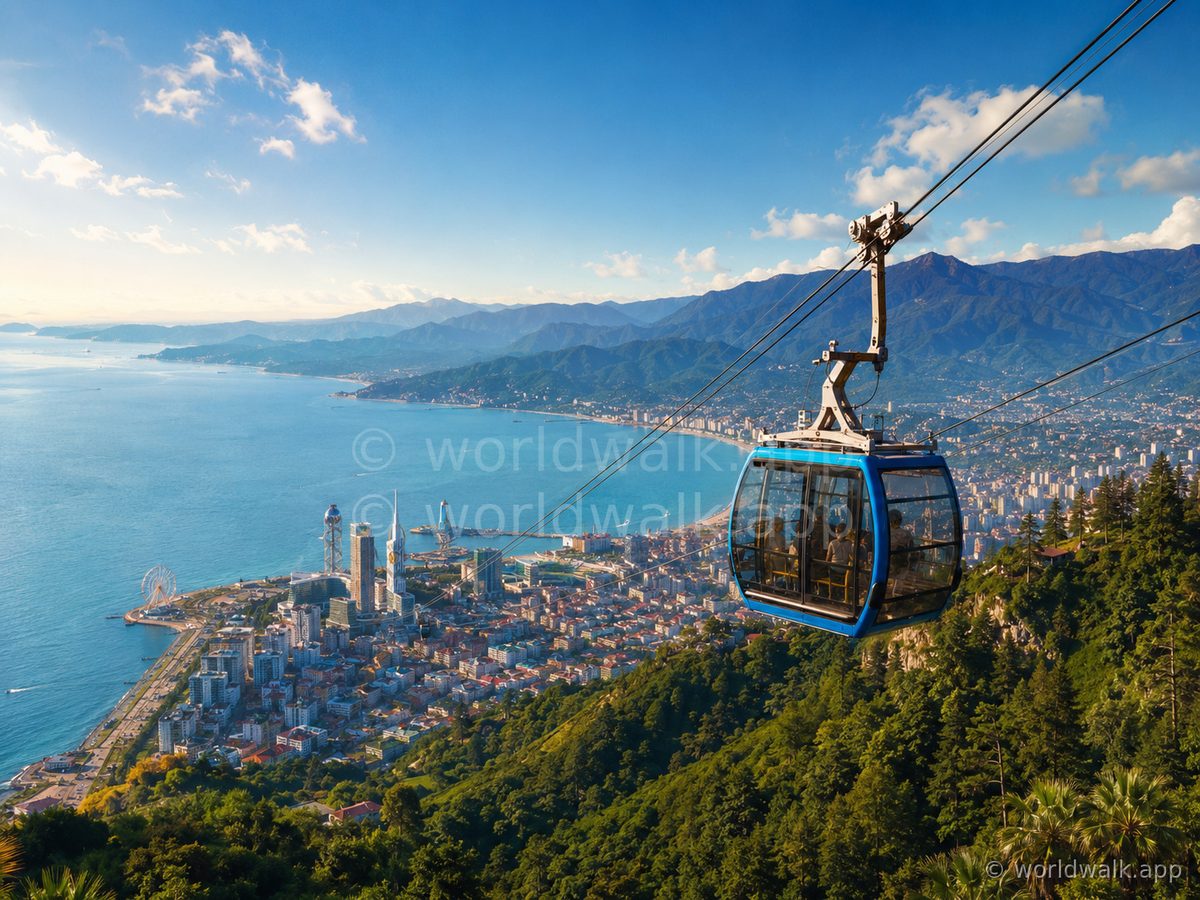
The cable car runs from the city up to the Anuria hill area, offering views over Batumi and the Black Sea. Check current operating hours and fares locally, as these may change.
The WorldWalk Batumi audio tour covers 29 stops through the Old Town, port, Turkish Quarter and surrounding streets — audio stories, photos and Google Maps links at every stop. Self-guided, at your own pace.
Start the audio tour →Batumi Botanical Garden
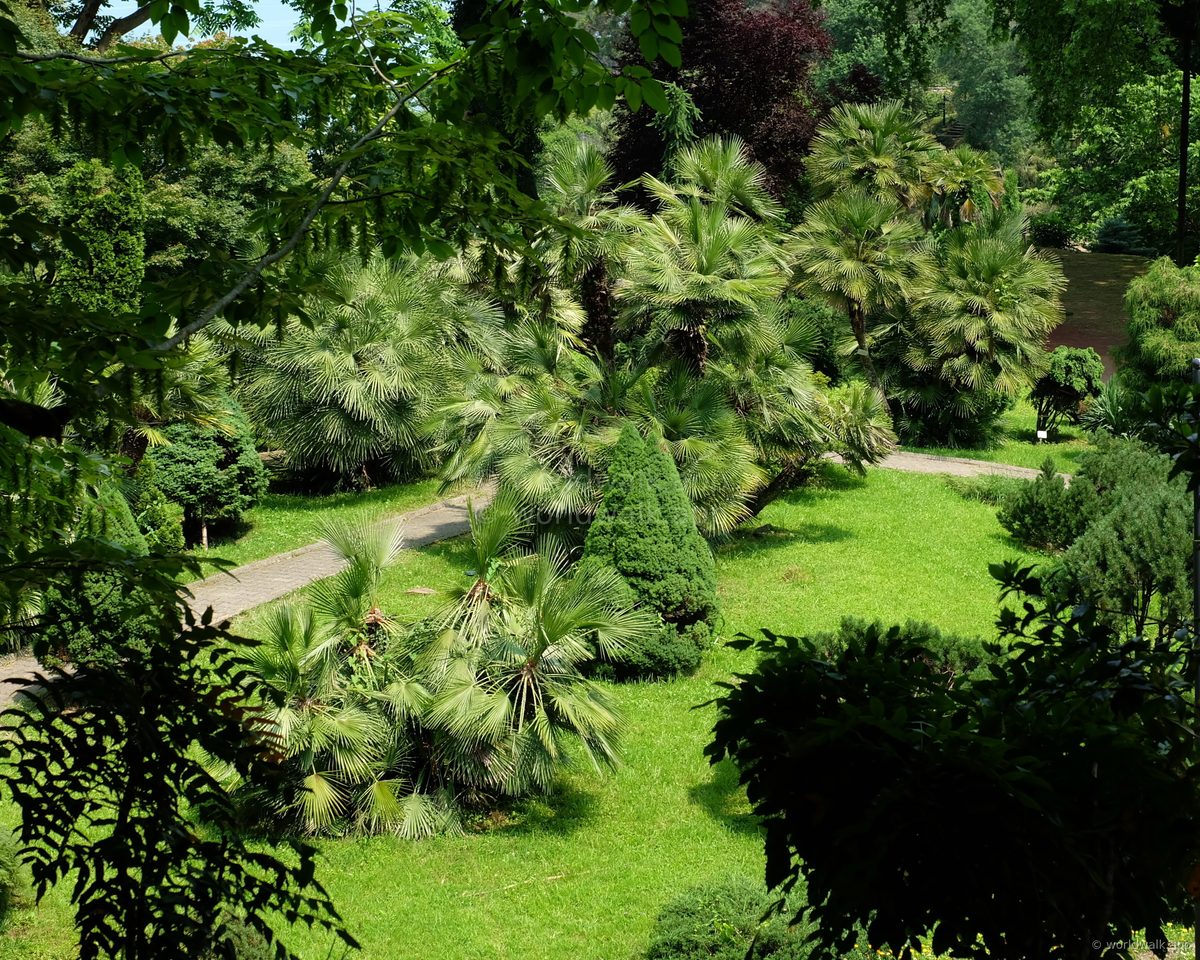
One of the best day trips from Batumi that does not require a long journey. The Botanical Garden is located at Green Cape (Mtsvane Kontskhi), a few kilometres north of the city, and contains an extensive collection of plants from different climate zones, with views over the sea. A taxi or marshrutka from Batumi is straightforward. Allow a full morning or afternoon.
Beaches
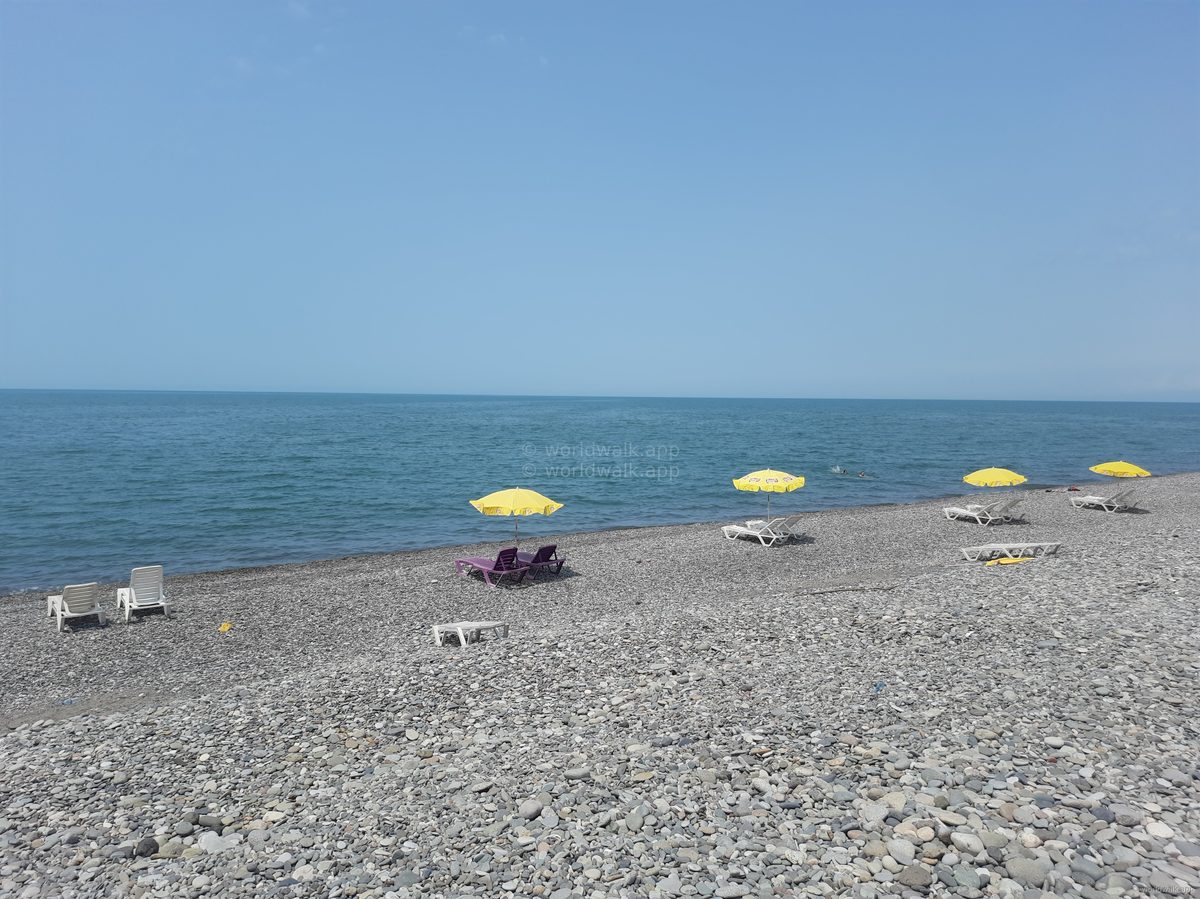
Batumi's beaches are pebble beaches — honest about this upfront saves disappointment. The central city beach is accessible and busy in summer. The New Boulevard beach area is slightly less crowded. Bring water shoes; pebbles are uncomfortable without them.
For better beach experiences, Gonio and Kvariati to the south offer a quieter setting. Kobuleti to the north has a long beach with a mix of sand and pebbles. Ureki, further north, is known for its magnetic black sand.
Markets and Food
The markets near the Old Town — including the Boni Market area — are worth time for food, local produce and a sense of everyday Batumi. This is also where you will find churchkhela hanging in bunches and stalls selling local wines, honeys and spices.
Slow Walking and Courtyards
Some of the best time spent in Batumi is unplanned: following a street to see where it ends, finding a courtyard that is not in any guide, sitting somewhere until the light changes. The Old Town has the density for this. The Boulevard has the scale. Both are worth exploring without a destination in mind.
Batumi Old Town: Why You Should Not Rush It
The Old Town is easy to walk through in twenty minutes and easy to dismiss as "a bit run-down in places." This is the wrong approach.
The Old Town accumulated its character across centuries of Ottoman rule, Russian imperial administration, early Soviet redevelopment and post-independence change. The wooden balconies and carved facades are a Georgian urban building tradition. The mosques reflect Adjara's distinct religious history. The narrow streets and sudden courtyards reflect a city built for foot traffic and shade. None of this is immediately obvious from the main streets, and most of it benefits from context.
The WorldWalk Batumi Audio Tour covers 29 stops through the Old Town, Europe Square, the port streets and nearby historic neighbourhoods — with audio stories, photos and Google Maps links. It works through Telegram, starts when you are ready and moves entirely at your own pace. If you want to understand the Old Town rather than just walk through it, this is a practical way to do that without joining a group.
How to Explore Batumi on Foot
Central Batumi is walkable. The Old Town, Europe Square, the Boulevard, Piazza, the port area and the cable car are all within comfortable walking distance of each other. A visitor staying in or near the Old Town can handle most first-day and second-day activities without transport.
Practical notes:
- Pavements vary in quality. Some are narrow, uneven or slippery when wet. Comfortable shoes matter more than they do in some cities.
- The Boulevard is flat and easy walking for its full length.
- Hills begin to appear as you move away from the seafront toward the northern and eastern edges of the city.
- The Botanical Garden is north of central Batumi, while Gonio, Kvariati and Sarpi are south of the city. All of these are better reached by taxi, marshrutka or another transport option rather than treated as casual city walks.
For travellers who want to explore the Old Town with context and flexibility, the Batumi walking tour vs audio guide article explains the differences between group tours, private guides and self-guided options — useful for deciding which approach suits you.
Suggested Batumi Itineraries
One Day in Batumi
Morning in the Old Town, using a map or audio guide to navigate the main streets and courtyards. Europe Square. Piazza. Adjarian khachapuri for lunch — somewhere with a view or in the market area. Afternoon on the Boulevard toward the port. Cable car if it is operating. Evening meal with Georgian wine. The one day in Batumi guide covers this route in detail.
Two Days in Batumi
Day one: Old Town, Europe Square, Boulevard, evening in a local restaurant. Day two: Botanical Garden in the morning (taxi or marshrutka), Boni Market on return, beach time if the weather suits, relaxed evening.
Three Days in Batumi
Day one: Old Town properly — slow, with context. Day two: Botanical Garden, Green Cape, beach, evening food market. Day three: Day trip south — Gonio Fortress, Kvariati beach, Sarpi and back. Or: day trip to the Adjara mountains (requires a driver or organised trip).
Rainy Day in Batumi
Rain in Batumi is common and should not ruin the trip. The Old Town is entirely walkable in light rain — the streets narrow enough to provide some shelter and the architecture more atmospheric in grey light. Markets are covered. Cafés are good. The what to do in Batumi when it rains guide covers this properly.
No-Car Version
Most of central Batumi is accessible on foot or by Bolt (available in the city). Marshrutkas run to the Botanical Garden and to towns along the coast. See Batumi without a car for a full breakdown. The Batumi Audio Tour is built for exactly this kind of independent exploration — no driver, no guide, no fixed schedule.
What to Eat in Batumi
Adjaran cuisine has its own character within Georgian food, shaped by the coast, the climate and the region's history.
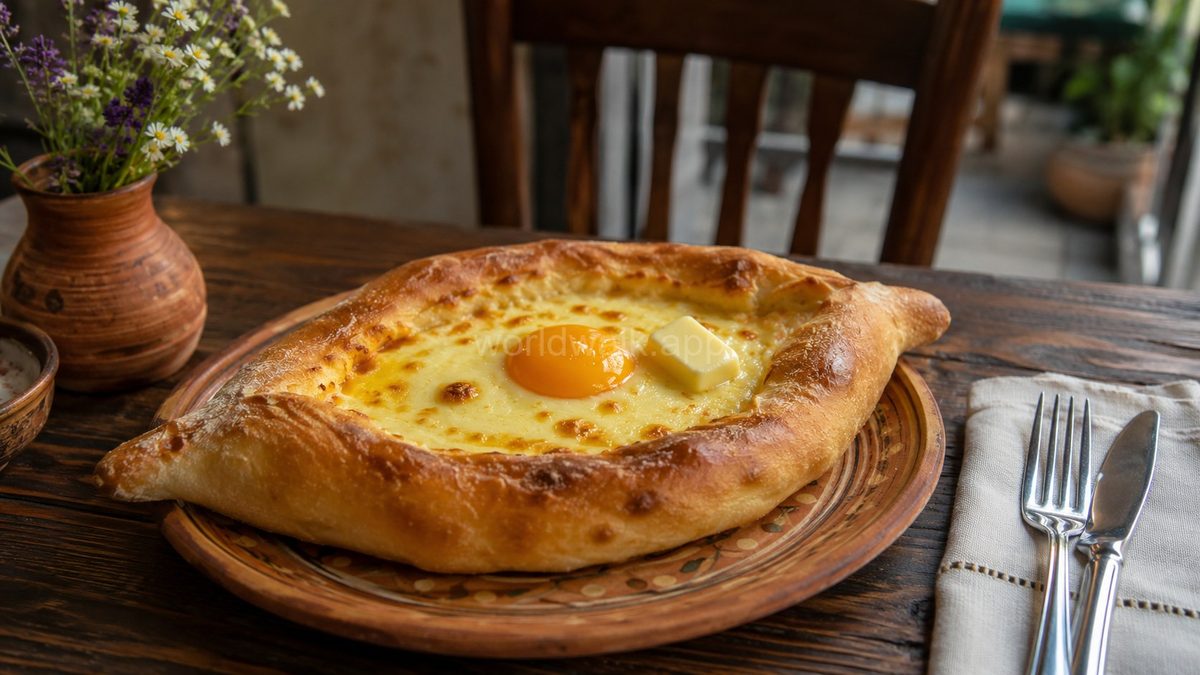
Adjarian khachapuri — the boat-shaped bread filled with cheese, topped with egg and butter — is the dish most visitors associate with Batumi, and rightly so. It is genuinely good here. The Adjarian khachapuri guide explains the dish, how to eat it and where to find a good version.
Borano — a simple, rich dish of melted butter and cheese, often served with mchadi (cornbread). A local staple with a very specific flavour.
Sinori — thin crepe-style pancakes rolled with cheese and cream, usually served as a starter. Worth trying if you see it on a menu.
Achma — a layered cheese pastry, softer than the Georgian cheese bread most people expect. Comfort food.
Black Sea fish — the proximity to the sea makes fresh fish a practical choice. Ask what is available rather than expecting a fixed menu.
Georgian salad, herbs and walnuts — Georgian cuisine uses walnuts extensively, and the salads here are unlike Western salads. Fresh tomato and cucumber with herbs is a starting point; walnut-based dishes go further.
Churchkhela — the traditional sweet made from nuts dipped in grape must, hanging in markets across Batumi. More of a snack than a dessert. The full explanation is in the what is churchkhela guide.
Georgian wine — Batumi is not a wine region, but restaurants and wine shops here carry wines from Kakheti, Imereti and western Georgia. If you want to understand what you are drinking, the Georgian wine explained guide covers the basics.
For a full picture of eating in Batumi — markets, food streets, what to order — see what to eat in Batumi.
Beaches In and Near Batumi
Batumi's beaches are pebble beaches. This is worth stating clearly because many visitors arrive expecting something closer to Mediterranean sand. Bring water shoes for comfort. The pebble beaches are clean and accessible; they are simply a different experience.
Central Batumi Beach — adjacent to the Boulevard, easily accessible, busy in summer. Convenient but not the most peaceful option.
New Boulevard Beach — farther along the seafront from the old centre, toward the newer southern part of Batumi. It has a similar pebble surface and can feel less crowded than the most central beach areas in summer.
Green Cape / Mtsvane Kontskhi — near the Botanical Garden, north of the city. A good combination with a Botanical Garden visit. Quieter than the city beaches.
Gonio — a coastal settlement about 12 kilometres from Batumi, close to the Georgia–Türkiye border. The beach here is more relaxed, the setting is quieter and the nearby Gonio Fortress is worth a look. Accessible by taxi or marshrutka.
Kvariati — further south from Gonio, a small bay with a calmer atmosphere. Popular with Georgian visitors who prefer a quieter beach.
Sarpi — at the Türkiye border, the southernmost accessible beach point. Interesting for the border setting as much as the beach itself.
Kobuleti — north of Batumi, about 25–30 kilometres. Its long beach has a mix of sand and pebbles — different from the predominantly pebble beaches closer to Batumi. A more resort-oriented, quieter atmosphere. Accessible by marshrutka.
Ureki — further north, known for its dark magnetic sand. Often recommended by Georgian visitors for the supposed therapeutic properties of the sand. A longer day trip or separate stay.
Day Trips from Batumi
Without a Car
Batumi Botanical Garden — marshrutka or taxi, 20–30 minutes. Easy, highly recommended, and one of the best things in the Batumi area.
Gonio and Kvariati — marshrutka south toward Sarpi, stopping at Gonio. Easy half-day.
Kobuleti — marshrutka north, straightforward.
Easier With a Taxi or Driver
Mtirala National Park — a cloud forest reserve in the Adjara mountains, genuinely different from anything in the Batumi area. Easier with a car or driver to reach the entrance. The park has hiking routes and visitor infrastructure; a guide can be useful, especially for more complex routes or deeper context, but marked trails may be manageable independently with proper preparation. Worth arranging transport through a local operator.
Adjara mountain villages — villages like Khulo, Shuakhevi and others in the higher valleys are accessible but the roads are mountain roads, better with local knowledge. A hired driver for the day is the practical option.
Ureki / Shekvetili — the Shekvetili park area and the Ureki beach are further north and more comfortable with a taxi or driver for a day trip rather than relying entirely on public transport.
How to Get Around Batumi
Walking — the correct answer for most central Batumi movement. The Old Town, Boulevard, Europe Square, Piazza and port area are all walkable from each other. Plan your accommodation accordingly.
Bolt — ride-hailing works in Batumi. Reliable, transparent pricing and no negotiation needed. Recommended over flagging down street taxis unless you know local fare expectations. See how to get around Batumi for full detail.
Marshrutkas (minibuses) — the local shared minibus system runs to the Botanical Garden, Gonio, Kobuleti and other destinations. Ask locally for current routes and stops, as these can change.
Taxis — available throughout the city. Agree on a fare before getting in unless using a metered or app-based service. Prices can vary considerably.
Airport transfer — Batumi International Airport is close to the city. Municipal bus No. 10 connects the airport with Batumi Centre, and the official airport website states the bus ride takes about 20 minutes. Taxis and app-based rides are also practical, especially with luggage. The Batumi airport to city centre guide covers your options and what to expect.
Cycling — bike hire is available along the Boulevard area in season. Good for the flat Boulevard stretch; less practical for the Old Town streets.
Money, Cards and Currency Exchange in Batumi
Georgia uses the Georgian lari (GEL). Cards are widely accepted in central Batumi, especially in hotels, larger restaurants, supermarkets and many shops. Still, keep some Georgian lari in cash for markets, marshrutkas, smaller cafés, taxis, beach extras and places where card terminals may not work.
Exchange offices — the best exchange rates are generally found at dedicated currency exchange offices (not banks or hotels). Central Batumi has several. Compare rates visibly displayed at the window before exchanging.
Airport exchange — exchange at the airport only what you need immediately. Rates at the airport are typically worse than in the city. There are ATMs in the arrival area.
ATMs — available throughout central Batumi. Check your bank's foreign transaction fees before travelling.
Cards — increasingly accepted in Batumi's restaurants and shops, but do not rely on card acceptance at markets, smaller guesthouses, taxis or older establishments. Keep cash available.
For a full guide to exchanging money in Batumi, see where to exchange money in Batumi.
What to Do in Batumi When It Rains
Batumi receives more rainfall than most Georgian destinations, and rain during your visit is a realistic probability at almost any time of year. The good news: Batumi functions reasonably well in rain.
The Old Town is one of the better places in the city to be in light rain — the streets are narrow enough to provide some shelter and the architecture is more atmospheric in grey light. Covered markets are practical for shopping and food. Cafés are good. The audio tour continues to work in rain; the stories do not change with the weather.
Museums provide a few hours of shelter with content worth having. The Adjara State Museum and Batumi Archaeological Museum both provide context for the city and region. Check current opening hours locally.
Rain makes beach time impractical, but most of the central activities remain viable. See the full what to do in Batumi when it rains guide for a day-by-day plan.
Is Batumi Good Without a Car?
Yes — for most first-time activities.
The Old Town, Boulevard, Europe Square, markets, cable car, restaurants and most accommodation options are all accessible on foot from a central base. Bolt handles most other city movement cleanly. The Botanical Garden is accessible by marshrutka or a short taxi. Gonio and Kvariati are reachable by marshrutka south.
Where a car or driver genuinely helps: Mtirala National Park, Adjara mountain villages, and multi-stop day trips along the coast that would require too much coordination on public transport.
The Batumi without a car guide covers this in full, including specific transport options for each destination.
Safety and Practical Travel Tips
Most visitors experience central Batumi as straightforward and comfortable to navigate, but ordinary city precautions still apply.
Walking at night — central Batumi, the Boulevard and Europe Square area are busy at night and feel safe. Stick to lit streets in less central areas as a general principle.
Traffic — Georgian driving culture can be assertive. Cross at pedestrian crossings and do not assume traffic will stop. This matters more than it might in cities with calmer traffic.
Slippery pavements in rain — some of Batumi's older pavements become slippery in wet conditions. Comfortable, grippy shoes are worth packing.
Beach safety — the Black Sea can have strong currents in certain conditions. Check local advice and observe flags or warnings at the beach.
Taxis — use Bolt or agree on a fare before the journey. Overcharging does occur, especially from street taxis at busy spots.
Opening hours — churches, museums and some attractions have variable hours. Check before making a specific trip.
Water shoes — pebble beaches without water shoes are genuinely uncomfortable. Pack a pair or buy them locally; they are inexpensive and available in central Batumi.
Final Verdict: Who Should Visit Batumi?
Batumi is a good destination for travellers who enjoy cities with actual texture — places where the past is still visible in the streets, where the food is tied to the region, and where walking remains the best way to understand what you are looking at.
It is less obviously suited for travellers seeking polished resort infrastructure, sandy beaches or a wide nightlife and arts scene. Those exist in Batumi to varying degrees, but they are not its strongest hand.
For a first-time visitor to Georgia who has already done Tbilisi, or who is building a west-Georgia itinerary combining Kutaisi, the Adjara mountains and the coast, Batumi is a natural and rewarding endpoint. For travellers arriving specifically for the beach, the Kobuleti or Ureki areas may serve them better — but Batumi itself will still provide the most interesting few days of their trip.
If you want to explore the Batumi bucket list properly, do it on foot, with some context, and without rushing the Old Town. That is what makes Batumi worth it.
FAQ
Is Batumi worth visiting? Yes, particularly for travellers who enjoy walking, food, architecture and a seaside city with real character. It is not the right destination for every traveller, but for those who want to understand a Georgian city on foot and eat well while doing it, Batumi delivers.
How many days do you need in Batumi? Two to three days covers the city and one or two short day trips. Four or more days gives you enough time to explore the Adjara region, relax and travel without feeling rushed.
What is Batumi known for? Batumi is known for its Old Town with Ottoman and European architecture, Adjarian cuisine (especially Adjarian khachapuri), the Black Sea Boulevard, the Botanical Garden and its position as a gateway to Adjara's mountains and coastline.
Is Batumi walkable? Yes. Central Batumi — the Old Town, Boulevard, Europe Square and port area — is highly walkable. Most first-day and second-day activities can be done on foot from a central base.
Do you need a car in Batumi? Not for central Batumi. For day trips to Mtirala National Park or Adjara mountain villages, a taxi or hired driver is recommended. Most beach destinations along the coast are reachable by marshrutka.
What is the best time to visit Batumi? May–June or September–October. These months offer pleasant temperatures, manageable crowds and lower prices than the summer peak. Batumi is rainy year-round, so pack for variable weather regardless of when you visit.
Are Batumi beaches sandy or pebble? Mostly pebble. The central Batumi beaches and most coastal spots near the city are pebble beaches. Kobuleti has a long sand-and-pebble beach, while Ureki is better known for dark magnetic sand. Bring water shoes for the pebble beaches.
What should you eat in Batumi? Start with Adjarian khachapuri (the boat-shaped bread with egg and butter). Add borano, sinori, achma, fresh Black Sea fish, Georgian salad with herbs and walnuts, and churchkhela for a sweet. Drink Georgian wine.
Is Batumi good when it rains? Better than many cities. The Old Town is walkable in light rain, covered markets are practical, cafés are good and the audio walking tour works in any weather. A rainy day in Batumi requires a plan, but it does not require abandoning the trip.
What is the best way to explore Batumi Old Town? On foot, slowly, with some context. A self-guided audio tour is the most flexible option for independent travellers — it provides stories and navigation without requiring you to join a group or follow a fixed schedule.
More Batumi Guides from WorldWalk
Planning Your Trip
- One Day in Batumi
- Where to Stay in Batumi
- Batumi Without a Car
- How to Get Around Batumi
- Batumi Airport to City Centre
- Where to Exchange Money in Batumi
Things to Do
- Batumi Old Town Walking Guide
- Batumi Walking Tour vs Audio Guide
- Things to Do in Batumi in Summer 2026
- Batumi Bucket List
- What to Do in Batumi When It Rains
Food and Culture
See also: Tired of crowded Europe? Where to go in summer instead