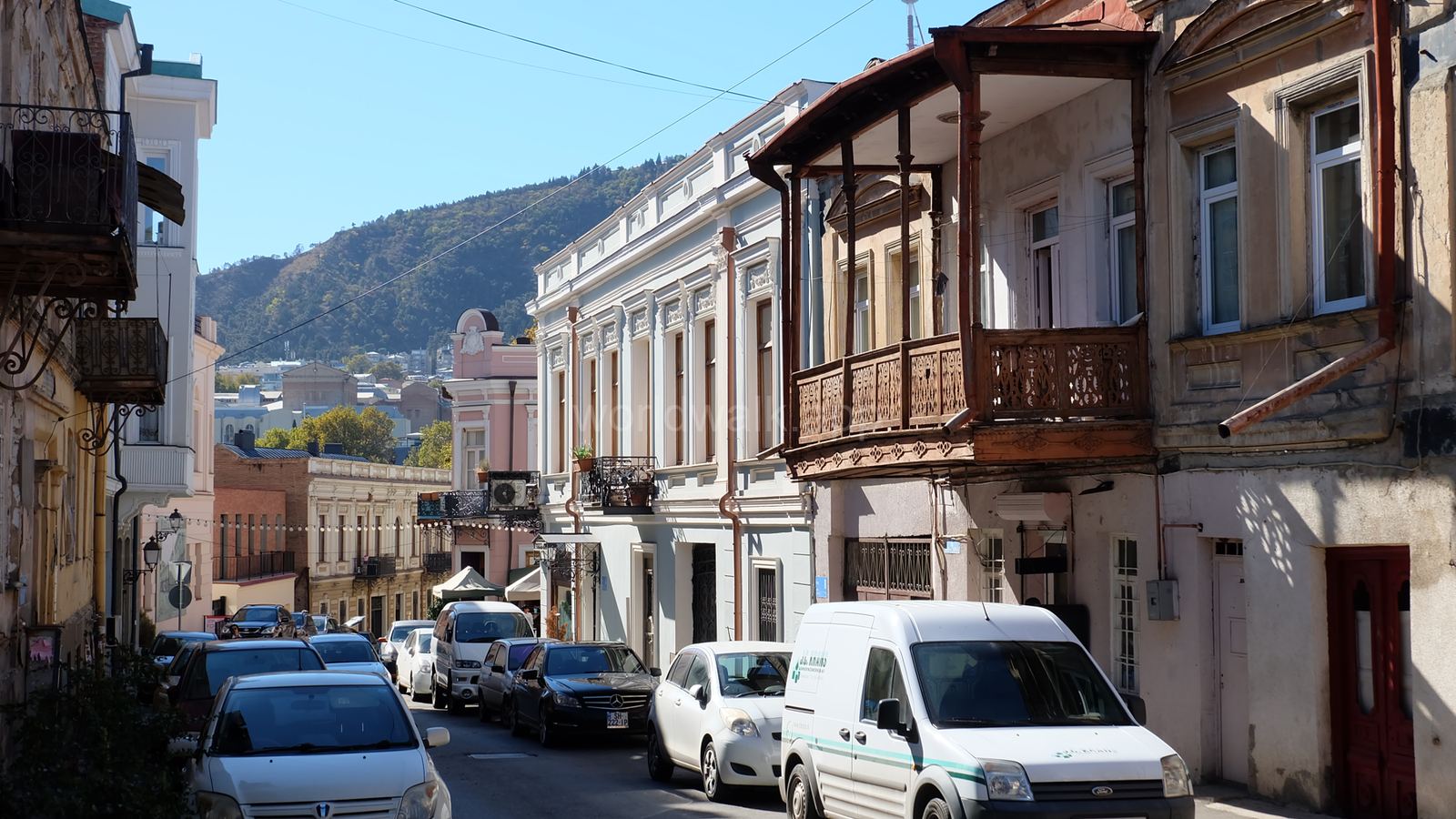
The good news: everything a visitor needs fits into a narrow strip along the river, and within it the areas differ less in convenience than in character. Below is a breakdown of each one: who it suits, what's inconvenient about it and how far it is from the centre.
Tbilisi areas at a glance
| Area | Best for | Downside |
|---|---|---|
| Sololaki | First visit, exploring on foot | Hills, old housing stock |
| Old Town | One or two nights, right in the thick of it | Noisy, pricier, touristy |
| Mtatsminda | Quiet and views | Steps and steep streets |
| Vera | Second visit, a week or longer | Less "postcard" atmosphere |
| Marjanishvili, Chughureti | Lively evenings, lower prices | Uneven quality from street to street |
| Avlabari | A balance of price and location | More residential than walkable |
| Vake | Families, long stays | Far from the Old Town, more expensive |
| Saburtalo | Long stays, everyday convenience | No old-centre atmosphere at all |
Quick answer
First visit, want to walk everywhere: Sololaki.
Right in the thick of it: the Old Town — but it's noisy and touristy.
Quiet and beautiful, but lots of steps: Mtatsminda.
Lively evenings, cheaper, metro nearby: Marjanishvili and Chughureti.
A calm residential option: Vera.
With children and for longer stays: Vake.
What to avoid: new-builds on the outskirts and accommodation along major roads.
Sololaki — the best choice for a first visit
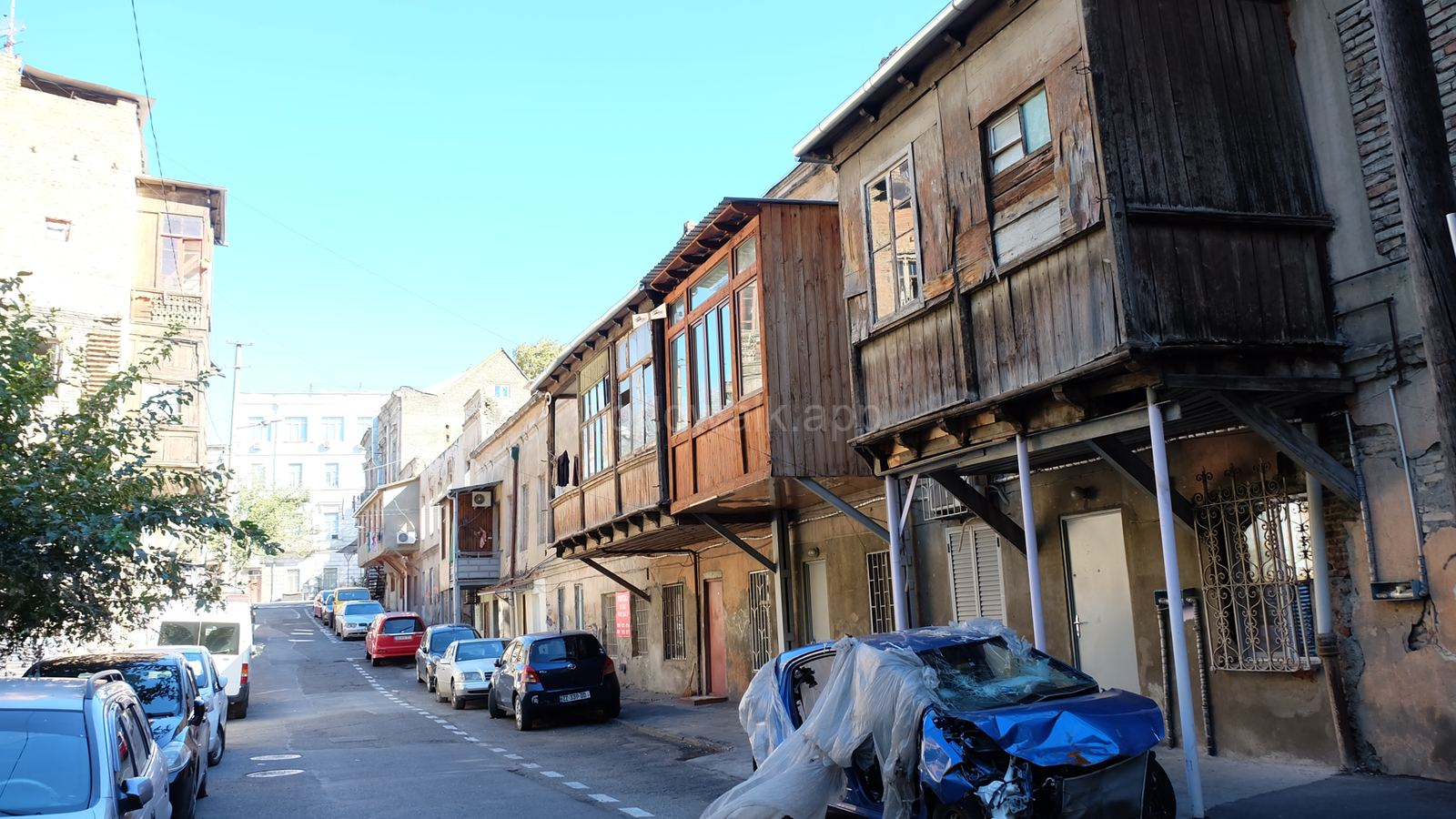
The district below Narikala Fortress, built in the late 19th century with oil and merchant money. Carved doors, stained glass in the entrance halls, painted stairwells and inner courtyards with shared balconies.
Pros: five minutes to the Old Town, ten to Freedom Square, and an atmosphere that is Tbilisi. Plenty of good cafés and wine bars.
Cons: the hills — some streets run steeply uphill. The old housing stock can be charming in one place and mean creaky floors and weak water pressure in another. Apartment renovations vary widely.
Who it suits: almost everyone on a first visit for a few days.
Old Town — right in the thick of it
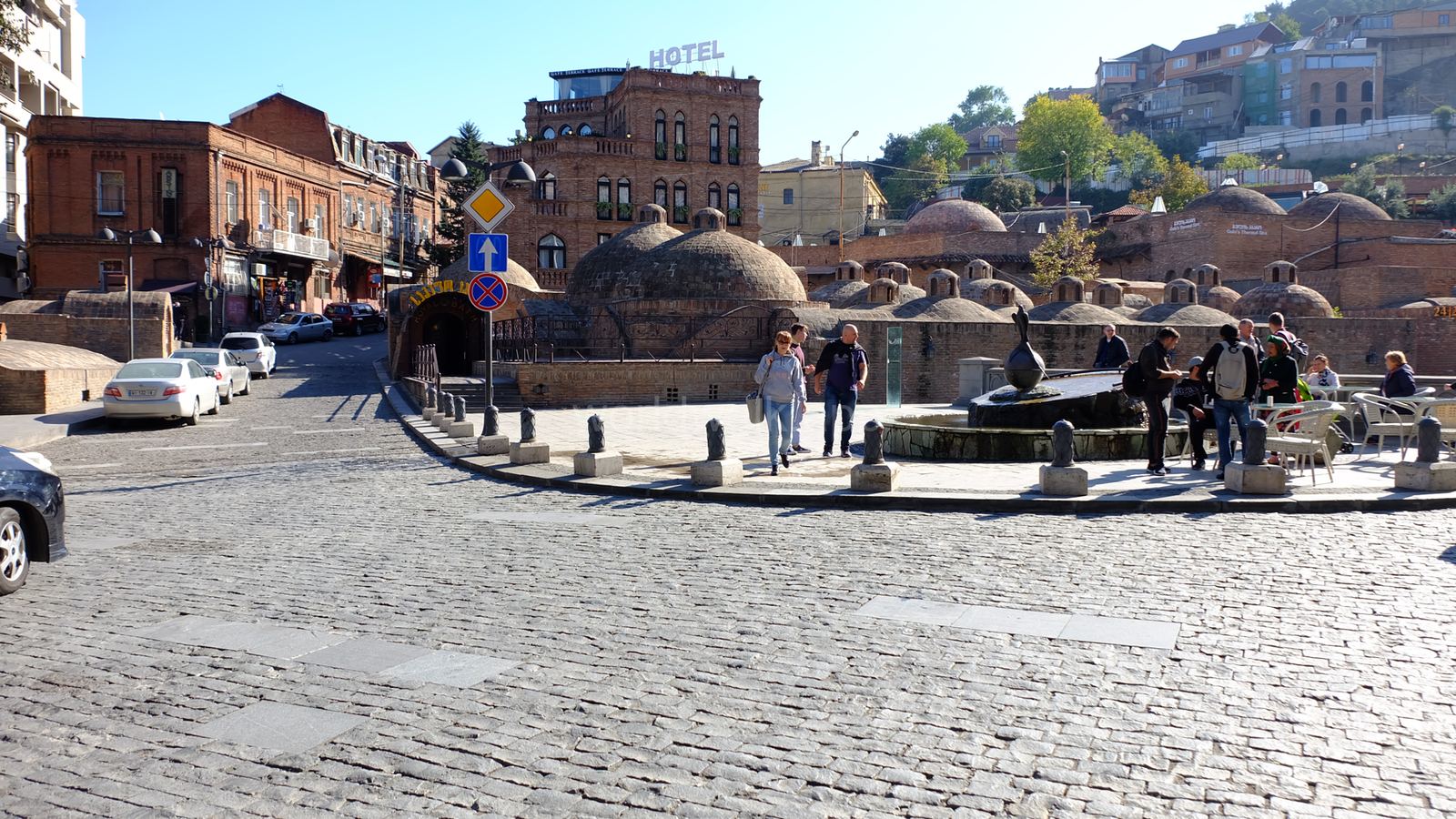
Abanotubani, Meidan, Shardeni Street, the Betlemi steps.
Pros: you are literally living among the sights. Sulphur baths, restaurants and the riverside are all on your doorstep.
Cons: noise. Shardeni Street and the area around it party late, and soundproofing in old buildings is minimal. Prices are higher, and the quality of accommodation doesn't always match — the area draws a lot of tourist traffic.
Who it suits: people staying one or two nights who want the shortest possible walk to everything.
Mtatsminda — quiet, beautiful and uphill
The slope above the centre: Besiki and Gudiashvili streets and the climbs up to the Pantheon and the funicular.
Pros: quiet, green, lovely views — and still only ten minutes' walk down to Rustaveli Avenue.
Cons: the key word is "down". Everything on the way back is uphill, and climbing steps with a suitcase is an experience in itself. Take this into account if you have heavy luggage or knee problems.
Who it suits: people who value quiet and don't mind hills.
Vera — a calm residential centre
Between Rustaveli and Vake: residential streets, lots of cafés, bakeries, wine bars and a park.
Pros: normal city life without a tourist veneer, and still 15 minutes' walk from the centre. Good value for money — the housing stock is newer than in Sololaki.
Cons: less "postcard" atmosphere, and the Old Town is no longer just around the corner.
Who it suits: repeat visitors, or anyone staying a week or longer.
Marjanishvili and Chughureti — the left bank
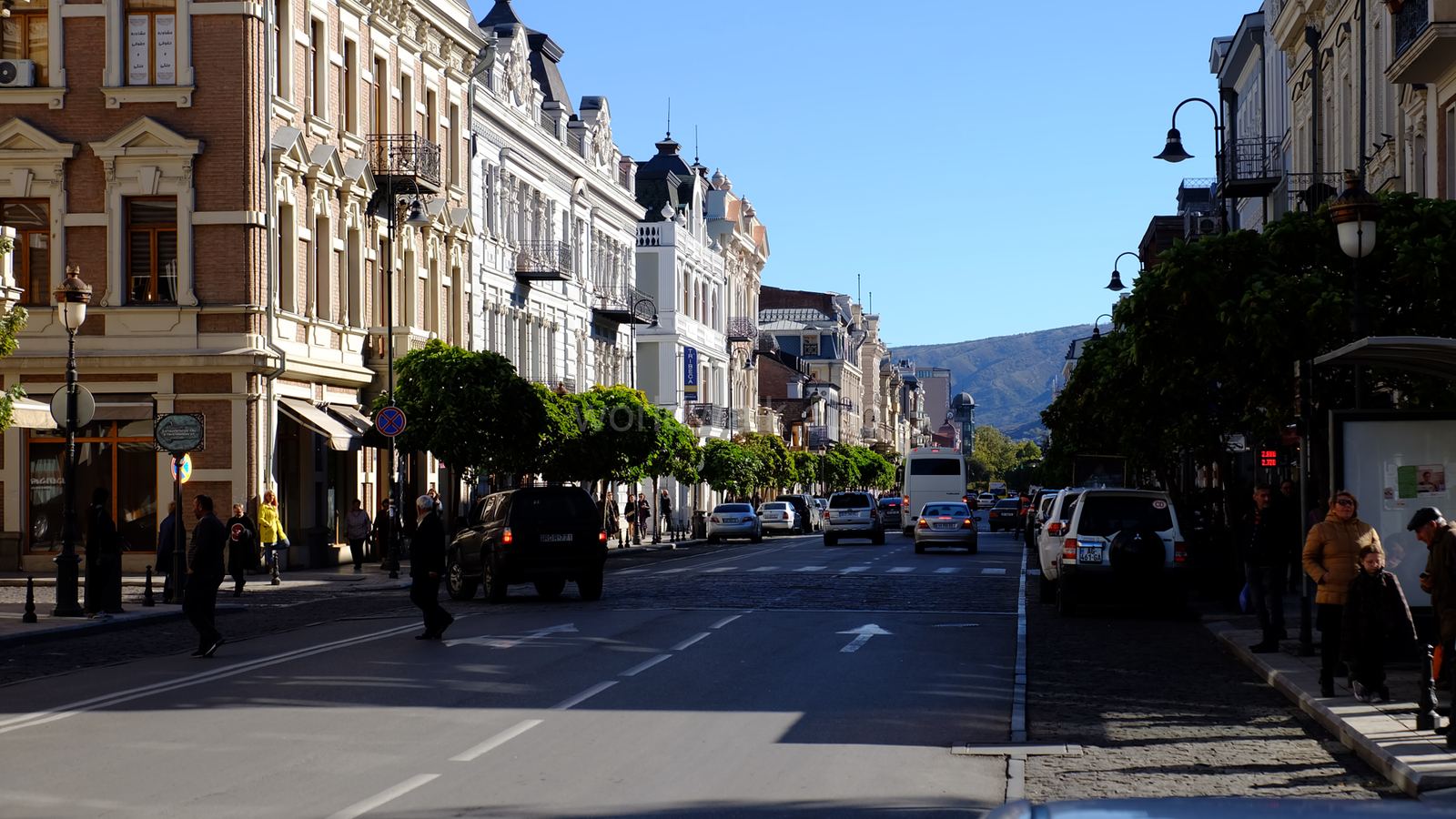
A former German settlement, now the liveliest evening part of the city: Fabrika with its courtyard and bars, cheap canteens, workshops and old façades.
Pros: cheaper than the right bank while just as close to the centre. Marjanishvili and Freedom Square metro stations are two stops apart. Excellent food for little money.
Cons: the area is uneven — beautiful streets sit next to shabby ones, and some side streets feel empty in the evening.
Who it suits: people who want a lively area and a lower price, and anyone coming for the bars and cafés.
Avlabari — near Metekhi
The left bank opposite the Old Town, historically an Armenian district, with Sameba Cathedral above it.
Pros: cheaper, on the metro, ten minutes to the Old Town across the bridge, great views.
Cons: the area itself is more residential than a place to stroll.
Who it suits: people looking for a balance between price and location.
Vake — green and family-friendly
West of the centre: wide streets, Vake Park, embassies and upmarket cafés.
Pros: quiet, green, good housing stock, convenient with children.
Cons: 20–30 minutes to the Old Town by public transport. More expensive. The feel is more "nice district of a big city" than "postcard Tbilisi".
Who it suits: families, long-stay visitors and remote workers.
Saburtalo — practical, no romance
A large district along the green metro line. Modern buildings, shopping centres, reasonable prices.
Pros: the metro, good infrastructure, newer housing, cheaper than the centre.
Cons: none of the old-centre atmosphere.
Who it suits: long-stay visitors who value everyday comfort over views.
What to avoid
- Gldani, Varketili, Isani and other outer residential districts. The savings don't make up for the commute.
- Listings "15 minutes from the centre" without saying how. This often means by car with no traffic.
- Ground-floor flats on busy streets — Tbilisi traffic is loud.
- Apartments in old buildings with no photos of the entrance hall. The stairwell may be wonderful or alarming, and it's better to know in advance.
What to check when booking
Hills. Google Maps won't tell you there are forty steps up to your front door. Look at Street View.
Floor and lift. Old buildings often have no lift, and a "third floor" in a 19th-century building is high up.
Air conditioning. Essential in summer — July and August are hard without it.
Heating. Old houses can be chilly in winter, so ask.
Noise. Especially in the Old Town and near bars.
Hot water and water pressure — a typical weakness of old buildings.
How long and where
One or two nights — the Old Town or Sololaki, so you don't waste time getting around. For a day plan, see One day in Tbilisi.
Three or four days — Sololaki or Vera.
A week or more — Vera, Vake or Marjanishvili: they offer normal city life rather than a shop window.
With children — Vake or Vera: fewer steps, more parks.
If you're heading to the coast after the capital, the logic for choosing an area is different there — see Where to stay in Batumi. For how the two cities differ in general, see our Batumi travel guide.
Frequently asked questions
Which is the best area to stay in Tbilisi?
For a first visit, Sololaki: central, atmospheric, and everything is walkable. The Old Town, if you want to be in the thick of it and don't mind the noise.
What is the most beautiful area of Tbilisi?
Sololaki — carved doors, stained glass, painted stairwells and 19th-century courtyards. Mtatsminda is beautiful in its own way: quieter, greener and with views, but constantly uphill.
Where is accommodation cheaper in Tbilisi?
On the left bank — Marjanishvili, Chughureti and Avlabari. And the centre is still only ten to fifteen minutes away.
Is it worth staying in the Old Town?
It's convenient, but noisy and more expensive. For one or two nights, yes; for a week, Sololaki or Vera is better.
Where should I stay with children?
Vake or Vera: fewer steps, more greenery, calmer.
Which areas of Tbilisi should I avoid?
The outer residential districts — Gldani, Varketili, Isani. The savings don't make up for the journey into the centre.
Do I need a car if I stay outside the centre?
Not if you're near the metro. In the centre, a car mostly means parking headaches.
What should I check when booking in an old building?
Hills, the floor and whether there is a lift, air conditioning, winter heating and hot water pressure.